 Zer dino zara? Galdetegia
 Dino borroka
 Dino lasterketa
 Dino minijokoak
 Pegatina-albuma
 Dino TOP zerrendak
 Harritu nazazu!
Zavacephale
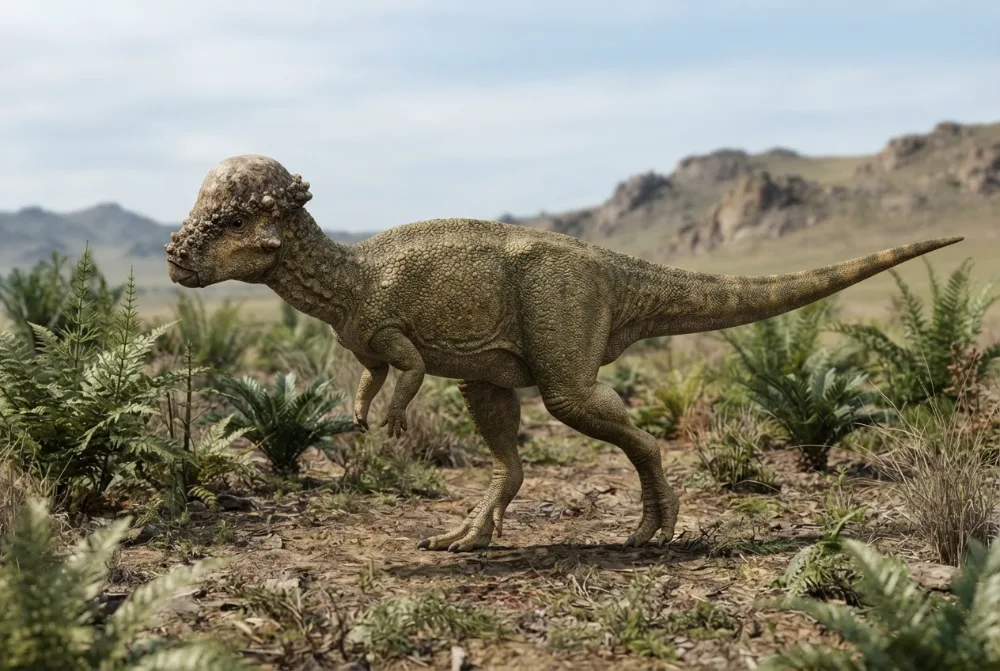
Zavacephale was a small, dome-headed dinosaur that lived in what is now Mongolia. It had a thick, rounded skull like a helmet, and it probably used it for head-butting contests. It is one of the oldest and most complete dome-headed dinosaurs ever found.12
Noiz bizi izan zen?
Zein handia zen?
Zein luzea zen?
Zein astuna zen?
 2 etxeko katu bezain luze, sudurretik buztanera🍌bata bestearen atzean jarritako 6 banana bezain luzeetxeko katu bat bezain astun, gutxi gorabehera🍌49 banana bezain astun🏃100 metro 12 segundotan egin zitzakeen korrika (gizakirik azkarrenak 9,6 behar ditu)
Zein handia zen Zavacephale ZUREKIN alderatuta?
Zure nabigatzaileko kalkulu hutsak. Ez da ezer gordetzen ez inora bidaltzen.
Zein azkarra zen?


Datu dibertigarriak
Zavacephale is the oldest known dome-headed dinosaur, living about 119 to 100 million years ago during the Early Cretaceous.12
Its skeleton is about 54% complete, making it the most complete pachycephalosaur ever found.1
It is the first pachycephalosaur to preserve hand bones and a mass of gastroliths (stomach stones).12
Unlike later dome-heads, Zavacephale's dome was made mostly of the frontal bone, with little help from the parietal bone.1
The tail of Zavacephale was covered in stiff tendons, but they did not form the 'caudal basket' seen in later pachycephalosaurs.1
The dome grew early in life, before the animal reached full size, which suggests it was important for social displays or head-butting even in young animals.2
Zavacephale: gehien egindako galderak
?How big was Zavacephale?
About 1 metre long and weighed around 5.85 kilograms. That is about the size of a large domestic cat.13
?What did Zavacephale eat?
It was a plant-eater. It swallowed small stones called gastroliths to help grind up tough plants in its stomach.42
?Did Zavacephale have feathers?
The fossils don't show feathers, so scientists aren't sure. No feathers have been found on any pachycephalosaur.1
?Why did Zavacephale have a dome?
It probably used its thick, bony dome for head-butting contests with rivals, like rams do. The dome may also have been used for display to attract mates.4
?When did Zavacephale live?
It lived about 119 to 100 million years ago, during the Early Cretaceous Period. That makes it the oldest known dome-headed dinosaur.1
Mito-hauslea
Mitoa: Some people think all dome-headed dinosaurs used their domes for ramming each other like bighorn sheep.
Egia: Scientists are not sure. Zavacephale's dome was well developed even in a young animal, so it might have been for showing off or fighting, but the exact use is still debated.2
Dino adituentzat
- Izen zientifikoa
- Zavacephale
- Izendatzailea:
- Chinzorig et al. 20255
- Taldea
- Kupula-buruak
- Familia / klada
- Pachycephalosauria5
- Sailkapena
- Ornithischia > Pachycephalosauria5
- Arroken adina
- 120 eta 100 milioi urte artean (Aptian / Albian)5
- Arroka-formazioak
- Khuren Dukh5
- Herrialdeak
- Mongolia5
- Fosil-erregistroak
- 1 The Paleobiology Database datu-basean5
- Aurkikuntza
- The fossil was found in 2019 in the Khuren Dukh Formation of Mongolia, and it was formally named by Tsogtbaatar Chinzorig and colleagues in 2025.12
- Oraindik eztabaidagai
- Scientists are still debating how the dome was used, whether for head-butting, display, or something else.2
Datuak nondik datozen
- Zavacephale (en.wikipedia.org)
- A domed pachycephalosaur from the early Cretaceous of Mongolia | Nature (nature.com)
- Best fossil of a dome-headed dinosaur is unearthed in Mongolia | Reuters (reuters.com)
- New dome-headed dinosaur species is the most complete pachycephalosaur ever found | Natural History Museum (nhm.ac.uk)
- Zavacephale in The Paleobiology Database (CC BY 4.0): adina, tokiak, arroka-formazioak, sailkapena.
Orrialde honetako datu bakoitzak zenbaki bat du, bere iturrira eramaten zaituena. Zerbait gaizki badugu, barkatu, dino-zaleak gara, ez zientzia-aldizkari bat. Idatzi [email protected] helbidera eta konponduko dugu.
 Rex gose da! Dino Wiki aita baten proiektua da, dinosauroak maite dituen bere semearentzat, doakoa, iragarkirik eta jarraitzailerik gabe. Helduek mokadutxo bat eman diezaiokete Rexi, sarean jarraitzen laguntzeko.Eman jaten Rexi
 Pachycephalosaurus
 Stegoceras
 Prenocephale
 Sphaerotholus
 Foraminacephale
 Brontotholus
 Stegosaurus
 Iguanodon
 Archaeopteryx
 Giganotosaurus
 Microraptor
 Deinonychus