 Que dino es ti? O test
 Batalla de dinos
 Carreira de dinos
 Minixogos de dinos
 Álbum de cromos
 Listas TOP de dinos
 Sorpréndeme!
Fona
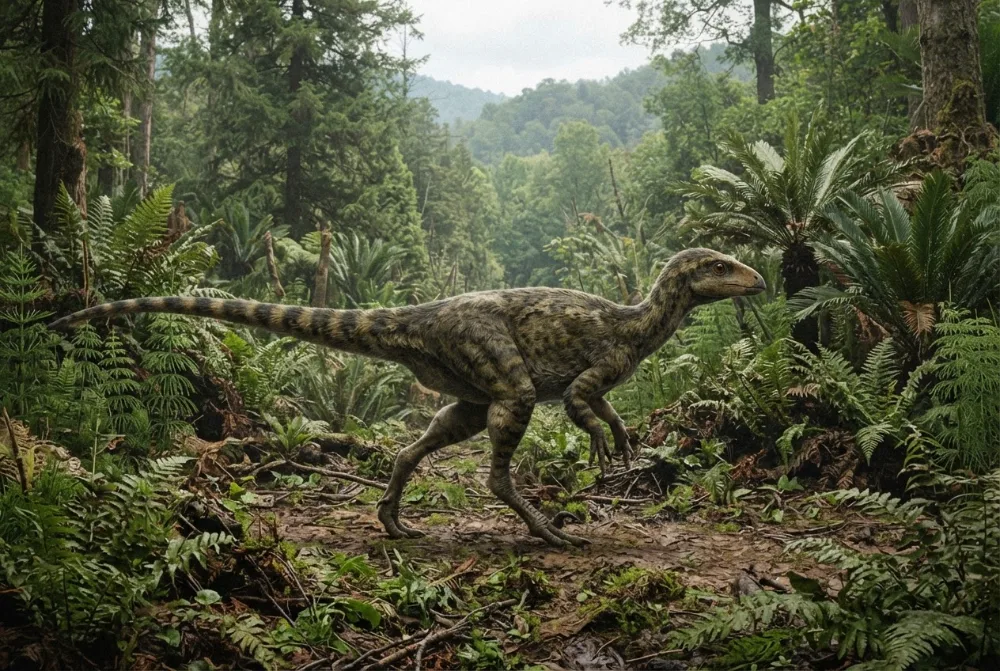
Fona was a small, plant-eating dinosaur that lived about 99 million years ago in what is now Utah. It was about the size of a large dog and spent much of its time digging and living in underground burrows. Fona's fossils are surprisingly common because it often buried itself before it died.12
Cando viviu?
Como era de grande?
Canto medía de longo?
Canto medía de alto?
estimación
Canto pesaba?
 tan longo coma 4 gatos domésticos do fociño á cola🍌tan longo coma 12 plátanos postos un tras outro🍉tan pesado coma 5 sandías🏃podería correr 100 metros en 9,2 segundos (o humano máis rápido necesita 9,6)
Como era de grande Fona comparado CONTIGO?
Só son contas no teu navegador. Non se garda nin se envía nada.
Que velocidade alcanzaba?


Datos curiosos
Fona had strong arm and hip muscles, fused pelvic bones, and large hind legs that helped it dig burrows.12
Scientists think Fona may have dug like a springhare: scratching soil loose with its front claws and kicking it away with its back legs.2
Fona's closest relative, Oryctodromeus, also burrowed, and its burrows have been found in Idaho and Montana.1
Fona skeletons are often found complete, lying chest-down with legs spread, as if they died in their burrows.1
At least two Fona skeletons have been found intertwined, which matches the idea that they shared burrows.2
Fona lived in a warm, wet floodplain with many rivers, between a huge inland sea to the east and volcanoes to the west.1
The species name herzogae honors Lisa Herzog, the paleontology operations manager at the North Carolina Museum of Natural Sciences.1
As preguntas máis frecuentes sobre Fona
?How big was Fona?
About the size of a large dog.1
?Did Fona live in burrows?
Yes, scientists think Fona spent at least part of its time underground in burrows, based on its anatomy and fossils.15
?What did Fona eat?
Fona was a plant-eating dinosaur.1
?When did Fona live?
Fona lived about 99 million years ago, during the mid-Cretaceous period.1
Para expertos en dinos
- Nome científico
- Fona
- Bautizado por
- Avrahami et al. 20246
- Grupo
- Herbívoros con bico
- Familia / clado
- Thescelosauridae6
- Clasificación
- Ornithischia6
- Idade das rochas
- de 100 a 94 millóns de anos (Cenomanian)6
- Formacións rochosas
- Cedar Mountain6
- Países
- EUA6
- Rexistros fósiles
- 3 na Paleobiology Database6
- Descubrimento
- Fona was named in 2024 by paleontologists Haviv Avrahami, Lindsay Zanno, and colleagues from North Carolina State University and the North Carolina Museum of Natural Sciences. The first fossils were found starting in 2013 in the Mussentuchit Member of the Cedar Mountain Formation in Utah.13
- Aínda en debate
- Scientists have not yet found the actual burrows of Fona, only the skeletons that suggest it lived underground.1
De onde veñen os datos
- Life Underground Suited New Dinosaur Fine | NC State News (news.ncsu.edu)
- This dinosaur dug its own grave | National Geographic (nationalgeographic.com)
- PBDB Taxon (paleobiodb.org)
- The First ‘Burrowing Dinosaur’ Was Discovered In 2007—And 17 Years Later, We’ve Discovered The Second (forbes.com)
- A new semi-fossorial thescelosaurine dinosaur from the Cenomanian-age Mussentuchit Member of the Cedar Mountain Formation, Utah - PubMed (pubmed.ncbi.nlm.nih.gov)
- Fona in The Paleobiology Database (CC BY 4.0): idade, lugares, formacións rochosas, clasificación.
Cada dato desta páxina ten un número que leva á súa fonte. Se nos equivocamos nalgo, sentímolo, somos fans dos dinos, non unha revista científica. Escríbenos a [email protected] e arranxámolo.
 Rex ten fame! Dino Wiki é o proxecto dun pai para o seu fillo, que adora os dinosauros, gratis, sen anuncios e sen rastrexadores. Os adultos poden darlle un petisco a Rex para mantelo en liña.Dálle de comer a Rex
 Iguanodon
 Tenontosaurus
 Thescelosaurus
 Zalmoxes
 Camptosaurus
 Rhabdodon
 Tyrannosaurus
 Triceratops
 Velociraptor
 Spinosaurus
 Ankylosaurus
 Parasaurolophus