 Que dino es ti? O test
 Batalla de dinos
 Carreira de dinos
 Minixogos de dinos
 Álbum de cromos
 Listas TOP de dinos
 Sorpréndeme!
Imperobator
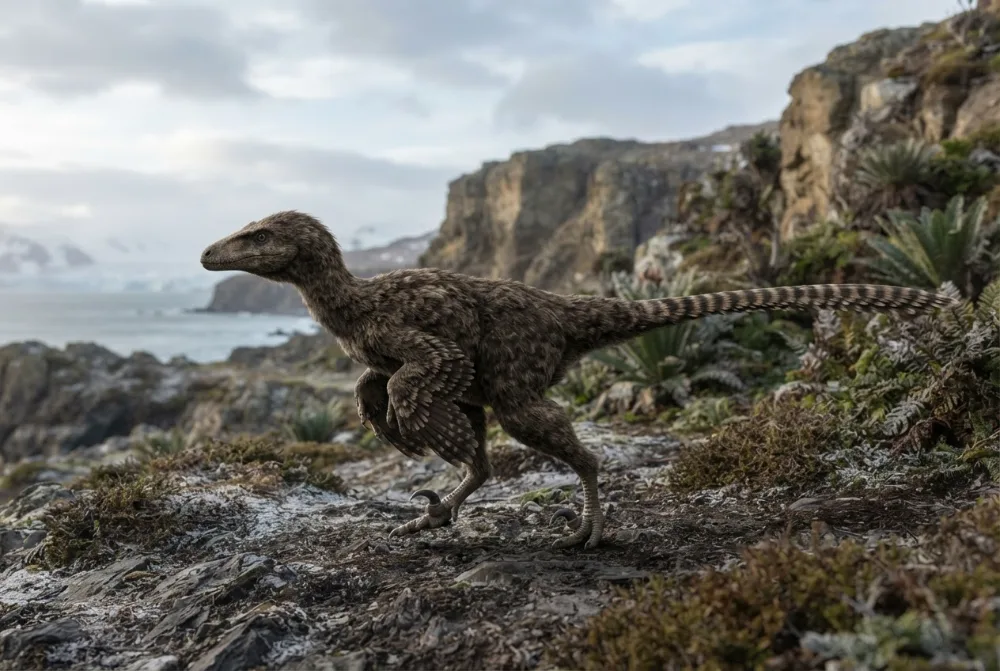
Imperobator was a meat-eating dinosaur that lived in Antarctica during the Late Cretaceous. It was one of only two non-bird theropods known from that icy continent. Scientists think it was a close cousin of the famous raptors like Velociraptor.1
Cando viviu?
Como era de grande?
Canto medía de longo?
Canto medía de alto?
 tan longo coma 3 cans do fociño á cola🍌tan longo coma 17 plátanos postos un tras outro🏃podería correr 100 metros en 7,2 segundos (o humano máis rápido necesita 9,6)
Como era de grande Imperobator comparado CONTIGO?
Só son contas no teu navegador. Non se garda nin se envía nada.
Que velocidade alcanzaba?


Datos curiosos
Imperobator is one of only two non-avian theropod dinosaurs ever found in Antarctica.1
Its foot did not have the famous sickle claw that most raptors have, which surprised scientists.1
The first fossils were discovered in 2003 by a team from the University of California Museum of Paleontology.1
Imperobator lived about 71 million years ago, when Antarctica was warmer and covered in forests.1
It shared its home with the ornithopod dinosaur Morrosaurus and the bird Antarcticavis.1
Scientists are still debating whether Imperobator was a true dromaeosaur or a more primitive paravian.1
As preguntas máis frecuentes sobre Imperobator
?How big was Imperobator?
Imperobator was about 2 to 3 metres long, similar in size to Deinonychus. It was originally thought to be much larger, like Utahraptor, but later studies showed it was smaller.1
?Did Imperobator have a sickle claw?
No, Imperobator did not have the famous sickle claw on its foot that most raptors have. This surprised scientists and helped them figure out it was not a true dromaeosaur.1
?What did Imperobator eat?
Imperobator was a meat-eating dinosaur. Its teeth were long, curved, and bladed, just like those of other carnivorous paravians.1
?Where was Imperobator found?
Imperobator was found on James Ross Island in Antarctica. The first fossils were discovered in 2003 by a team from the University of California Museum of Paleontology.1
?When did Imperobator live?
Imperobator lived about 71 million years ago, during the Late Cretaceous period. At that time, Antarctica was warmer and covered in forests.1
?Is Imperobator a dinosaur?
Yes, Imperobator is a non-avian theropod dinosaur. It is one of only two non-bird theropods ever found in Antarctica.1
Cazamitos
Mito: Imperobator had a sickle claw like Velociraptor.
Verdade: Imperobator lacked the distinctive sickle claw on its foot, which sets it apart from typical dromaeosaurs.1
Para expertos en dinos
- Nome científico
- Imperobator
- Bautizado por
- Ely and Case 20192
- Grupo
- Raptores
- Familia / clado
- Dromaeosauridae2
- Clasificación
- Theropoda > Dromaeosauridae2
- Idade das rochas
- de 72 a 66 millóns de anos (Maastrichtian)2
- Formacións rochosas
- Snow Hill Island2
- Países
- Antártida2
- Rexistros fósiles
- 1 na Paleobiology Database2
- Descubrimento
- Imperobator was named by Ricardo Ely and Judd Case in 2019. The fossils were first found in 2003 on James Ross Island, Antarctica, and were initially thought to be a dromaeosaur.12
- Aínda en debate
- Scientists are not sure whether Imperobator belongs to the dromaeosaur family or to a more primitive group of paravians.1
De onde veñen os datos
- Imperobator (en.wikipedia.org)
- Imperobator in The Paleobiology Database (CC BY 4.0): idade, lugares, formacións rochosas, clasificación.
Cada dato desta páxina ten un número que leva á súa fonte. Se nos equivocamos nalgo, sentímolo, somos fans dos dinos, non unha revista científica. Escríbenos a [email protected] e arranxámolo.
 Rex ten fame! Dino Wiki é o proxecto dun pai para o seu fillo, que adora os dinosauros, gratis, sen anuncios e sen rastrexadores. Os adultos poden darlle un petisco a Rex para mantelo en liña.Dálle de comer a Rex
 Velociraptor
 Microraptor
 Deinonychus
 Asiamericana
 Richardoestesia
 Saurornitholestes
 Tyrannosaurus
 Triceratops
 Spinosaurus
 Ankylosaurus
 Parasaurolophus
 Pteranodon