 Que dino es ti? O test
 Batalla de dinos
 Carreira de dinos
 Minixogos de dinos
 Álbum de cromos
 Listas TOP de dinos
 Sorpréndeme!
Tamarro
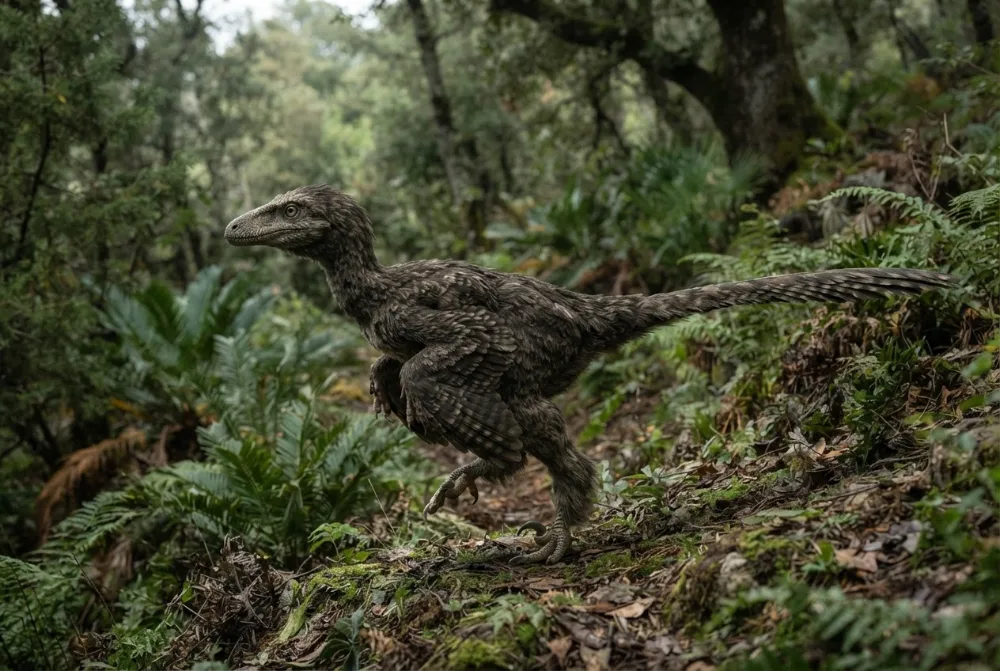
Tamarro was a small, fast-growing dinosaur that lived on an ancient island in what is now Spain. It was a troodontid, a group of bird-like, meat-eating dinosaurs. Scientists only know it from a single foot bone, but that bone has a unique hole not seen in any other troodontid.1
Cando viviu?
Como era de grande?
Canto medía de longo?
Canto medía de alto?
Canto pesaba?
 tan longo coma 4 gatos domésticos do fociño á cola🍌tan longo coma 11 plátanos postos un tras outro🍉tan pesado coma 4 sandías🏃podería correr 100 metros en 8,4 segundos (o humano máis rápido necesita 9,6)
Como era de grande Tamarro comparado CONTIGO?
Só son contas no teu navegador. Non se garda nin se envía nada.
Que velocidade alcanzaba?


Datos curiosos
Tamarro lived at the very end of the Cretaceous period, within 200,000 years of the asteroid that wiped out the dinosaurs.1
Its foot bone shows that Tamarro was a fast grower, reaching nearly adult size quickly, like many island animals.1
Tamarro is the first troodontid dinosaur ever found in Europe.1
The only known fossil of Tamarro is a single right second metatarsal, a bone from the foot.1
This foot bone has a special hole (a foramen) that is not found in any other troodontid, which helped scientists identify it as a new species.1
Tamarro lived on the Ibero-Armorican island, a large island that included parts of modern Spain, Portugal, and France.1
Scientists think Tamarro may have migrated from Asia to Europe, either by land bridges or by island hopping.1
As preguntas máis frecuentes sobre Tamarro
?What did Tamarro eat?
Tamarro was a meat-eating dinosaur, a troodontid, so it likely ate small animals. Scientists know this from its group, not from its single foot bone.31
?How big was Tamarro?
Tamarro was a small, mid-sized troodontid, but its exact size is unknown because only a foot bone has been found. It was a fast grower, reaching nearly adult size quickly.13
Para expertos en dinos
- Nome científico
- Tamarro
- Bautizado por
- Sellés et al. 20214
- Grupo
- Raptores
- Familia / clado
- Troodontidae4
- Clasificación
- Theropoda > Troodontidae4
- Idade das rochas
- de 72 a 66 millóns de anos (Maastrichtian)4
- Formacións rochosas
- Talarn4
- Países
- España4
- Rexistros fósiles
- 1 na Paleobiology Database4
- Descubrimento
- Tamarro was discovered in September 2003 by a team from the Museu de la Conca Dellà at the Sant Romà d'Abella site in Spain. It was named in 2021 by Sellés and colleagues.1
- Aínda en debate
- Scientists are not sure whether Tamarro was a dwarf species, like many other dinosaurs that lived on islands, or if it was just a young animal that hadn't finished growing.1
De onde veñen os datos
- A fast-growing basal troodontid (Dinosauria: Theropoda) from the latest Cretaceous of Europe | Scientific Reports (nature.com)
- Tamarro insperatus, uno de los últimos dinosaurios que vivió en los Pirineos (nationalgeographic.com.es)
- Tamarro (en.wikipedia.org)
- Tamarro in The Paleobiology Database (CC BY 4.0): idade, lugares, formacións rochosas, clasificación.
Cada dato desta páxina ten un número que leva á súa fonte. Se nos equivocamos nalgo, sentímolo, somos fans dos dinos, non unha revista científica. Escríbenos a [email protected] e arranxámolo.
 Rex ten fame! Dino Wiki é o proxecto dun pai para o seu fillo, que adora os dinosauros, gratis, sen anuncios e sen rastrexadores. Os adultos poden darlle un petisco a Rex para mantelo en liña.Dálle de comer a Rex
 Velociraptor
 Microraptor
 Deinonychus
 Asiamericana
 Richardoestesia
 Saurornitholestes
 Tyrannosaurus
 Triceratops
 Spinosaurus
 Ankylosaurus
 Parasaurolophus
 Pteranodon