 რომელი დინო ხარ? ქვიზი
 დინოების ბრძოლა
 დინოების რბოლა
 დინო მინი-თამაშები
 სტიკერების ალბომი
 დინო TOP სიები
 გამაოცე!
Platecarpus
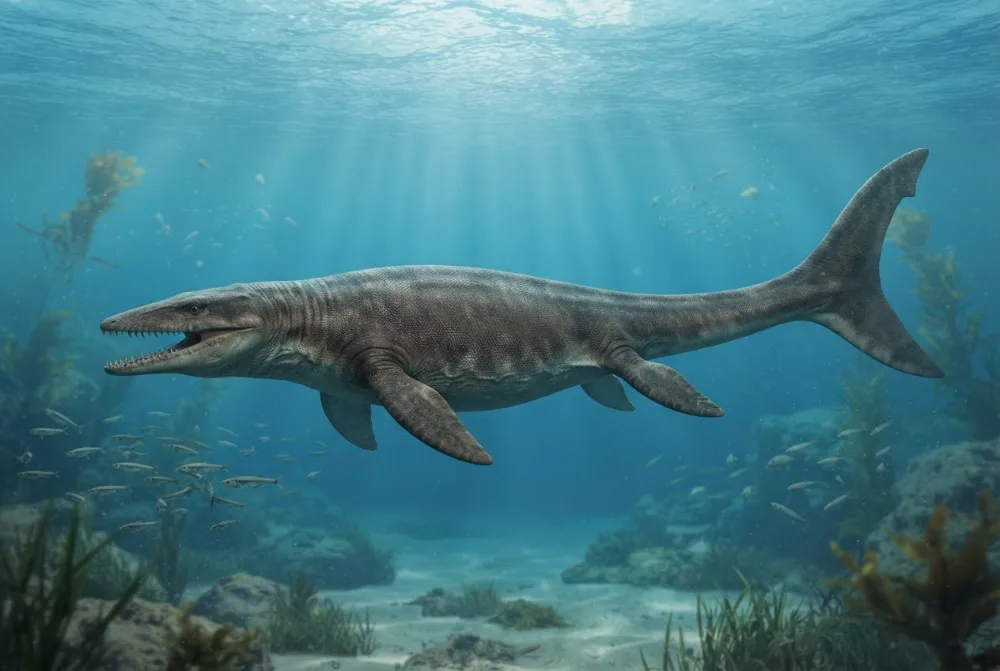
Platecarpus was a fast-swimming marine lizard that lived in the sea during the time of the dinosaurs. It had a long tail with a shark-like fin and ate fish and squid. Platecarpus was not a dinosaur, but a mosasaur, a kind of giant sea lizard.1
როდის ცხოვრობდა?
რამხელა იყო?
რამდენად გრძელი იყო?
 6 ძაღლის სიგრძის, ცხვირიდან კუდამდე🍌32 მწკრივად დალაგებული ბანანის სიგრძის🏊დიდი აუზის სიგრძეს (50 მ) 4,7 წამში გაცურავდა
რამხელა იყო Platecarpus შენთან შედარებით?
უბრალოდ მათემატიკა შენს ბრაუზერში. არაფერი ინახება და არსად იგზავნება.
რამდენად სწრაფი იყო?


სახალისო ფაქტები
Platecarpus had a short skull and fewer teeth than any other mosasaur, with only about 10 teeth in each lower jaw bone.1
A well-preserved fossil shows skin impressions, pigments near the nostrils, and even the shape of the tail fluke, which was like a shark's tail.1
Platecarpus swam by moving its tail side to side, but its deep tail fin made it a powerful, fast swimmer, not like an eel.1
Fossilized stomach contents show that Platecarpus ate fish and did not digest its food completely, passing bones and scales quickly.1
A 2026 study of tooth chemistry suggests that Platecarpus was warm-blooded, like modern sharks and whales.1
Platecarpus fossils are very common in the Smoky Hill Chalk of Kansas, which was once the bottom of a shallow sea.1
ყველაზე ხშირი კითხვები: Platecarpus
?How big was Platecarpus?
About 5.7 metres (18.7 feet) long, based on a complete fossil. That is roughly the length of a small bus.1
?What did Platecarpus eat?
It ate medium-sized fish, and probably also squid and ammonites. Fossil stomach contents show it swallowed fish whole and digested them quickly.1
?When did Platecarpus live?
It lived about 84 to 81 million years ago, during the Late Cretaceous period. That was the time of the dinosaurs.1
?Is Platecarpus a dinosaur?
No, it is not a dinosaur. It is a mosasaur, a kind of giant marine lizard that lived in the sea.1
?Where have Platecarpus fossils been found?
Mostly in the United States, especially in Kansas. Fossils have also been found in Belgium, Australia, and Africa.1
მითების მსხვრეველი
მითი: Many people think mosasaurs like Platecarpus swam like eels, wiggling their whole body.
სიმართლე: Platecarpus had a crescent-shaped tail fluke and swam more like a shark, using its tail for powerful thrusts.1
დინო ექსპერტებისთვის
- სამეცნიერო სახელი
- Platecarpus
- სახელი დაარქვა:
- Cope 18692
- ჯგუფი
- მოზაზავრები
- ოჯახი / კლადი
- Mosasauridae2
- კლასიფიკაცია
- Mosasauroidea2
- ქანების ასაკი
- 100-66 მილიონი წელი (Cenomanian / Maastrichtian)2
- ქანების წყებები
- Pierre Shale, Niobrara, Molecap Greensand2
- ქვეყნები
- აშშ, კანადა, შვედეთი, ბრაზილია, ავსტრალია, რუსეთი2
- ნამარხების ჩანაწერები
- The Paleobiology Database-ში: 602
- აღმოჩენა
- Platecarpus was named by the famous paleontologist Edward Drinker Cope in 1869, based on fossils found in Mississippi, USA.12
- ჯერ კიდევ სადავოა
- Scientists still debate whether some fossils belong to Platecarpus or to other closely related mosasaurs, and some species have been moved to different genera.1
საიდან არის ფაქტები
- Platecarpus (en.wikipedia.org)
- Platecarpus in The Paleobiology Database (CC BY 4.0): ასაკი, ადგილები, ქანების წყებები, კლასიფიკაცია.
ამ გვერდზე ყოველ ფაქტს აქვს ნომერი, რომელიც მის წყაროზე მიუთითებს. თუ რამე შეგვეშალა, ბოდიში, ჩვენ დინოს მოყვარულები ვართ და არა სამეცნიერო ჟურნალი. მოგვწერე მისამართზე [email protected] და გავასწორებთ.
 რექსს შია! Dino Wiki მამის პროექტია დინოზავრების მოყვარული შვილისთვის, უფასო, რეკლამისა და ტრეკერების გარეშე. უფროსებს შეუძლიათ რექსს რამე გემრიელი აჭამონ, რომ საიტი ონლაინ დარჩეს.აჭამე რექსს
 Mosasaurus
 Prognathodon
 Tylosaurus
 Clidastes
 Globidens
 Halisaurus
 Tyrannosaurus
 Triceratops
 Velociraptor
 Spinosaurus
 Ankylosaurus
 Parasaurolophus