 Kwizi: Oli dayinoso ki?
 Olutalo lwa dayinoso
 Empaka z'emisinde gya dayinoso
 Emizannyo emitono egya dayinoso
 Alubaamu ya sitika
 Enkalala za dayinoso eza TOP
 Mpa ekyewuunyisa!
Yabeerawo ddi?

Yali wa mbiro kwenkana wa?


Ebyewuunyisa
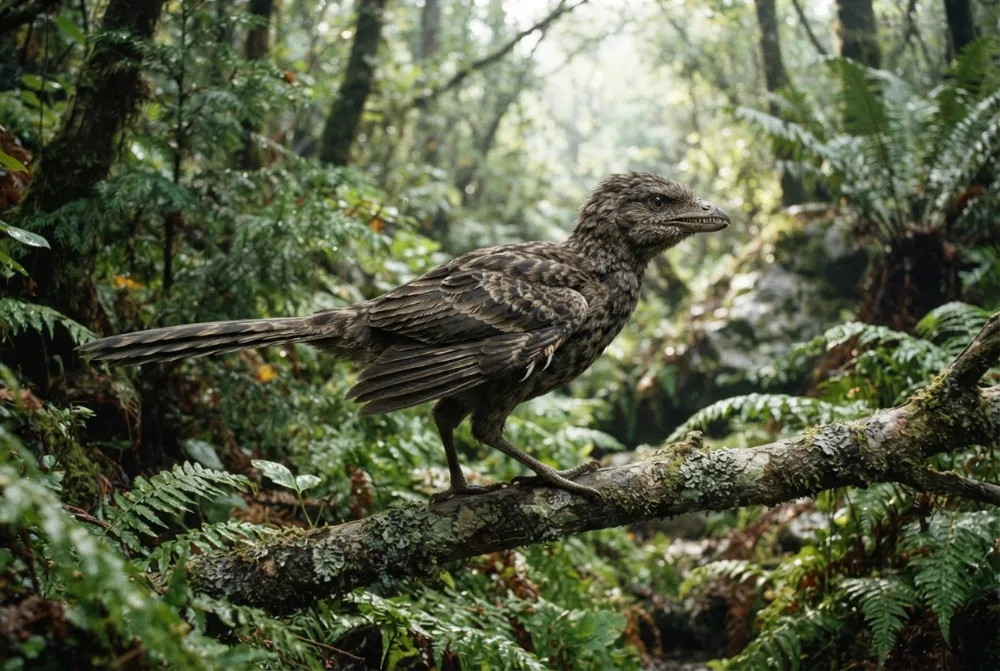
Archaeovolans lived during the Early Cretaceous period, about 121 to 113 million years ago.1
The only known fossil of Archaeovolans is a nearly complete skeleton, but it is missing the tail and parts of the pelvis and hindlimbs.2
Some scientists think Archaeovolans might actually be the same as another bird called Yanornis.2
The holotype specimen of Archaeovolans was once part of a fake fossil called Archaeoraptor, which was a mix of different animals.2
Archaeovolans had teeth, which is a feature of many early birds but not modern birds.5
Ebibuuzo ebisinga okubuuzibwa ku Archaeovolans
?Was Archaeovolans a dinosaur?
Yes, it was an avian theropod dinosaur, a bird-like dinosaur with feathers and teeth. Some scientists call it a bird, but birds are a type of dinosaur.53
?How big was Archaeovolans?
It was about the size of a chicken, roughly 30 to 40 centimetres (12 to 16 inches) long. This is based on its close relative Yanornis.4
?What did Archaeovolans eat?
It ate meat, especially fish. Fossils of its close relative Yanornis show fish bones in the stomach and crop area.4
Eri abakugu mu dayinoso
- Erinnya lya ssaayansi
- Archaeovolans
- Yatuumibwa
- Czerkas and Xu 20025
- Ekibinja
- Ebinyonyi eby'olubereberye
- Ekika / ekibinja
- Ornithurae5
- Engabanya
- Theropoda > Avialae5
- Emyaka gy'enjazi
- emyaka obukadde 121 okutuuka ku 113 (Aptian)5
- Ensengeka z'enjazi
- Jiufotang5
- Ensi
- Cayina5
- Ebisigalira ebyazuulibwa
- 1 mu The Paleobiology Database5
- Okuzuulibwa
- Archaeovolans was named by Stephen Czerkas and Xu Xing in 2002. The name means 'ancient flier'. The type specimen is IVPP V12444, a skeleton found at Xiasanjiazi in China.51
- Kikyakubaganyizibwako ebirowoozo
- Scientists are not sure if Archaeovolans is a distinct species or if it is the same as Yanornis martini.2
Ebituufu gye biva
- PBDB Taxon (paleobiodb.org)
- Dinosaur Genera List update #192 (reptilis.net)
- Re: Dinosaur Genera List update #192 (dml.reptilis.net)
- Yanornis (Wikipedia) (Wikipedia)
- Archaeovolans in The Paleobiology Database (CC BY 4.0): emyaka, ebifo, ensengeka z'enjazi, engabanya.
Buli kituufu ku lupapula luno kirina ennamba eraga ensibuko yaakyo. Bwe tuba nga tukoze ensobi, tusonyiwe, ffe tuli bawagizi ba dayinoso, so si magazini ya ssaayansi. Tubuulire ku [email protected] tujja kugitereeza.
 Rex alumwa enjala! Dino Wiki pulojekiti ya taata eri mutabani we ayagala ennyo dayinoso, ya bwereere, tewali bulango era tewali bikulondoola. Abakulu basobola okuwa Rex akantu ak'okulya okuyamba okugikuuma ku mutimbagano.Liisa Rex
 Archaeopteryx
 Hesperornis
 Ichthyornis
 Baptornis
 Jurapteryx
 Gobipteryx
 Stegosaurus
 Iguanodon
 Giganotosaurus
 Microraptor
 Deinonychus
 Baryonyx