 Kwizi: Oli dayinoso ki?
 Olutalo lwa dayinoso
 Empaka z'emisinde gya dayinoso
 Emizannyo emitono egya dayinoso
 Alubaamu ya sitika
 Enkalala za dayinoso eza TOP
 Mpa ekyewuunyisa!
Beipiaosaurus
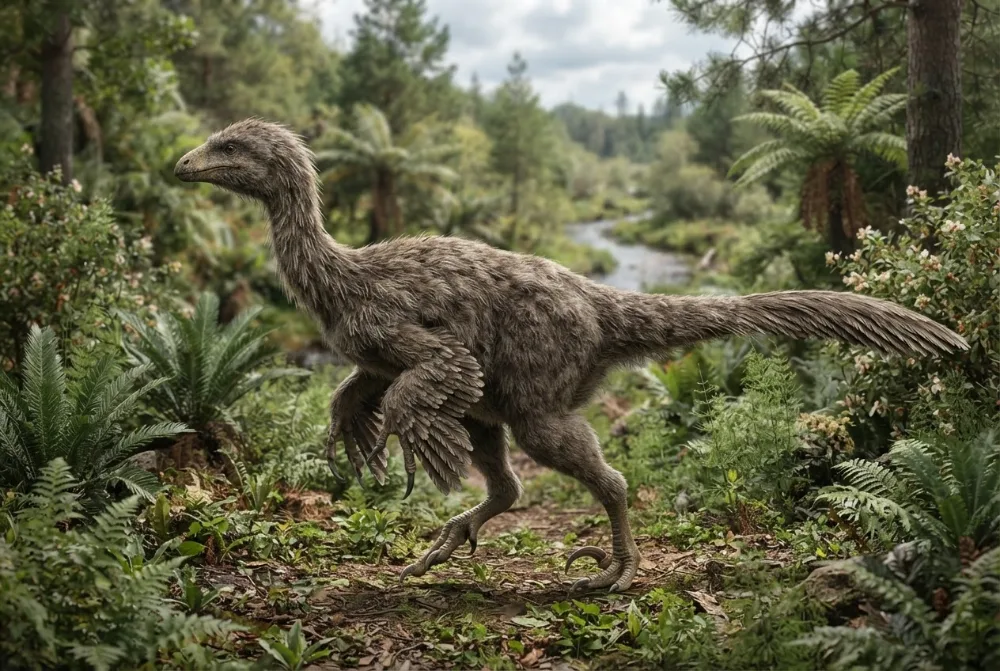
Beipiaosaurus was a feathered dinosaur that looked a bit like a big, fluffy bird. It had long, simple feathers on its neck and tail, and scientists think it was covered in downy fuzz. This dinosaur was a plant-eater, even though it belonged to the meat-eating dinosaur group!12
Yabeerawo ddi?
Yali munene atya?
Yali muwanvu kwenkana wa?
Yali mugulumivu kwenkana wa?
kuteebereza
Yali muzito kwenkana wa?
 obuwanvu nga kkapa 4 ab'awaka, ennyindo ku mukira🍌obuwanvu ng'amenvu 12 nga gaddiriŋŋana🍉obuzito ng'obwa wotamerooni 5🏃yandidduse mita 100 mu sikonda 13 (omuntu asinga embiro yeetaaga 9.6)
Beipiaosaurus yali munene atya bw'ogeraageranya ku GGWE?
Kubala kwokka mu browser yo. Tewali kiterekebwa wadde okusindikibwa wonna.
Yali wa mbiro kwenkana wa?


Ebyewuunyisa
Beipiaosaurus had two kinds of feathers: a fluffy downy coat and much longer, stiff, ribbon-like feathers called EBFFs (elongated broad filamentous feathers). These long feathers could be up to 15 cm (6 inches) long.1
Before the discovery of Yutyrannus, Beipiaosaurus was the heaviest feathered dinosaur known from direct fossil evidence.1
Its feathers were brownish, as scientists found out by studying the shape of pigment cells preserved in the fossils.1
Beipiaosaurus had a shorter neck than most other therizinosaurs, which usually have long necks for reaching high plants.1
The name Beipiaosaurus inexpectus means 'unexpected Beipiao lizard' because its features surprised the scientists who first studied it.1
Ebibuuzo ebisinga okubuuzibwa ku Beipiaosaurus
?How big was Beipiaosaurus?
Beipiaosaurus was a small dinosaur, about 2.2 metres (7.2 feet) long and weighing around 27 kilograms (60 pounds). Some estimates suggest it was a bit shorter at 1.8 metres (5.9 feet) and heavier at 50 kilograms (110 pounds).13
?What did Beipiaosaurus eat?
Beipiaosaurus was mostly a plant-eater, even though it belonged to the meat-eating dinosaur group. Its teeth and body structure show it was generally herbivorous.13
?Did Beipiaosaurus have feathers?
Yes, Beipiaosaurus had two kinds of feathers: a fluffy downy coat and much longer, stiff, ribbon like feathers called EBFFs. These long feathers could be up to 15 centimetres (6 inches) long.1
?When did Beipiaosaurus live?
Beipiaosaurus lived during the Early Cretaceous period, about 125 million years ago. Its fossils were found in the Yixian Formation in China.13
?Where was Beipiaosaurus found?
Beipiaosaurus fossils were discovered in Liaoning Province, China, near the city of Beipiao. The first remains were found in 1996 by a farmer named Li Yinxian.1
?What does the name Beipiaosaurus mean?
The name Beipiaosaurus means 'Beipiao lizard' after the city in China where it was found. The species name 'inexpectus' means 'unexpected' in Latin, because its features surprised scientists.13
?Was Beipiaosaurus bigger than T. rex?
No, Beipiaosaurus was much smaller than T. rex. It was only about 2.2 metres (7.2 feet) long and weighed around 27 kilograms (60 pounds), while T. rex was over 12 metres long.1
?What color were Beipiaosaurus feathers?
Scientists studied pigment cells in the fossils and found that Beipiaosaurus feathers were brownish. The melanosomes (color cells) were sphere-shaped, which gives a dark brown color.1
Omumenyi w'enfumo
Enfumo: Many people think all feathered dinosaurs could fly or glide.
Amazima: Beipiaosaurus had feathers but could not fly. Its feathers were probably for display, insulation, or both.1
Eri abakugu mu dayinoso
- Erinnya lya ssaayansi
- Beipiaosaurus
- Yatuumibwa
- Xu et al. 19994
- Ekibinja
- Dayinoso ez'ebyoya ez'enjawulo
- Ekika / ekibinja
- Therizinosauroidea4
- Engabanya
- Theropoda > Therizinosauria4
- Emyaka gy'enjazi
- emyaka obukadde 126 okutuuka ku 120 (Barremian / Aptian)4
- Ensengeka z'enjazi
- Yixian4
- Ensi
- Cayina4
- Ebisigalira ebyazuulibwa
- 2 mu The Paleobiology Database4
- Okuzuulibwa
- A farmer named Li Yinxian found the first Beipiaosaurus fossil in 1996 near Sihetun, China. Scientists Xu Xing, Tang Zhilu, and Wang Xiaolin named it in 1999.1
- Kikyakubaganyizibwako ebirowoozo
- Scientists are still debating whether the long, ribbon-like feathers of Beipiaosaurus were used for display, to keep warm, or for some other purpose.1
Ebituufu gye biva
- Beipiaosaurus (en.wikipedia.org)
- A therizinosauroid dinosaur with integumentary structures from China | Nature (preview-www.nature.com)
- Beipiaosaurus | Natural History Museum (nhm.ac.uk)
- Beipiaosaurus in The Paleobiology Database (CC BY 4.0): emyaka, ebifo, ensengeka z'enjazi, engabanya.
Buli kituufu ku lupapula luno kirina ennamba eraga ensibuko yaakyo. Bwe tuba nga tukoze ensobi, tusonyiwe, ffe tuli bawagizi ba dayinoso, so si magazini ya ssaayansi. Tubuulire ku [email protected] tujja kugitereeza.
 Rex alumwa enjala! Dino Wiki pulojekiti ya taata eri mutabani we ayagala ennyo dayinoso, ya bwereere, tewali bulango era tewali bikulondoola. Abakulu basobola okuwa Rex akantu ak'okulya okuyamba okugikuuma ku mutimbagano.Liisa Rex
 Therizinosaurus
 Oviraptor
 Chirostenotes
 Citipes
 Leptorhynchos
 Avimimus
 Stegosaurus
 Iguanodon
 Archaeopteryx
 Giganotosaurus
 Microraptor
 Deinonychus