 Kwizi: Oli dayinoso ki?
 Olutalo lwa dayinoso
 Empaka z'emisinde gya dayinoso
 Emizannyo emitono egya dayinoso
 Alubaamu ya sitika
 Enkalala za dayinoso eza TOP
 Mpa ekyewuunyisa!
Yabeerawo ddi?

Yali munene atya?
Yali muwanvu kwenkana wa?
Yali mugulumivu kwenkana wa?
Yali muzito kwenkana wa?

 obuwanvu ng'embwa 2.5, ennyindo ku mukira🍌obuwanvu ng'amenvu 14 nga gaddiriŋŋana🍉obuzito ng'obwa wotamerooni 4🏃yandidduse mita 100 mu sikonda 9.5 (omuntu asinga embiro yeetaaga 9.6)
Citipes yali munene atya bw'ogeraageranya ku GGWE?
Kubala kwokka mu browser yo. Tewali kiterekebwa wadde okusindikibwa wonna.
Yali wa mbiro kwenkana wa?


Ebyewuunyisa
Citipes was named in 2020, but its fossils were first discovered in 1926 and were thought to belong to other dinosaurs like Ornithomimus.1
A fossil of a young Gorgosaurus was found with the legs of at least two Citipes inside its stomach, showing that Citipes was hunted by this larger dinosaur.1
The Citipes legs inside the Gorgosaurus were from babies less than one year old, and the Gorgosaurus seemed to prefer eating the muscular hind legs.1
Citipes had a fused ankle and strong leg muscles, which made it a very fast runner.1
One Citipes fossil shows a broken hip bone that had healed, meaning the animal survived a serious injury.1
Citipes lived alongside two other similar dinosaurs, Caenagnathus and Chirostenotes, but they were different sizes and probably ate different foods to avoid competing.1
Ebibuuzo ebisinga okubuuzibwa ku Citipes
?How big was Citipes?
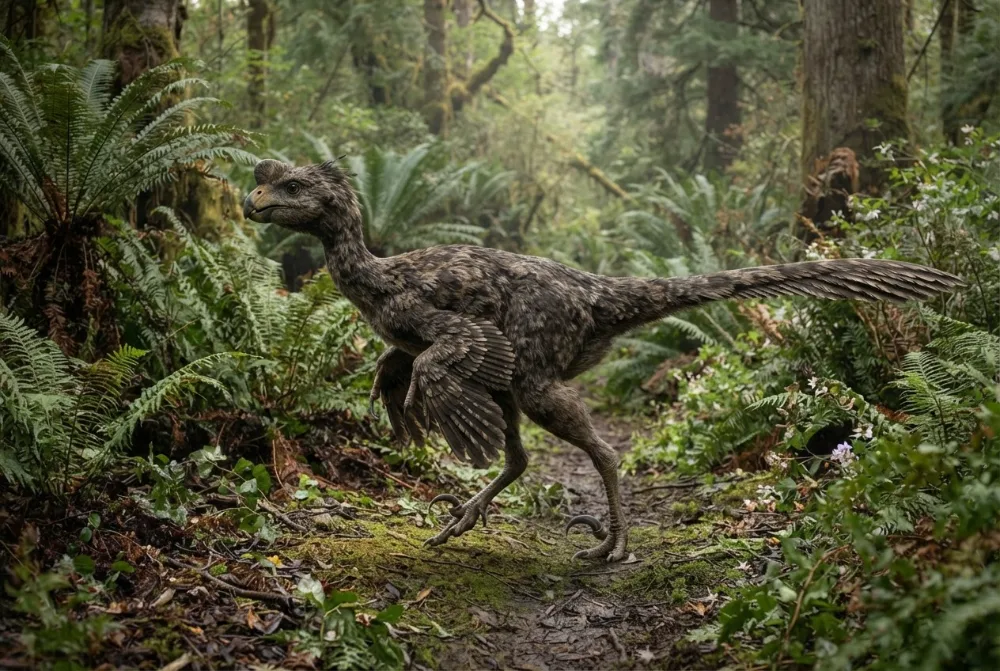
Citipes was a small dinosaur, roughly the size of an emu when fully grown. The juveniles found in the Gorgosaurus stomach were about the size of a turkey.2
?What did Citipes eat?
Citipes probably ate plants and small animals, since it had a beak like a parrot. It lived alongside two similar dinosaurs that ate different foods to avoid competing.1
?Did Citipes have feathers?
Yes, scientists think Citipes was covered in feathers, like many other bird-like dinosaurs. It was a caenagnathid, a type of feathered theropod.1
Omumenyi w'enfumo
Enfumo: Citipes is often confused with the dinosaur Citipati, which has a similar name.
Amazima: Citipes and Citipati are different dinosaurs. Citipati is an oviraptorid from Mongolia, while Citipes is a caenagnathid from North America.1
Eri abakugu mu dayinoso
- Erinnya lya ssaayansi
- Citipes
- Yatuumibwa
- Funston 20203
- Ekibinja
- Dayinoso ez'ebyoya ez'enjawulo
- Ekika / ekibinja
- Caenagnathidae3
- Engabanya
- Theropoda > Oviraptorosauria3
- Emyaka gy'enjazi
- emyaka obukadde 84 okutuuka ku 66 (Campanian / Maastrichtian)3
- Ensengeka z'enjazi
- Dinosaur Park, Hell Creek3
- Ensi
- Kanada, Amerika3
- Ebisigalira ebyazuulibwa
- 12 mu The Paleobiology Database3
- Okuzuulibwa
- The first Citipes fossils were found in 1926 in Alberta, Canada, by a University of Toronto expedition. They were named Ornithomimus elegans by William Parks in 1933, but later moved to their own genus Citipes by Gregory Funston in 2020.1
- Kikyakubaganyizibwako ebirowoozo
- Scientists are not sure exactly what Citipes ate. It had a beak but no teeth, so it may have eaten plants, small animals, or both.1
Ebituufu gye biva
- Citipes (en.wikipedia.org)
- Young tyrannosaur found with baby dinosaurs in its stomach | CBC News (cbc.ca)
- Citipes in The Paleobiology Database (CC BY 4.0): emyaka, ebifo, ensengeka z'enjazi, engabanya.
Buli kituufu ku lupapula luno kirina ennamba eraga ensibuko yaakyo. Bwe tuba nga tukoze ensobi, tusonyiwe, ffe tuli bawagizi ba dayinoso, so si magazini ya ssaayansi. Tubuulire ku [email protected] tujja kugitereeza.
 Rex alumwa enjala! Dino Wiki pulojekiti ya taata eri mutabani we ayagala ennyo dayinoso, ya bwereere, tewali bulango era tewali bikulondoola. Abakulu basobola okuwa Rex akantu ak'okulya okuyamba okugikuuma ku mutimbagano.Liisa Rex
 Therizinosaurus
 Oviraptor
 Chirostenotes
 Leptorhynchos
 Avimimus
 Caenagnathus
 Tyrannosaurus
 Triceratops
 Velociraptor
 Spinosaurus
 Ankylosaurus
 Parasaurolophus