 Kwizi: Oli dayinoso ki?
 Olutalo lwa dayinoso
 Empaka z'emisinde gya dayinoso
 Emizannyo emitono egya dayinoso
 Alubaamu ya sitika
 Enkalala za dayinoso eza TOP
 Mpa ekyewuunyisa!
Campananeyen
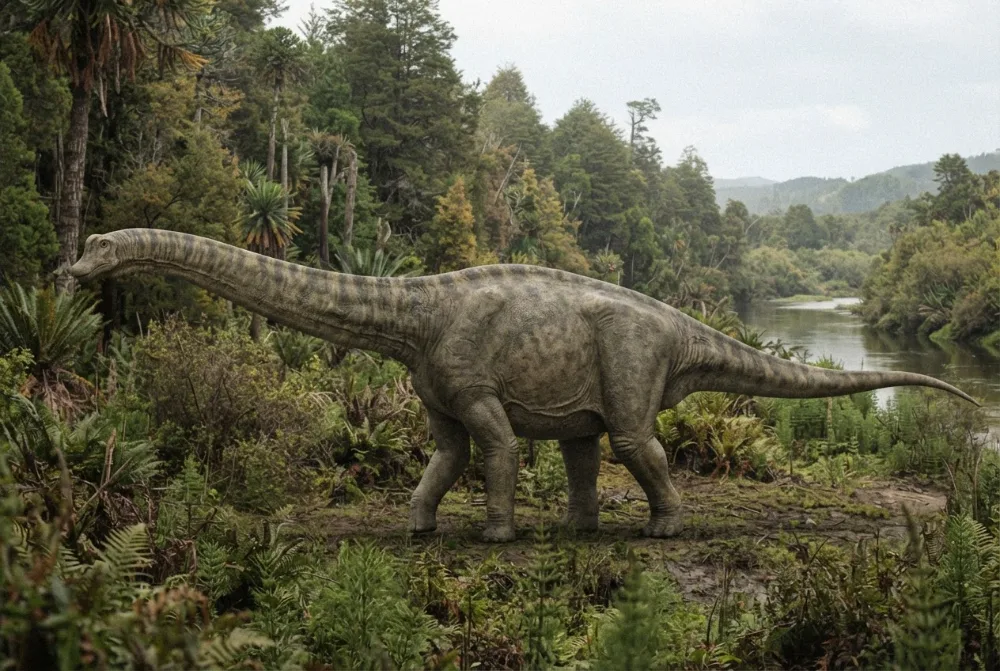
Campananeyen was a long-necked sauropod that lived in a huge desert in what is now Argentina. Its bones were so full of air pockets that scientists named it after the Mapuche word for 'air'. This dinosaur had a very thin and fragile hip bone, which is why its species name means 'the most fragile'.1
Yabeerawo ddi?
Yali munene atya?
Yali muwanvu kwenkana wa?
Yali mugulumivu kwenkana wa?
kuteebereza
Yali muzito kwenkana wa?
 obuwanvu ng'emmotoka 2.5 ezisimbiddwa mu lunyiriri🍌obuwanvu ng'amenvu 58 nga gaddiriŋŋana
 obuzito ng'obw'embwa 120🍉obuzito ng'obwa wotamerooni 500🎒obuzito ng'obw'ebibiina 3 ebijjuvu eby'abaana b'essomero🐻❄️obuzito ng'obwa ddubu enjeru 6🏃yandidduse mita 100 mu sikonda 16 (omuntu asinga embiro yeetaaga 9.6)
Campananeyen yali munene atya bw'ogeraageranya ku GGWE?
Kubala kwokka mu browser yo. Tewali kiterekebwa wadde okusindikibwa wonna.
Yali wa mbiro kwenkana wa?


Ebyewuunyisa
Campananeyen had a very thin and fragile ilium (hip bone), so thin that scientists gave it the species name fragilissimus, meaning 'the most fragile'.1
Its bones were extremely pneumatized, meaning they were filled with air pockets, which made the skeleton lighter. The name Campananeyen comes from the Mapuche word for 'air'.1
The quadrate fossa, a large pit on the back of the skull's cheek bone, was 30 to 70 percent larger in Campananeyen than in any other known rebbachisaurid.1
Unlike most rebbachisaurids, Campananeyen had hyposphene-hypantrum joints between its vertebrae, which helped lock the backbone together. Its hyposphene was hollow and ovoid, like in Nigersaurus.1
The sacral ribs of Campananeyen had a unique 'dorsal alar arm' that helped support the leg muscles, especially the muscle that pulls the thigh forward.1
Campananeyen lived in the Kokorkom Desert, a huge sandy desert with some oases, alongside other dinosaurs like the giant predator Giganotosaurus and the long-necked Limaysaurus.1
The first fossils of Campananeyen were found in 2016 but were not named until 2024, when scientists realized they belonged to a new species.1
Ebibuuzo ebisinga okubuuzibwa ku Campananeyen
?What did Campananeyen eat?
Campananeyen was a herbivore, meaning it ate plants. It likely used its many closely aligned teeth to eat leaves and other vegetation.4
?How big was Campananeyen?
Scientists do not know exactly how big Campananeyen was because only a fragmentary skeleton has been found. It was a sauropod, so it had a long neck, a large body, and strong limbs.14
?When did Campananeyen live?
Campananeyen lived during the Early Cretaceous Period, about 111 to 106 million years ago. It lived in a desert environment in what is now Argentina.1
?Why is Campananeyen called 'the most fragile'?
Its species name, fragilissimus, means 'the most fragile' in Latin. This is because its hip bone (ilium) was very thin and delicate, filled with air pockets.1
Eri abakugu mu dayinoso
- Erinnya lya ssaayansi
- Campananeyen
- Yatuumibwa
- Lerzo et al. 20245
- Ekibinja
- Ez'ensingo empanvu
- Ekika / ekibinja
- Rebbachisauridae5
- Engabanya
- Sauropodomorpha > Sauropoda > Diplodocoidea5
- Emyaka gy'enjazi
- emyaka obukadde 113 okutuuka ku 110 (Albian)5
- Ensengeka z'enjazi
- Candeleros5
- Ensi
- Arigentina5
- Ebisigalira ebyazuulibwa
- 1 mu The Paleobiology Database5
- Okuzuulibwa
- The Campananeyen holotype specimen was discovered in the Candeleros Formation near Villa El Chocón, Neuquén Province, Argentina. It was first described in 2016 but left unnamed, and then in 2024 scientists Lerzo et al. named it Campananeyen fragilissimus.1
- Kikyakubaganyizibwako ebirowoozo
- Scientists are still debating exactly how Campananeyen is related to other rebbachisaurids, because its fossils are fragmentary and incomplete.2
Ebituufu gye biva
- Campananeyen (en.wikipedia.org)
- They all floated in the cretaceous: new rebbachisaurid (Sauropoda, Diplodocoidea) with a highly pneumatized skeleton from the Upper Cretaceous (lower Cenomanian) of Patagonia, Argentina: Historical Biology: Vol 37 , No 8 - Get Access (tandfonline.com)
- Campananeyen fragilissimus | Dinosaur Database by DinoAnimals.com (dinoanimals.com)
- Campananeyen | The Lightweight Sauropod of Late Cretaceous (thedinosaurs.org)
- Campananeyen in The Paleobiology Database (CC BY 4.0): emyaka, ebifo, ensengeka z'enjazi, engabanya.
Buli kituufu ku lupapula luno kirina ennamba eraga ensibuko yaakyo. Bwe tuba nga tukoze ensobi, tusonyiwe, ffe tuli bawagizi ba dayinoso, so si magazini ya ssaayansi. Tubuulire ku [email protected] tujja kugitereeza.
 Rex alumwa enjala! Dino Wiki pulojekiti ya taata eri mutabani we ayagala ennyo dayinoso, ya bwereere, tewali bulango era tewali bikulondoola. Abakulu basobola okuwa Rex akantu ak'okulya okuyamba okugikuuma ku mutimbagano.Liisa Rex
 Brachiosaurus
 Diplodocus
 Brontosaurus
 Argentinosaurus
 Camarasaurus
 Morosaurus
 Stegosaurus
 Iguanodon
 Archaeopteryx
 Giganotosaurus
 Microraptor
 Deinonychus