 Kwizi: Oli dayinoso ki?
 Olutalo lwa dayinoso
 Empaka z'emisinde gya dayinoso
 Emizannyo emitono egya dayinoso
 Alubaamu ya sitika
 Enkalala za dayinoso eza TOP
 Mpa ekyewuunyisa!
Yabeerawo ddi?

Yali munene atya?
Yali muwanvu kwenkana wa?
Yali mugulumivu kwenkana wa?
kuteebereza
Yali muzito kwenkana wa?

 obuwanvu ng'embwa 6, ennyindo ku mukira🍌obuwanvu ng'amenvu 33 nga gaddiriŋŋanaobuzito ng'obw'embwa 75🍉obuzito ng'obwa wotamerooni 300🧸obuzito ng'obw'abaana 79 ab'omu nnasale🎒obuzito ng'obw'abaana b'essomero 47🐻❄️obuzito ng'obwa ddubu enjeru 3🏃yandidduse mita 100 mu sikonda 12 (omuntu asinga embiro yeetaaga 9.6)
Cedrorestes yali munene atya bw'ogeraageranya ku GGWE?
Kubala kwokka mu browser yo. Tewali kiterekebwa wadde okusindikibwa wonna.
Yali wa mbiro kwenkana wa?


Ebyewuunyisa
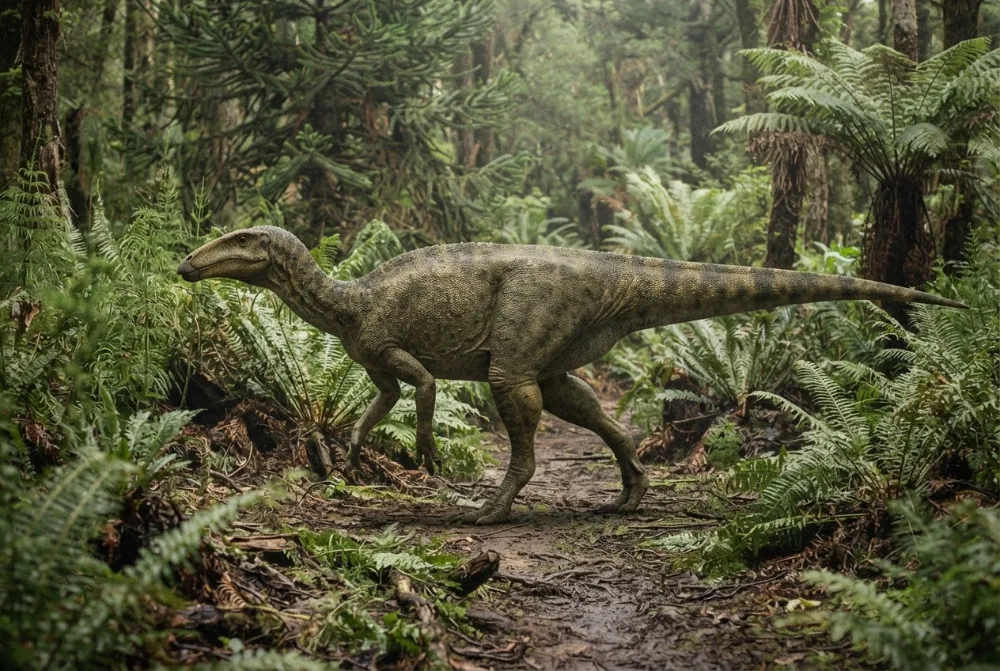
Cedrorestes is known from only one partial skeleton, including hip bones, a thighbone, and ribs.1
Its hip bone had a tall blade like Iguanodon but also a special bony bump that is usually seen in hadrosaurids, the duck-billed dinosaurs.1
The fossil was found scattered in mudstone and showed damage from weathering or trampling before it was buried.1
Cedrorestes lived alongside other dinosaurs like the armored Gastonia, the big predator Utahraptor, and the sauropod Cedarosaurus.1
The species name crichtoni honors Michael Crichton, the author of Jurassic Park.1
Scientists think Cedrorestes could move on two legs or on all fours, like many other iguanodontian dinosaurs.1
Ebibuuzo ebisinga okubuuzibwa ku Cedrorestes
?How big was Cedrorestes?
No one knows for sure because only a partial skeleton has been found. It was a large herbivore, but scientists need more fossils to estimate its size.1
?What did Cedrorestes eat?
It was a plant-eater. It had a beak for munching plants and could walk on two legs or on all fours to reach different kinds of vegetation.1
?Was Cedrorestes a dinosaur?
Yes, it was a dinosaur. It belonged to the group Iguanodontia, which are plant-eating ornithischian dinosaurs.1
?When did Cedrorestes live?
It lived during the Early Cretaceous Period, about 137 to 132 million years ago, in what is now Utah, USA.1
Eri abakugu mu dayinoso
- Erinnya lya ssaayansi
- Cedrorestes
- Yatuumibwa
- Gilpin et al. 20074
- Ekibinja
- Ezirya ebimera ez'omumwa ng'ogw'ekinyonyi
- Ekika / ekibinja
- Hadrosauroidea4
- Engabanya
- Ornithischia > Ornithopoda > Iguanodontia4
- Emyaka gy'enjazi
- emyaka obukadde 137 okutuuka ku 133 (Valanginian)4
- Ensengeka z'enjazi
- Cedar Mountain4
- Ensi
- Amerika4
- Ebisigalira ebyazuulibwa
- 1 mu The Paleobiology Database4
- Okuzuulibwa
- The fossil was found in 2001 near the top of the Yellow Cat Member in Utah. David Gilpin and colleagues named it Cedrorestes crichtoni in 2007.1
- Kikyakubaganyizibwako ebirowoozo
- Scientists are not sure whether Cedrorestes was an early hadrosaurid or a close relative of hadrosaurids, because the skeleton is incomplete.1
Ebituufu gye biva
- Cedrorestes (en.wikipedia.org)
- Cedrorestes Gilpin et al. 2007 - Encyclopedia of Life (eol.org)
- Cedrorestes crichtoni (es.wikipedia.org)
- Cedrorestes in The Paleobiology Database (CC BY 4.0): emyaka, ebifo, ensengeka z'enjazi, engabanya.
Buli kituufu ku lupapula luno kirina ennamba eraga ensibuko yaakyo. Bwe tuba nga tukoze ensobi, tusonyiwe, ffe tuli bawagizi ba dayinoso, so si magazini ya ssaayansi. Tubuulire ku [email protected] tujja kugitereeza.
 Rex alumwa enjala! Dino Wiki pulojekiti ya taata eri mutabani we ayagala ennyo dayinoso, ya bwereere, tewali bulango era tewali bikulondoola. Abakulu basobola okuwa Rex akantu ak'okulya okuyamba okugikuuma ku mutimbagano.Liisa Rex
Endala okuva mu kibinja kye kimu: Ezirya ebimera ez'omumwa ng'ogw'ekinyonyi
 IguanodonEzirya ebimera ez'omumwa ng'ogw'ekinyonyi
 TenontosaurusEzirya ebimera ez'omumwa ng'ogw'ekinyonyi
 ThescelosaurusEzirya ebimera ez'omumwa ng'ogw'ekinyonyi
 ZalmoxesEzirya ebimera ez'omumwa ng'ogw'ekinyonyi
 CamptosaurusEzirya ebimera ez'omumwa ng'ogw'ekinyonyi
 RhabdodonEzirya ebimera ez'omumwa ng'ogw'ekinyonyi
 Stegosaurus
 Archaeopteryx
 Giganotosaurus
 Microraptor
 Deinonychus
 Baryonyx