 Kwizi: Oli dayinoso ki?
 Olutalo lwa dayinoso
 Empaka z'emisinde gya dayinoso
 Emizannyo emitono egya dayinoso
 Alubaamu ya sitika
 Enkalala za dayinoso eza TOP
 Mpa ekyewuunyisa!
Zalmoxes
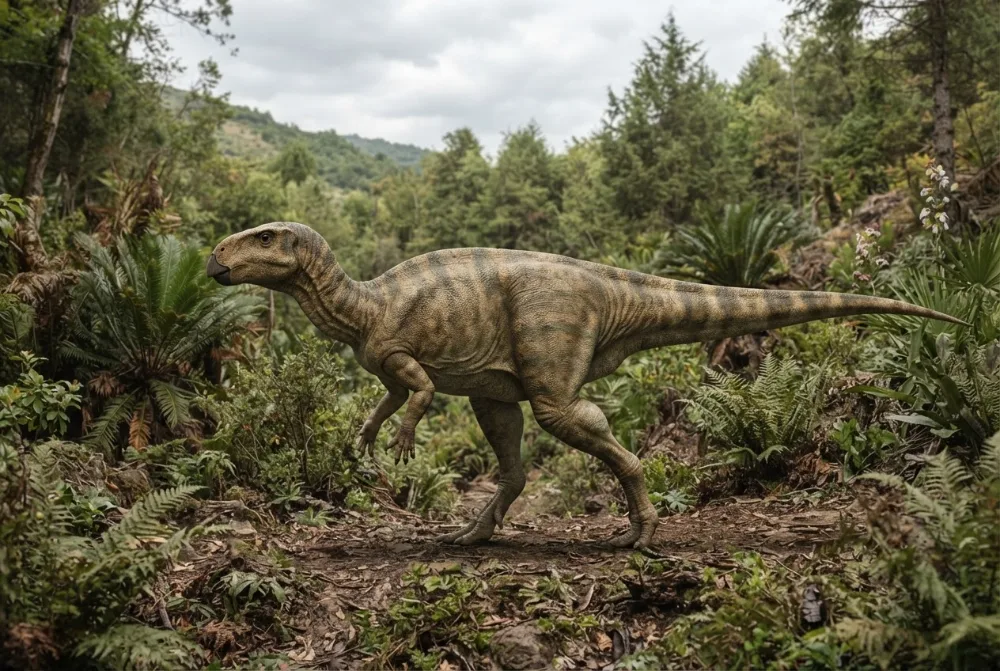
Zalmoxes was a small, plant-eating dinosaur that lived on an island called Hateg, in what is now Romania. It walked on two legs, had a beak, and ate tough plants. It was about the size of a small car, but some were even smaller!1
Yabeerawo ddi?
Yali munene atya?
Yali muwanvu kwenkana wa?
Yali mugulumivu kwenkana wa?
kuteebereza
Yali muzito kwenkana wa?
 obuwanvu ng'embwa 3, ennyindo ku mukira🍌obuwanvu ng'amenvu 16 nga gaddiriŋŋana
 obuzito ng'obwa kkapa 11 ab'awaka🍉obuzito ng'obwa wotamerooni 9🧸obuzito ng'obw'abaana 2.5 ab'omu nnasale🎒obuzito ng'obw'abaana b'essomero 1.5🏃yandidduse mita 100 mu sikonda 8.2 (omuntu asinga embiro yeetaaga 9.6)
Zalmoxes yali munene atya bw'ogeraageranya ku GGWE?
Kubala kwokka mu browser yo. Tewali kiterekebwa wadde okusindikibwa wonna.
Yali wa mbiro kwenkana wa?


Ebyewuunyisa
Zalmoxes had a slow growth rate and a long growth period, which is different from many other dinosaurs.1
It lived on an island, and scientists think it might have been smaller than its relatives because of island dwarfism, though some think it was already small.1
Zalmoxes had a large triangular head and a beak, which helped it eat tough plants.1
Fossils of Zalmoxes have been found in Austria and France too, not just Romania.4
One species of Zalmoxes, called Z. shqiperorum, was later reclassified as a different type of dinosaur, a ceratopsian, not an ornithopod.1
Zalmoxes was one of the most common vertebrates in Transylvania during the latest Cretaceous period.1
Ebibuuzo ebisinga okubuuzibwa ku Zalmoxes
?How big was Zalmoxes?
Zalmoxes was small, with adults of Z. robustus reaching about 2.5 metres (8.2 feet) long and weighing about 45 kilograms (99 pounds). An unnamed species grew to about 2.9 metres (9.5 feet) long.1
?What did Zalmoxes eat?
Zalmoxes ate tough, fibrous plants like soft shoots, horsetails, angiosperms, pteridophytes, and ferns. It had a beak and could process C3 plants.1
?When did Zalmoxes live?
Zalmoxes lived during the Maastrichtian age of the Late Cretaceous, about 70 to 66 million years ago. It was one of the most common vertebrates in Transylvania at that time.13
?Where was Zalmoxes found?
Fossils of Zalmoxes have been found in Romania, specifically in the Hateg Basin of Transylvania. Some sources also mention finds in Austria and France, but the main site is Romania.13
?Was Zalmoxes a dinosaur?
Yes, Zalmoxes was a dinosaur, specifically a small ornithopod. It is classified as a probable rhabdodontid ornithopod, not a ceratopsian, though one species was later reclassified.13
?Why was Zalmoxes small?
Scientists once thought Zalmoxes was small due to island dwarfism, but later studies suggest it was already close to the size of its ancestors. Some related species were larger or smaller due to island effects.1
Omumenyi w'enfumo
Enfumo: Some people think Zalmoxes was a dwarf dinosaur because it lived on an island.
Amazima: Scientists now think Zalmoxes was already small, and its larger relative Rhabdodon had island gigantism, while a smaller relative Mochlodon had island dwarfism.1
Eri abakugu mu dayinoso
- Erinnya lya ssaayansi
- Zalmoxes
- Yatuumibwa
- Weishampel et al. 20034
- Ekibinja
- Ezirya ebimera ez'omumwa ng'ogw'ekinyonyi
- Ekika / ekibinja
- Rhabdodontoidea4
- Engabanya
- Ornithischia > Ornithopoda > Iguanodontia4
- Emyaka gy'enjazi
- emyaka obukadde 84 okutuuka ku 66 (Campanian / Maastrichtian)4
- Ensengeka z'enjazi
- Sebeş, Sînpetru, Densuș-Ciula4
- Ensi
- Lomaniya, Awusitiriya, Bufalansa4
- Ebisigalira ebyazuulibwa
- 44 mu The Paleobiology Database4
- Era emanyiddwa nga
- Onychosaurus (amannya ag'edda kati gabalibwa ng'ekisolo kye kimu)4
- Okuzuulibwa
- The first fossils were named Mochlodon robustus by Baron Franz Nopcsa in 1899. In 2003, scientists renamed them Zalmoxes robustus after studying new remains.12
- Kikyakubaganyizibwako ebirowoozo
- Scientists still debate whether Zalmoxes was a dwarf species or just naturally small, and how it is related to other similar dinosaurs.1
Ebituufu gye biva
- Zalmoxes (en.wikipedia.org)
- Osteology and phylogeny of Zalmoxes (n. g.), an unusual Euornithopod dinosaur from the latest Cretaceous of Romania (tandfonline.com)
- Zalmoxes | Natural History Museum (nhm.ac.uk)
- Zalmoxes in The Paleobiology Database (CC BY 4.0): emyaka, ebifo, ensengeka z'enjazi, engabanya.
Buli kituufu ku lupapula luno kirina ennamba eraga ensibuko yaakyo. Bwe tuba nga tukoze ensobi, tusonyiwe, ffe tuli bawagizi ba dayinoso, so si magazini ya ssaayansi. Tubuulire ku [email protected] tujja kugitereeza.
 Rex alumwa enjala! Dino Wiki pulojekiti ya taata eri mutabani we ayagala ennyo dayinoso, ya bwereere, tewali bulango era tewali bikulondoola. Abakulu basobola okuwa Rex akantu ak'okulya okuyamba okugikuuma ku mutimbagano.Liisa Rex
Endala okuva mu kibinja kye kimu: Ezirya ebimera ez'omumwa ng'ogw'ekinyonyi
 IguanodonEzirya ebimera ez'omumwa ng'ogw'ekinyonyi
 TenontosaurusEzirya ebimera ez'omumwa ng'ogw'ekinyonyi
 ThescelosaurusEzirya ebimera ez'omumwa ng'ogw'ekinyonyi
 CamptosaurusEzirya ebimera ez'omumwa ng'ogw'ekinyonyi
 RhabdodonEzirya ebimera ez'omumwa ng'ogw'ekinyonyi
 NanosaurusEzirya ebimera ez'omumwa ng'ogw'ekinyonyi
 Tyrannosaurus
 Triceratops
 Velociraptor
 Spinosaurus
 Ankylosaurus
 Parasaurolophus