 Kwizi: Oli dayinoso ki?
 Olutalo lwa dayinoso
 Empaka z'emisinde gya dayinoso
 Emizannyo emitono egya dayinoso
 Alubaamu ya sitika
 Enkalala za dayinoso eza TOP
 Mpa ekyewuunyisa!
Diuqin
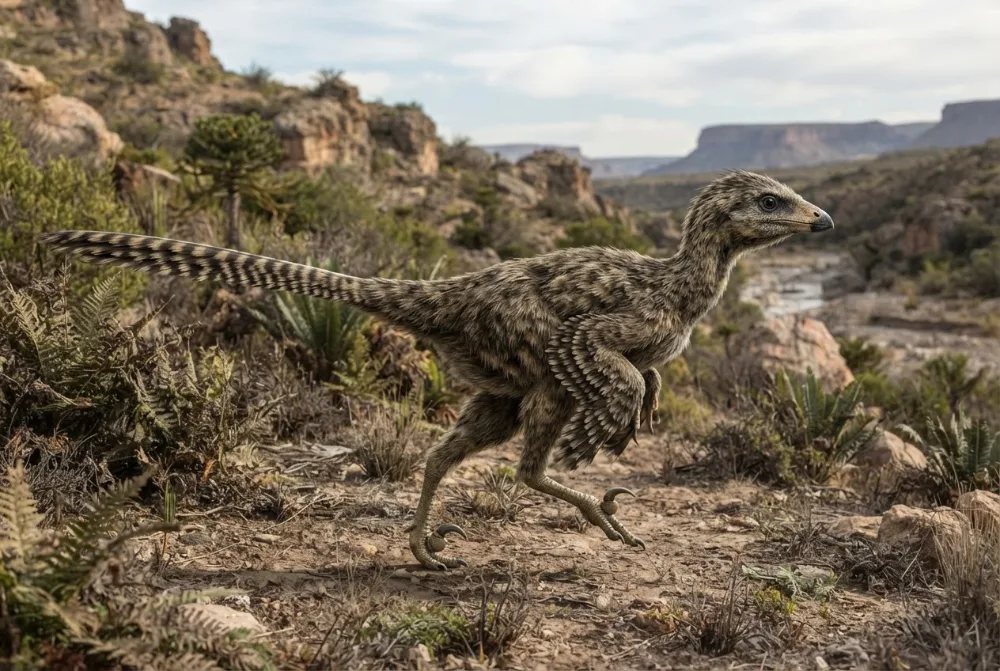
Diuqin was a feathered, bird-like dinosaur that lived about 85 million years ago in what is now Argentina. It was a fast, meat-eating hunter with sharp claws and a beak. Scientists only know it from a few bones, but those bones tell an exciting story!1
Yabeerawo ddi?
Yali munene atya?
Yali muwanvu kwenkana wa?
Yali mugulumivu kwenkana wa?
kuteebereza
Yali muzito kwenkana wa?

 obuwanvu ng'embwa 3, ennyindo ku mukira🍌obuwanvu ng'amenvu 16 nga gaddiriŋŋana🍉obuzito ng'obwa wotamerooni 7🏃yandidduse mita 100 mu sikonda 7.7 (omuntu asinga embiro yeetaaga 9.6)
Diuqin yali munene atya bw'ogeraageranya ku GGWE?
Kubala kwokka mu browser yo. Tewali kiterekebwa wadde okusindikibwa wonna.
Yali wa mbiro kwenkana wa?


Ebyewuunyisa
Diuqin belongs to a group called unenlagiines, which were bird-like raptors with long arms and feathers.1
Its name comes from the Mapuche language and means 'bird of prey'.1
The only known Diuqin fossil was found on a narrow strip of land between two lakes in Argentina.1
Diuqin lived during the Santonian age, about 85 million years ago, filling a 15-million-year gap in the fossil record of its group.1
The humerus bone of Diuqin has small round holes that scientists think were bite marks from a crocodile, mammal, or another dinosaur.1
Diuqin is known from only a few bones: parts of the backbone, a nearly complete left upper arm bone, and a few fragments.1
Ebibuuzo ebisinga okubuuzibwa ku Diuqin
?What did Diuqin eat?
Diuqin was a meat-eating hunter, so it ate other animals. Its sharp claws and beak helped it catch prey.3
?How big was Diuqin?
Scientists don't know exactly because only a few bones have been found. It was probably small and bird-like, but its full size is still a guess.3
?Did Diuqin have feathers?
Yes, Diuqin was a feathered dinosaur. It belonged to a group of bird-like raptors that had long arms and feathers.3
?Where was Diuqin found?
Diuqin was found in Argentina, on a narrow strip of land between two lakes in Patagonia. It lived there about 85 million years ago.3
Eri abakugu mu dayinoso
- Erinnya lya ssaayansi
- Diuqin
- Yatuumibwa
- Porfiri et al. 20244
- Ekibinja
- Raputa
- Ekika / ekibinja
- Dromaeosauridae4
- Engabanya
- Theropoda > Dromaeosauridae4
- Emyaka gy'enjazi
- emyaka obukadde 86 okutuuka ku 84 (Santonian)4
- Ensengeka z'enjazi
- Bajo de la Carpa4
- Ensi
- Arigentina4
- Ebisigalira ebyazuulibwa
- 1 mu The Paleobiology Database4
- Okuzuulibwa
- Diuqin was named in 2024 by a team of scientists including J. D. Porfiri. The fossil was found on an isthmus between Lago Barreales and Lago Mari Menuco in Neuquén Province, Argentina.1
- Kikyakubaganyizibwako ebirowoozo
- Scientists are not sure exactly where Diuqin fits on the dinosaur family tree. It might be a type of unenlagiine, but some studies place it in other groups.1
Ebituufu gye biva
- Diuqin lechiguanae gen. et sp. nov., a new unenlagiine (Theropoda: Paraves) from the Bajo de la Carpa Formation (Neuquén Group, Upper Cretaceous) of Neuquén Province, Patagonia, Argentina | BMC Ecology and Evolution | Springer Nature Link (link.springer.com)
- Diuqin lechiguanae | Dinosaur Database by DinoAnimals.com (dinoanimals.com)
- Diuqin (en.wikipedia.org)
- Diuqin in The Paleobiology Database (CC BY 4.0): emyaka, ebifo, ensengeka z'enjazi, engabanya.
Buli kituufu ku lupapula luno kirina ennamba eraga ensibuko yaakyo. Bwe tuba nga tukoze ensobi, tusonyiwe, ffe tuli bawagizi ba dayinoso, so si magazini ya ssaayansi. Tubuulire ku [email protected] tujja kugitereeza.
 Rex alumwa enjala! Dino Wiki pulojekiti ya taata eri mutabani we ayagala ennyo dayinoso, ya bwereere, tewali bulango era tewali bikulondoola. Abakulu basobola okuwa Rex akantu ak'okulya okuyamba okugikuuma ku mutimbagano.Liisa Rex
 Velociraptor
 Microraptor
 Deinonychus
 Asiamericana
 Richardoestesia
 Saurornitholestes
 Tyrannosaurus
 Triceratops
 Spinosaurus
 Ankylosaurus
 Parasaurolophus
 Pteranodon