 Kwizi: Oli dayinoso ki?
 Olutalo lwa dayinoso
 Empaka z'emisinde gya dayinoso
 Emizannyo emitono egya dayinoso
 Alubaamu ya sitika
 Enkalala za dayinoso eza TOP
 Mpa ekyewuunyisa!
Duriavenator
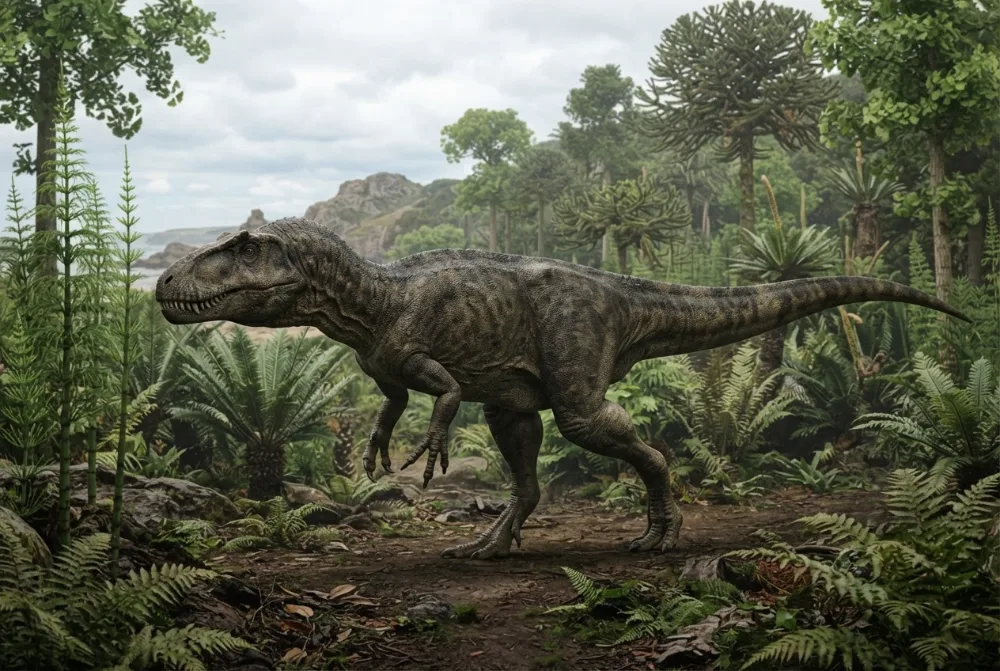
Duriavenator was a meat-eating dinosaur that lived in what is now England about 168 million years ago. It was a medium-sized predator with a big head and strong arms. Scientists think it hunted other dinosaurs like a sneaky ambush predator.1
Yabeerawo ddi?
Yali munene atya?
Yali muwanvu kwenkana wa?
Yali mugulumivu kwenkana wa?
kuteebereza
Yali muzito kwenkana wa?
 obuwanvu ng'embwa 7, ennyindo ku mukira🍌obuwanvu ng'amenvu 39 nga gaddiriŋŋana🍉obuzito ng'obwa wotamerooni 200🧸obuzito ng'obw'abaana 53 ab'omu nnasale🎒obuzito ng'obw'abaana b'essomero 31🐻❄️obuzito ng'obwa ddubu enjeru 2🏃yandidduse mita 100 mu sikonda 10 (omuntu asinga embiro yeetaaga 9.6)
Duriavenator yali munene atya bw'ogeraageranya ku GGWE?
Kubala kwokka mu browser yo. Tewali kiterekebwa wadde okusindikibwa wonna.
Yali wa mbiro kwenkana wa?


Ebyewuunyisa
Duriavenator was first thought to be a Megalosaurus, but scientists later gave it its own name in 2008.1
The only known fossils of Duriavenator are parts of its skull and jaws, found in a quarry in 1882.1
Duriavenator had a deep groove on its upper jaw bone with many air-filled holes, which is a unique feature.1
It had about 4 teeth in the front of its upper jaw, 14 to 16 in the back of the upper jaw, and 14 to 15 in the lower jaw.1
The front teeth of Duriavenator were longer and pointed forward, which may have helped it grab food.1
Duriavenator lived during the Middle Jurassic period, about 168 million years ago, making it one of the oldest known tetanuran theropods.1
Ebibuuzo ebisinga okubuuzibwa ku Duriavenator
?How big was Duriavenator?
It was about 5 to 7 metres long (16 to 23 feet) and weighed around 1 tonne (2,200 pounds). That is about as heavy as a small car.1
?What did Duriavenator eat?
It was a meat-eater that probably hunted other dinosaurs, like sauropods and stegosaurs. Scientists think it was an ambush predator.1
?When did Duriavenator live?
It lived about 168 million years ago, during the Middle Jurassic period. That is long before T. rex appeared.1
?Where was Duriavenator found?
Its only known fossils were discovered in a quarry near Sherborne in Dorset, England, in 1882. They are now at the Natural History Museum in London.1
Eri abakugu mu dayinoso
- Erinnya lya ssaayansi
- Duriavenator
- Yatuumibwa
- Benson 20082
- Ekibinja
- Dayinoso ezirya ennyama
- Ekika / ekibinja
- Megalosauridae2
- Engabanya
- Theropoda2
- Emyaka gy'enjazi
- emyaka obukadde 169 okutuuka ku 168 (Bajocian)2
- Ensengeka z'enjazi
- Upper Inferior Oolite2
- Ensi
- Bungereza2
- Ebisigalira ebyazuulibwa
- 1 mu The Paleobiology Database2
- Okuzuulibwa
- In 1882, Edward Cleminshaw found skull bones near Sherborne, England. The fossils were first called Megalosaurus, but in 2008 Roger Benson renamed them Duriavenator.1
- Kikyakubaganyizibwako ebirowoozo
- Scientists are not sure exactly how big Duriavenator was because only a few skull bones have been found. The size estimates are based on related dinosaurs.1
Ebituufu gye biva
- Duriavenator (en.wikipedia.org)
- Duriavenator in The Paleobiology Database (CC BY 4.0): emyaka, ebifo, ensengeka z'enjazi, engabanya.
Buli kituufu ku lupapula luno kirina ennamba eraga ensibuko yaakyo. Bwe tuba nga tukoze ensobi, tusonyiwe, ffe tuli bawagizi ba dayinoso, so si magazini ya ssaayansi. Tubuulire ku [email protected] tujja kugitereeza.
 Rex alumwa enjala! Dino Wiki pulojekiti ya taata eri mutabani we ayagala ennyo dayinoso, ya bwereere, tewali bulango era tewali bikulondoola. Abakulu basobola okuwa Rex akantu ak'okulya okuyamba okugikuuma ku mutimbagano.Liisa Rex
 Allosaurus
 Carnotaurus
 Dilophosaurus
 Giganotosaurus
 Compsognathus
 Paronychodon
 Ichthyosaurus
 Khudiakovia
 Ophthalmosaurus
 Pterodactylus
 Peloneustes
 Rhamphocephalus