 Kwizi: Oli dayinoso ki?
 Olutalo lwa dayinoso
 Empaka z'emisinde gya dayinoso
 Emizannyo emitono egya dayinoso
 Alubaamu ya sitika
 Enkalala za dayinoso eza TOP
 Mpa ekyewuunyisa!
Pterodactylus
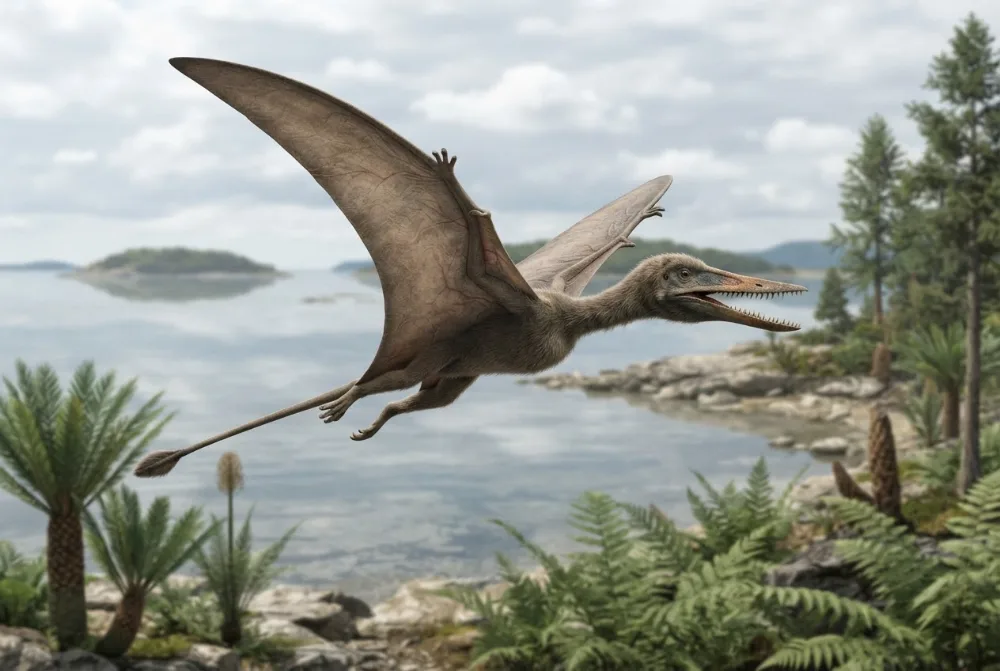
Pterodactylus was one of the first flying reptiles ever discovered. It lived during the Late Jurassic period, about 150 million years ago, and had wings made of skin and muscle that stretched from its long fourth finger to its back legs. It was a small pterosaur that probably ate insects and other small animals.12
Yabeerawo ddi?
Yali munene atya?
Yali muwanvu kwenkana wa?
Yali muzito kwenkana wa?
 obuwanvu nga kkapa 2 ab'awaka, ennyindo ku mukira🍌obuwanvu ng'amenvu 6 nga gaddiriŋŋanaobuzito ng'obwa kkapa ow'awaka🍌obuzito ng'obw'amenvu 17⚽yandibuuse okusomoka ekisaawe ky'omupiira kyonna mu sikonda 9
Pterodactylus yali munene atya bw'ogeraageranya ku GGWE?
Kubala kwokka mu browser yo. Tewali kiterekebwa wadde okusindikibwa wonna.
Yali wa mbiro kwenkana wa?


Ebyewuunyisa
Pterodactylus was the first pterosaur ever named and identified as a flying reptile, in 1809 by French scientist Georges Cuvier.1
Its fossils are often found in the Solnhofen limestone of Germany, which preserved soft body parts like jellyfish and feathers.12
Pterodactylus lived alongside other pterosaurs such as Rhamphorhynchus and Anurognathus, as well as the early bird Archaeopteryx.1
Unlike birds, pterosaurs like Pterodactylus were reptiles and their wings were made of skin and muscle, not feathers.2
Pterodactylus had a relatively high bite force for its size, which helped it crush the shells of invertebrates.1
The name Pterodactylus means 'winged finger' because its wing was supported by one very long finger.1
Ebibuuzo ebisinga okubuuzibwa ku Pterodactylus
?How big was Pterodactylus?
Pterodactylus was a small pterosaur with an estimated adult wingspan of about 1.04 metres (3.4 feet).1
?What did Pterodactylus eat?
Pterodactylus was a generalist carnivore that probably ate invertebrates and small vertebrates. It had a relatively high bite force that helped it crush the shells of invertebrates.1
?When did Pterodactylus live?
Pterodactylus lived during the Late Jurassic period, about 150.8 to 148.5 million years ago.1
?Where were Pterodactylus fossils found?
Most Pterodactylus fossils have been found in the Solnhofen limestone of Bavaria, Germany. A few fragmentary remains have also been tentatively identified from elsewhere in Europe and Africa.1
?Was Pterodactylus a dinosaur?
No, Pterodactylus was not a dinosaur. It was a pterosaur, a type of flying reptile that lived at the same time as dinosaurs.12
?How did Pterodactylus fly?
Pterodactylus had wings made of skin and muscle that stretched from its very long fourth finger to its hind legs. The wings were supported by fibres inside and ridges on the outside.1
?Why is it called Pterodactylus?
The name Pterodactylus means 'winged finger' because its wing was supported by one very long finger.1
?Who discovered Pterodactylus?
The first Pterodactylus fossil was described by Italian scientist Cosimo Alessandro Collini in 1784. It was later named Pterodactylus by French scientist Georges Cuvier in 1809.1
?Did Pterodactylus have teeth?
Yes, Pterodactylus had teeth. The shape, size and arrangement of its teeth show it was a carnivore that ate small animals.1
?What animals lived with Pterodactylus?
Pterodactylus lived alongside other small pterosaurs like Rhamphorhynchus and Anurognathus, as well as the early bird Archaeopteryx and small dinosaurs like Compsognathus.1
Omumenyi w'enfumo
Enfumo: Many people think all pterosaurs are called pterodactyls and that they are dinosaurs.
Amazima: Pterodactylus is just one genus of pterosaur, and pterosaurs are flying reptiles, not dinosaurs.2
Eri abakugu mu dayinoso
- Erinnya lya ssaayansi
- Pterodactylus
- Yatuumibwa
- Cuvier 18094
- Ekibinja
- Ebyewalula ebibuuka
- Ekika / ekibinja
- Monofenestrata4
- Engabanya
- Pterosauria4
- Emyaka gy'enjazi
- emyaka obukadde 201 okutuuka ku 133 (Hettangian / Valanginian)4
- Ensengeka z'enjazi
- Solnhofener Plattenkalk, Solnhofen, Tendaguru4
- Ensi
- Bugirimaani, Tanzaniya, Bufalansa, Potugaali, Bungereza4
- Ebisigalira ebyazuulibwa
- 15 mu The Paleobiology Database4
- Era emanyiddwa nga
- Diopecephalus, Macrotrachelus, Pterotherium (amannya ag'edda kati gabalibwa ng'ekisolo kye kimu)4
- Okuzuulibwa
- The first known pterosaur fossil was discovered in the Solnhofen limestone of Germany in 1784. It was later named Pterodactylus by Georges Cuvier in 1809, making it the first pterosaur ever scientifically described.12
- Kikyakubaganyizibwako ebirowoozo
- Scientists still debate exactly how many species of Pterodactylus existed, with some suggesting that many fossils belong to just one species, Pterodactylus antiquus.1
Ebituufu gye biva
- Pterodactylus (en.wikipedia.org)
- Pterosaurs: The truth about these ‘flying dinosaurs’ | Natural History Museum (nhm.ac.uk)
- Pterodactyl: The Misunderstood Pterosaur | Strange Animals (strangeanimals.info)
- Pterodactylus in The Paleobiology Database (CC BY 4.0): emyaka, ebifo, ensengeka z'enjazi, engabanya.
Buli kituufu ku lupapula luno kirina ennamba eraga ensibuko yaakyo. Bwe tuba nga tukoze ensobi, tusonyiwe, ffe tuli bawagizi ba dayinoso, so si magazini ya ssaayansi. Tubuulire ku [email protected] tujja kugitereeza.
 Rex alumwa enjala! Dino Wiki pulojekiti ya taata eri mutabani we ayagala ennyo dayinoso, ya bwereere, tewali bulango era tewali bikulondoola. Abakulu basobola okuwa Rex akantu ak'okulya okuyamba okugikuuma ku mutimbagano.Liisa Rex
 Pteranodon
 Quetzalcoatlus
 Dorygnathus
 Rhamphorhynchus
 Anhanguera
 Eudimorphodon
 Ichthyosaurus
 Khudiakovia
 Ophthalmosaurus
 Peloneustes
 Gongbusaurus
 Shunosaurus