 Kwizi: Oli dayinoso ki?
 Olutalo lwa dayinoso
 Empaka z'emisinde gya dayinoso
 Emizannyo emitono egya dayinoso
 Alubaamu ya sitika
 Enkalala za dayinoso eza TOP
 Mpa ekyewuunyisa!
Yabeerawo ddi?

Yali munene atya?
Yali muwanvu kwenkana wa?
Yali muzito kwenkana wa?
Eoalulavis yali munene atya bw'ogeraageranya ku GGWE?
Kubala kwokka mu browser yo. Tewali kiterekebwa wadde okusindikibwa wonna.
Yali wa mbiro kwenkana wa?


Ebyewuunyisa
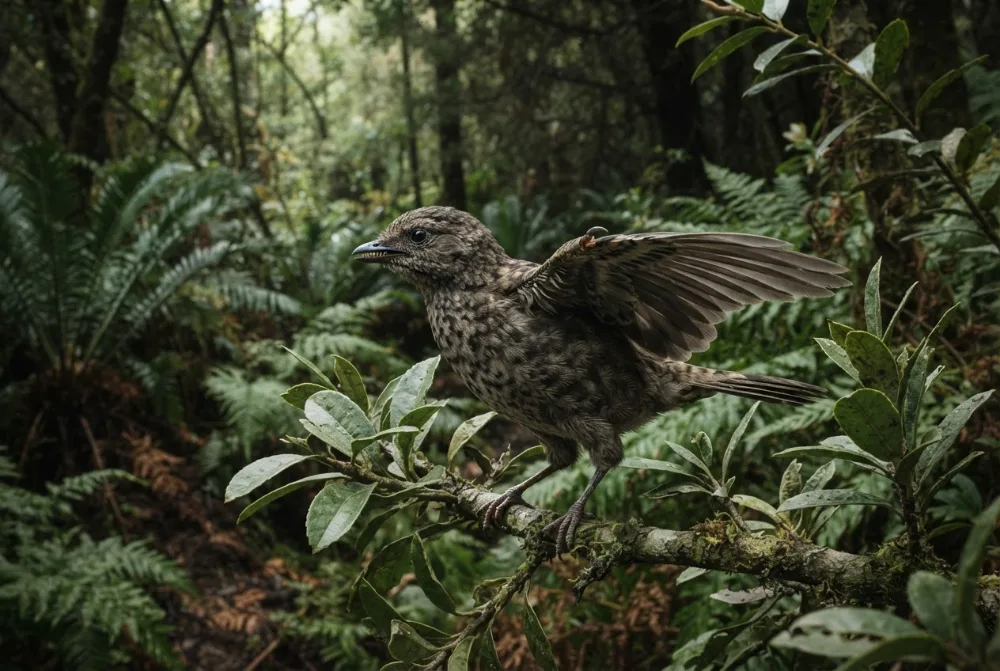
Eoalulavis was about the size of a European goldfinch, weighing only about 45 grams (1.6 ounces).1
Its wingspan, including feathers, was only about 26 centimeters (10 inches), similar to a modern kingfisher.1
The name Eoalulavis means 'dawn alula bird' because it is one of the earliest birds known to have an alula, or 'bastard wing'.1
Scientists found the remains of its last meal inside the fossil: concentrated pieces of crustacean shells.1
Eoalulavis had a very thin, spear-shaped breastbone, unlike the wide breastbones of most early birds.1
It likely flew in a bounding style, flapping hard then tucking its wings to dive, like modern songbirds and woodpeckers.1
The fossil was preserved with feathers and soft tissues because it was buried quickly in a lake with special conditions.1
Ebibuuzo ebisinga okubuuzibwa ku Eoalulavis
?What did Eoalulavis eat?
It ate small crustaceans. Scientists found pieces of crustacean shells in its fossilized belly, its last meal.1
?How big was Eoalulavis?
It was tiny, about the size of a European goldfinch. It weighed about 45 grams and had a wingspan of about 26 centimeters.1
?Could Eoalulavis fly well?
Yes, it was a good flier. It had an alula for slow, sharp turns and likely used bounding flight, flapping hard then diving with wings folded, like modern songbirds.1
?Is Eoalulavis a dinosaur?
Yes, it is a bird, and birds are a type of dinosaur called avialan dinosaurs. It lived about 125 million years ago.1
Eri abakugu mu dayinoso
- Erinnya lya ssaayansi
- Eoalulavis
- Yatuumibwa
- Sanz et al. 19962
- Ekibinja
- Ebinyonyi eby'olubereberye
- Ekika / ekibinja
- Enantiornithes2
- Engabanya
- Theropoda > Avialae2
- Emyaka gy'enjazi
- emyaka obukadde 126 okutuuka ku 121 (Barremian)2
- Ensengeka z'enjazi
- La Huérguina2
- Ensi
- Sipeyini2
- Ebisigalira ebyazuulibwa
- 1 mu The Paleobiology Database2
- Okuzuulibwa
- Eoalulavis was named in 1996 by Sanz and colleagues based on a single fossil skeleton found at Las Hoyas in Spain.12
- Kikyakubaganyizibwako ebirowoozo
- Scientists are not sure what its hind legs looked like because no leg bones have been found.1
Ebituufu gye biva
- Eoalulavis (en.wikipedia.org)
- Eoalulavis in The Paleobiology Database (CC BY 4.0): emyaka, ebifo, ensengeka z'enjazi, engabanya.
Buli kituufu ku lupapula luno kirina ennamba eraga ensibuko yaakyo. Bwe tuba nga tukoze ensobi, tusonyiwe, ffe tuli bawagizi ba dayinoso, so si magazini ya ssaayansi. Tubuulire ku [email protected] tujja kugitereeza.
 Rex alumwa enjala! Dino Wiki pulojekiti ya taata eri mutabani we ayagala ennyo dayinoso, ya bwereere, tewali bulango era tewali bikulondoola. Abakulu basobola okuwa Rex akantu ak'okulya okuyamba okugikuuma ku mutimbagano.Liisa Rex
 Archaeopteryx
 Hesperornis
 Ichthyornis
 Baptornis
 Jurapteryx
 Gobipteryx
 Stegosaurus
 Iguanodon
 Giganotosaurus
 Microraptor
 Deinonychus
 Baryonyx