 Kwizi: Oli dayinoso ki?
 Olutalo lwa dayinoso
 Empaka z'emisinde gya dayinoso
 Emizannyo emitono egya dayinoso
 Alubaamu ya sitika
 Enkalala za dayinoso eza TOP
 Mpa ekyewuunyisa!
Eolambia
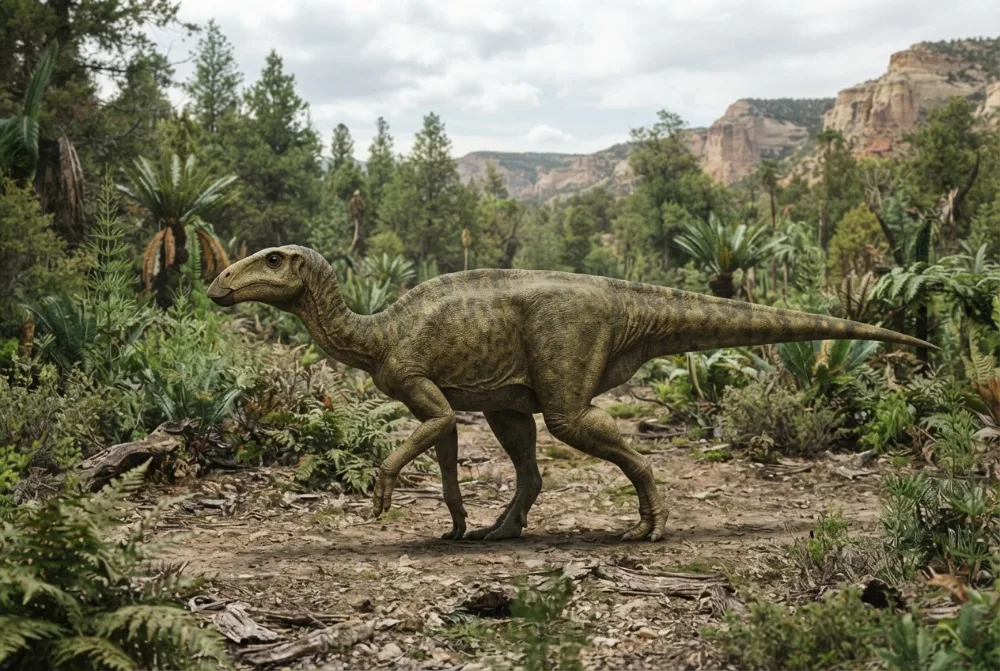
Eolambia was a plant-eating dinosaur that lived in what is now Utah, USA, about 96 million years ago. It had a beak and lots of teeth for chewing tough plants. It was an early cousin of the duck-billed dinosaurs.15
Yabeerawo ddi?
Yali munene atya?
Yali muwanvu kwenkana wa?
Yali mugulumivu kwenkana wa?
Yali muzito kwenkana wa?
 obuwanvu ng'embwa 7, ennyindo ku mukira🍌obuwanvu ng'amenvu 37 nga gaddiriŋŋana🍉obuzito ng'obwa wotamerooni 260🧸obuzito ng'obw'abaana 68 ab'omu nnasale🎒obuzito ng'obw'abaana b'essomero 41🐻❄️obuzito ng'obwa ddubu enjeru 3🏃yandidduse mita 100 mu sikonda 11 (omuntu asinga embiro yeetaaga 9.6)
Eolambia yali munene atya bw'ogeraageranya ku GGWE?
Kubala kwokka mu browser yo. Tewali kiterekebwa wadde okusindikibwa wonna.
Yali wa mbiro kwenkana wa?


Ebyewuunyisa
Eolambia is known from hundreds of bones, including both adults and babies, so scientists have a good picture of its skeleton.1
The first Eolambia fossil was found by Carole and Ramal Jones in 1993, and the species name honors Carole.1
Young Eolambia were hunted by big crocodile-like reptiles that lived in the lakes, but adults were too big for them.1
Grown-up Eolambia, at least eight or nine years old, were hunted by large meat-eating dinosaurs like Siats.1
Eolambia lived in a floodplain with lakes that changed water levels over about 21,000-year cycles.1
The name Eolambia was suggested by paleoartist Michael Skrepnick, replacing an earlier informal name.1
Ebibuuzo ebisinga okubuuzibwa ku Eolambia
?How big was Eolambia?
About 6 metres (20 feet) long. That is about as long as a large van.1
?What does the name Eolambia mean?
It means 'dawn lambeosaurine', because scientists first thought it was an early member of the lambeosaurine group.1
?Was Eolambia a hadrosaur?
No, it is a hadrosauroid, an early cousin of the true duck-billed dinosaurs (hadrosaurs).1
?How old could Eolambia get?
Scientists estimate it lived at least 8 to 9 years, based on a subadult specimen.4
Omumenyi w'enfumo
Enfumo: Eolambia was a duck-billed dinosaur like later hadrosaurs.
Amazima: Eolambia was an early relative of hadrosaurs, but it was not a true hadrosaurid. Scientists place it outside the hadrosaurid family.2
Eri abakugu mu dayinoso
- Erinnya lya ssaayansi
- Eolambia
- Yatuumibwa
- Kirkland 19985
- Ekibinja
- Ezirya ebimera ez'omumwa ng'ogw'ekinyonyi
- Ekika / ekibinja
- Hadrosauroidea5
- Engabanya
- Ornithischia > Ornithopoda > Iguanodontia5
- Emyaka gy'enjazi
- emyaka obukadde 121 okutuuka ku 94 (Aptian / Cenomanian)5
- Ensengeka z'enjazi
- Cedar Mountain5
- Ensi
- Amerika5
- Ebisigalira ebyazuulibwa
- 12 mu The Paleobiology Database5
- Okuzuulibwa
- The first Eolambia fossils were found in 1993 by Carole and Ramal Jones in Utah. Paleontologist James Kirkland named it Eolambia caroljonesa in 1998.1
- Kikyakubaganyizibwako ebirowoozo
- Scientists debate exactly where Eolambia sits on the family tree, with some originally thinking it was a lambeosaurine hadrosaurid, but later studies place it as a more basal hadrosauroid.2
Ebituufu gye biva
- Eolambia (en.wikipedia.org)
- Osteology of the Basal Hadrosauroid Eolambia caroljonesa (Dinosauria: Ornithopoda) from the Cedar Mountain Formation of Utah | PLOS One (journals.plos.org)
- Eolambia caroljonesa | Dinosaur Database by DinoAnimals.com (dinoanimals.com)
- Anatomy, taphonomy, and phylogenetic implications of a new specimen of Eolambia caroljonesa (Dinosauria: Ornithopoda) from the Cedar Mountain Formation, Utah, USA (pmc.ncbi.nlm.nih.gov)
- Eolambia in The Paleobiology Database (CC BY 4.0): emyaka, ebifo, ensengeka z'enjazi, engabanya.
Buli kituufu ku lupapula luno kirina ennamba eraga ensibuko yaakyo. Bwe tuba nga tukoze ensobi, tusonyiwe, ffe tuli bawagizi ba dayinoso, so si magazini ya ssaayansi. Tubuulire ku [email protected] tujja kugitereeza.
 Rex alumwa enjala! Dino Wiki pulojekiti ya taata eri mutabani we ayagala ennyo dayinoso, ya bwereere, tewali bulango era tewali bikulondoola. Abakulu basobola okuwa Rex akantu ak'okulya okuyamba okugikuuma ku mutimbagano.Liisa Rex
Endala okuva mu kibinja kye kimu: Ezirya ebimera ez'omumwa ng'ogw'ekinyonyi
 IguanodonEzirya ebimera ez'omumwa ng'ogw'ekinyonyi
 TenontosaurusEzirya ebimera ez'omumwa ng'ogw'ekinyonyi
 ThescelosaurusEzirya ebimera ez'omumwa ng'ogw'ekinyonyi
 ZalmoxesEzirya ebimera ez'omumwa ng'ogw'ekinyonyi
 CamptosaurusEzirya ebimera ez'omumwa ng'ogw'ekinyonyi
 RhabdodonEzirya ebimera ez'omumwa ng'ogw'ekinyonyi
 Stegosaurus
 Archaeopteryx
 Giganotosaurus
 Microraptor
 Deinonychus
 Baryonyx