 Kwizi: Oli dayinoso ki?
 Olutalo lwa dayinoso
 Empaka z'emisinde gya dayinoso
 Emizannyo emitono egya dayinoso
 Alubaamu ya sitika
 Enkalala za dayinoso eza TOP
 Mpa ekyewuunyisa!
Gongshuilong
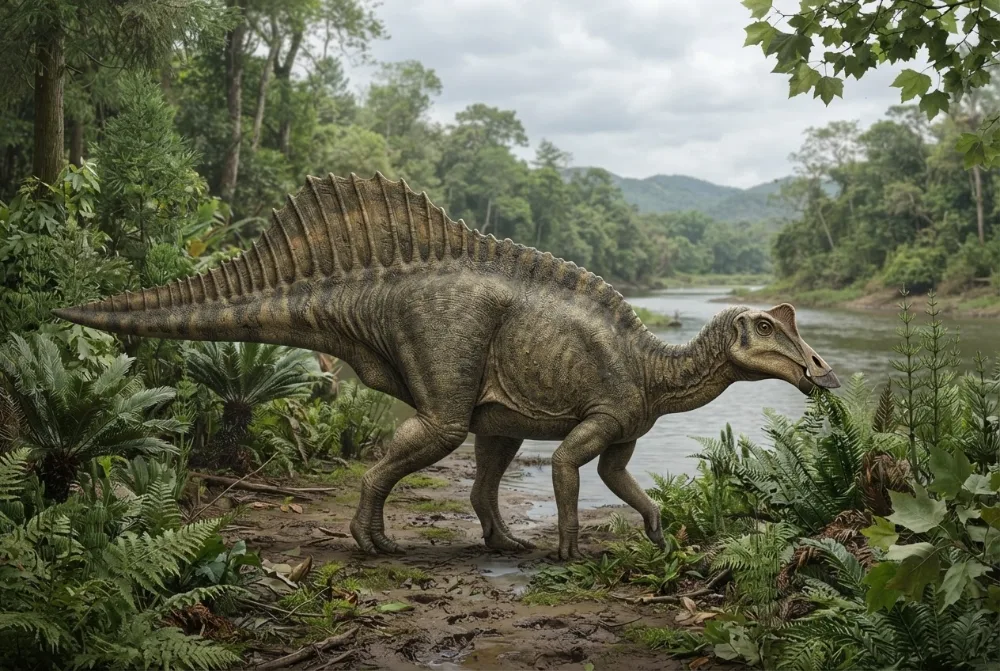
Gongshuilong was a duck-billed dinosaur that lived in China near the end of the Age of Dinosaurs. It had a tall, sail-like tail made of extra-long bones, which made it look really cool. This plant-eater is special because it is the first named hadrosaur from South China!1
Yabeerawo ddi?
Yali munene atya?
Yali muwanvu kwenkana wa?
Yali mugulumivu kwenkana wa?
kuteebereza
 obuwanvu ng'embwa 7, ennyindo ku mukira🍌obuwanvu ng'amenvu 39 nga gaddiriŋŋana🏃yandidduse mita 100 mu sikonda 13 (omuntu asinga embiro yeetaaga 9.6)
Gongshuilong yali munene atya bw'ogeraageranya ku GGWE?
Kubala kwokka mu browser yo. Tewali kiterekebwa wadde okusindikibwa wonna.
Yali wa mbiro kwenkana wa?


Ebyewuunyisa
Gongshuilong's tail bones were super long, making the tail look like a sail. The neural spines were 8.5 times as tall as the bones they attached to, which is unique among all iguanodontian dinosaurs.1
It was a medium-sized hadrosaur, about 7 metres (23 feet) long, which is about as long as a small school bus.1
Gongshuilong is the second brachylophosaurin found in Asia, after Wulagasaurus. Most of its close relatives lived in North America, so it helps show that this group might have started in Asia.1
The fossils were found in a bonebed with at least two individuals, because scientists found two left lower jaws, two shoulder blades, and two shin bones of different sizes.1
Its name, Gongshuilong, comes from the Gong River near where it was found, and 'long' means dragon in Chinese.1
The species name 'fanwei' refers to the sail-like tail, because 'fan' means sail in Chinese.1
Ebibuuzo ebisinga okubuuzibwa ku Gongshuilong
?What did Gongshuilong eat?
Gongshuilong was a plant-eater, like other duck-billed dinosaurs. It used its beak and many teeth to chew plants.1
?How big was Gongshuilong?
Gongshuilong was a medium sized hadrosaur, about 7 metres (23 feet) long, roughly the length of a small school bus.1
?When did Gongshuilong live?
Gongshuilong lived during the Late Cretaceous period, specifically in the Maastrichtian age, near the end of the Age of Dinosaurs.1
Omumenyi w'enfumo
Enfumo: Some people think all duck-billed dinosaurs lived in North America.
Amazima: Gongshuilong shows that duck-billed dinosaurs also lived in Asia, and it is the first named hadrosaur from South China.1
Eri abakugu mu dayinoso
- Erinnya lya ssaayansi
- Gongshuilong
- Yatuumibwa
- Yao et al. 20263
- Ekibinja
- Ez'emimwa gy'embaata
- Ekika / ekibinja
- Hadrosauridae3
- Engabanya
- Ornithischia > Ornithopoda > Iguanodontia > Hadrosauridae3
- Emyaka gy'enjazi
- emyaka obukadde 72 okutuuka ku 66 (Maastrichtian)3
- Ensengeka z'enjazi
- Lianhe3
- Ensi
- Cayina3
- Ebisigalira ebyazuulibwa
- 1 mu The Paleobiology Database3
- Okuzuulibwa
- In March 2021, construction workers found a bonebed in Ganzhou, China. Scientists from the Jiangxi Geological Survey and Exploration Institute dug out the fossils in two blocks, and in 2026 Han Yao and colleagues named the new species Gongshuilong fanwei.12
- Kikyakubaganyizibwako ebirowoozo
- Scientists are still debating exactly how Gongshuilong is related to other brachylophosaurins, because the family tree shows a polytomy, meaning the relationships are not fully resolved.1
Ebituufu gye biva
- Gongshuilong (en.wikipedia.org)
- MorphoBank V4 (beta.morphobank.org)
- Gongshuilong in The Paleobiology Database (CC BY 4.0): emyaka, ebifo, ensengeka z'enjazi, engabanya.
Buli kituufu ku lupapula luno kirina ennamba eraga ensibuko yaakyo. Bwe tuba nga tukoze ensobi, tusonyiwe, ffe tuli bawagizi ba dayinoso, so si magazini ya ssaayansi. Tubuulire ku [email protected] tujja kugitereeza.
 Rex alumwa enjala! Dino Wiki pulojekiti ya taata eri mutabani we ayagala ennyo dayinoso, ya bwereere, tewali bulango era tewali bikulondoola. Abakulu basobola okuwa Rex akantu ak'okulya okuyamba okugikuuma ku mutimbagano.Liisa Rex
 Parasaurolophus
 Edmontosaurus
 Saurolophus
 Hypacrosaurus
 Corythosaurus
 Kritosaurus
 Tyrannosaurus
 Triceratops
 Velociraptor
 Spinosaurus
 Ankylosaurus
 Pteranodon