 Kwizi: Oli dayinoso ki?
 Olutalo lwa dayinoso
 Empaka z'emisinde gya dayinoso
 Emizannyo emitono egya dayinoso
 Alubaamu ya sitika
 Enkalala za dayinoso eza TOP
 Mpa ekyewuunyisa!
Halisaurus
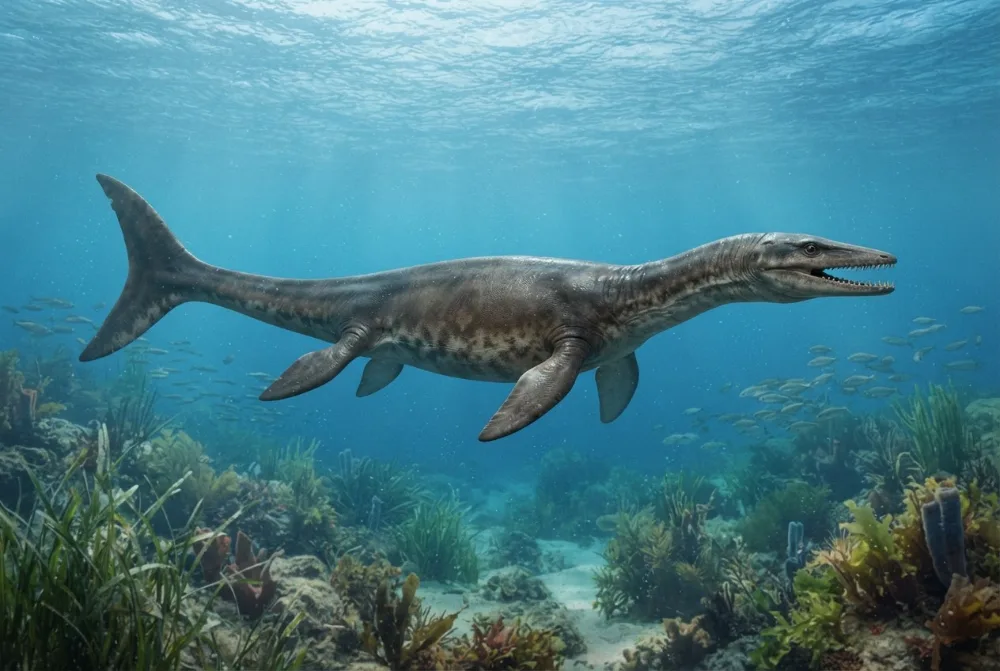
Halisaurus was a small, sleek marine lizard that swam in the warm seas of the Late Cretaceous. It was not a dinosaur, but a mosasaur, a relative of today's monitor lizards. It used its long tail and flippers to chase fish and other prey.1
Yabeerawo ddi?
Yali munene atya?
Yali muwanvu kwenkana wa?
 obuwanvu ng'embwa 4, ennyindo ku mukira🍌obuwanvu ng'amenvu 22 nga gaddiriŋŋana🏊yandiwuze obuwanvu bw'ekidiba ekinene (50 m) mu sikonda 4.9
Halisaurus yali munene atya bw'ogeraageranya ku GGWE?
Kubala kwokka mu browser yo. Tewali kiterekebwa wadde okusindikibwa wonna.
Yali wa mbiro kwenkana wa?


Ebyewuunyisa
Halisaurus was named by famous fossil hunter Othniel Charles Marsh in 1869.1
It was a small mosasaur, only about 3 to 4 metres long, much smaller than giants like Tylosaurus.1
Its flippers were not as specialized as those of later mosasaurs, so it was probably a slower swimmer.1
Fossils of Halisaurus have been found on every continent except Australia and Antarctica.2
The species Halisaurus onchognathus is known only from remains that were destroyed during World War II, so scientists are not sure if it was a real species.1
Halisaurus lived from about 85 to 66 million years ago, during the Late Cretaceous.2
Ebibuuzo ebisinga okubuuzibwa ku Halisaurus
?How big was Halisaurus?
Halisaurus was about 3 to 4 metres (9.8 to 13.1 feet) long, making it small for a mosasaur.1
?Was Halisaurus a dinosaur?
No, Halisaurus was not a dinosaur. It was a mosasaur, a marine lizard related to today's monitor lizards.1
?What did Halisaurus eat?
Halisaurus likely ate small fish and other small prey, based on its slender jaws and numerous small teeth.1
?Could Halisaurus swim fast?
Maybe up to about 37 km/h (23 mph) in a short burst. This is an estimate from its size. But it was probably not a great swimmer over long distances, because its flippers were not as good as those of later mosasaurs.1
?When did Halisaurus live?
Halisaurus lived during the Late Cretaceous, from about 86 to 66 million years ago.1
?Where have Halisaurus fossils been found?
Fossils have been found on every continent except Australia and Antarctica, including North America and North Africa.1
Omumenyi w'enfumo
Enfumo: Halisaurus was a dinosaur.
Amazima: Halisaurus was a mosasaur, a marine reptile closely related to modern monitor lizards, not a dinosaur.1
Eri abakugu mu dayinoso
- Erinnya lya ssaayansi
- Halisaurus
- Yatuumibwa
- Marsh 18692
- Ekibinja
- Mosasawulu
- Ekika / ekibinja
- Mosasauridae2
- Engabanya
- Mosasauroidea2
- Emyaka gy'enjazi
- emyaka obukadde 86 okutuuka ku 62 (Santonian / Danian)2
- Ensengeka z'enjazi
- Navesink, Severn, Marshalltown2
- Ensi
- Amerika, Moroko, Cile, Peru, Yorudaani, Angola2
- Ebisigalira ebyazuulibwa
- 30 mu The Paleobiology Database2
- Okuzuulibwa
- Halisaurus was named by Othniel Charles Marsh in 1869 based on a partial skull and vertebrae found near Hornerstown, New Jersey.1
- Kikyakubaganyizibwako ebirowoozo
- Scientists are not sure how many species of Halisaurus really existed, because some fossils are very fragmentary.1
Ebituufu gye biva
- Halisaurus (en.wikipedia.org)
- Halisaurus in The Paleobiology Database (CC BY 4.0): emyaka, ebifo, ensengeka z'enjazi, engabanya.
Buli kituufu ku lupapula luno kirina ennamba eraga ensibuko yaakyo. Bwe tuba nga tukoze ensobi, tusonyiwe, ffe tuli bawagizi ba dayinoso, so si magazini ya ssaayansi. Tubuulire ku [email protected] tujja kugitereeza.
 Rex alumwa enjala! Dino Wiki pulojekiti ya taata eri mutabani we ayagala ennyo dayinoso, ya bwereere, tewali bulango era tewali bikulondoola. Abakulu basobola okuwa Rex akantu ak'okulya okuyamba okugikuuma ku mutimbagano.Liisa Rex
 Mosasaurus
 Prognathodon
 Tylosaurus
 Platecarpus
 Clidastes
 Globidens
 Tyrannosaurus
 Triceratops
 Velociraptor
 Spinosaurus
 Ankylosaurus
 Parasaurolophus