 Kwizi: Oli dayinoso ki?
 Olutalo lwa dayinoso
 Empaka z'emisinde gya dayinoso
 Emizannyo emitono egya dayinoso
 Alubaamu ya sitika
 Enkalala za dayinoso eza TOP
 Mpa ekyewuunyisa!
Yabeerawo ddi?

Yali munene atya?
Yali muwanvu kwenkana wa?
Yali mugulumivu kwenkana wa?
kuteebereza
Yali muzito kwenkana wa?
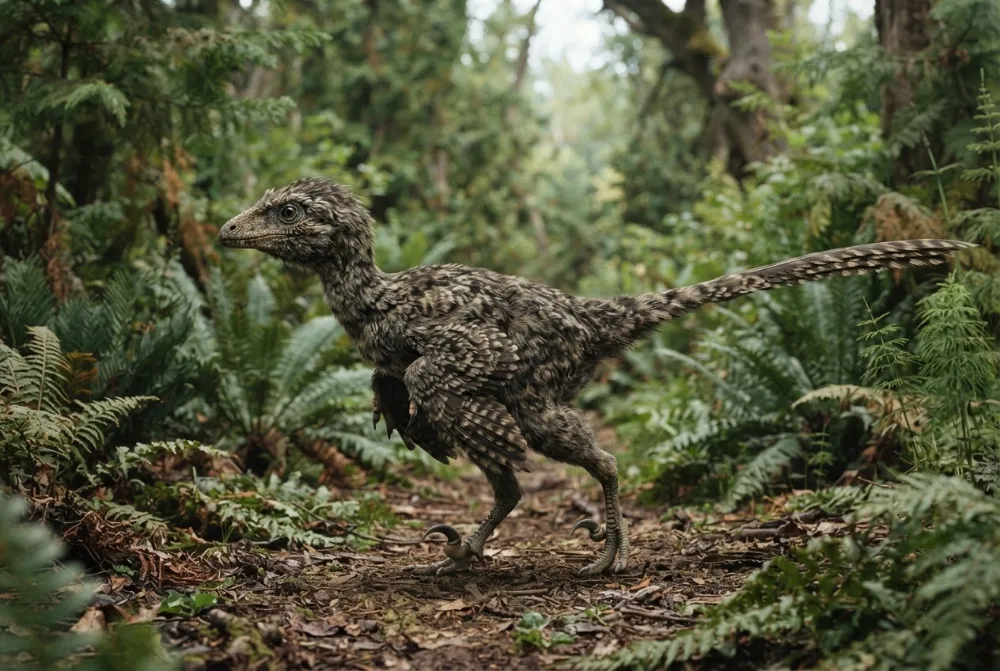
 obuwanvu nga kkapa 2 ab'awaka, ennyindo ku mukira🍌obuwanvu ng'amenvu 6 nga gaddiriŋŋana🪶obuzito butono okusinga kkapa ow'awaka🍌obuzito ng'obw'amenvu 16🪑mutono nnyo nga asobola okuyita wansi w'entebe🏃yandidduse mita 100 mu sikonda 15 (omuntu asinga embiro yeetaaga 9.6)
Hesperonychus yali munene atya bw'ogeraageranya ku GGWE?
Kubala kwokka mu browser yo. Tewali kiterekebwa wadde okusindikibwa wonna.
Yali wa mbiro kwenkana wa?


Ebyewuunyisa
Hesperonychus weighed only about 1.9 kilograms, which is less than a house cat.1
It is the smallest carnivorous non-avian dinosaur known from North America.1
Hesperonychus belongs to a group called Microraptorinae, which includes the four-winged Microraptor from China.1
Its fossils were first collected in 1982 but were not studied until 25 years later.1
Hesperonychus lived about 75 million years ago during the Late Cretaceous.1
Even though it was fully grown, its hip bones were fused together, showing it was an adult.1
Ebibuuzo ebisinga okubuuzibwa ku Hesperonychus
?How big was Hesperonychus?
About 1 metre long and weighed between 1.5 and 2 kilograms, roughly the size of a large cat.31
?What did Hesperonychus eat?
It was a meat-eater. It ate small animals like lizards, mammals, and insects.31
?Did Hesperonychus have feathers?
Yes, it almost certainly had feathers. It belonged to a group of feathered dinosaurs called Microraptorinae, which includes the four-winged Microraptor.31
?Could Hesperonychus fly?
Probably not. Scientists think it was more like a ground-running predator, not a glider like its relative Microraptor.3
Eri abakugu mu dayinoso
- Erinnya lya ssaayansi
- Hesperonychus
- Yatuumibwa
- Longrich and Currie 20094
- Ekibinja
- Raputa
- Ekika / ekibinja
- Dromaeosauridae4
- Engabanya
- Theropoda > Dromaeosauridae4
- Emyaka gy'enjazi
- emyaka obukadde 84 okutuuka ku 72 (Campanian)4
- Ensengeka z'enjazi
- Dinosaur Park, Oldman4
- Ensi
- Kanada4
- Ebisigalira ebyazuulibwa
- 4 mu The Paleobiology Database4
- Okuzuulibwa
- The holotype was collected in 1982 by Dr. Elizabeth Nicholls, but it was not described until 2009 by Nicholas Longrich and Philip Currie. The species name honors Elizabeth Nicholls.13
- Kikyakubaganyizibwako ebirowoozo
- Scientists are not sure exactly how many small dromaeosaurids lived in North America, because only isolated bones have been found so far.1
Ebituufu gye biva
- A microraptorine (Dinosauria, Dromaeosauridae) from the Late Cretaceous of North America (pmc.ncbi.nlm.nih.gov)
- A microraptorine (Dinosauria, Dromaeosauridae) from the Late Cretaceous of North America (pnas.org)
- Hesperonychus (en.wikipedia.org)
- Hesperonychus in The Paleobiology Database (CC BY 4.0): emyaka, ebifo, ensengeka z'enjazi, engabanya.
Buli kituufu ku lupapula luno kirina ennamba eraga ensibuko yaakyo. Bwe tuba nga tukoze ensobi, tusonyiwe, ffe tuli bawagizi ba dayinoso, so si magazini ya ssaayansi. Tubuulire ku [email protected] tujja kugitereeza.
 Rex alumwa enjala! Dino Wiki pulojekiti ya taata eri mutabani we ayagala ennyo dayinoso, ya bwereere, tewali bulango era tewali bikulondoola. Abakulu basobola okuwa Rex akantu ak'okulya okuyamba okugikuuma ku mutimbagano.Liisa Rex
 Velociraptor
 Microraptor
 Deinonychus
 Asiamericana
 Richardoestesia
 Saurornitholestes
 Tyrannosaurus
 Triceratops
 Spinosaurus
 Ankylosaurus
 Parasaurolophus
 Pteranodon