 Kwizi: Oli dayinoso ki?
 Olutalo lwa dayinoso
 Empaka z'emisinde gya dayinoso
 Emizannyo emitono egya dayinoso
 Alubaamu ya sitika
 Enkalala za dayinoso eza TOP
 Mpa ekyewuunyisa!
Hippodraco
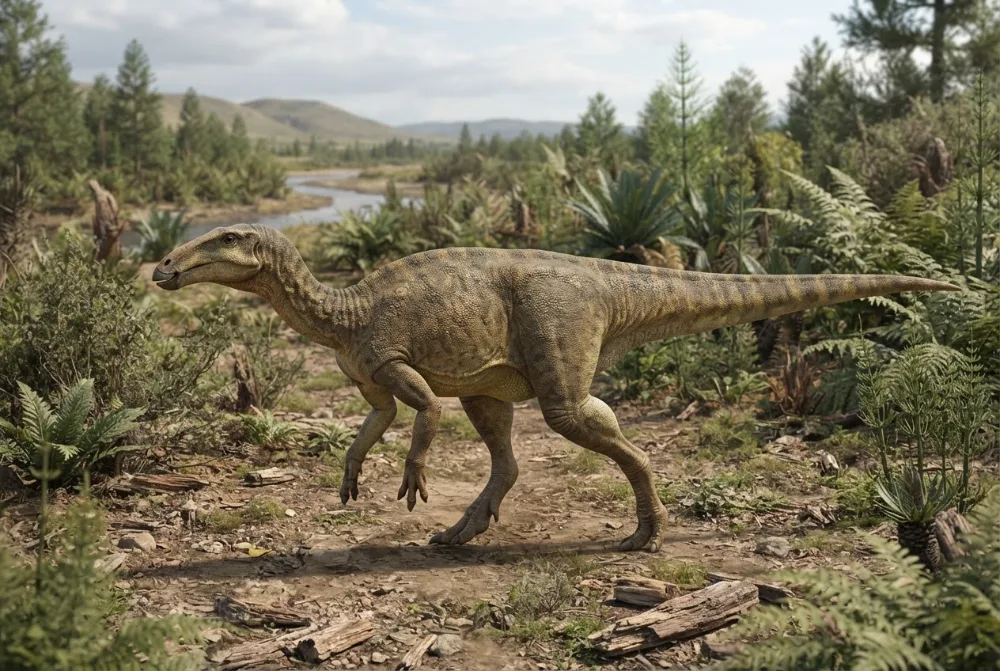
Hippodraco was a plant-eating dinosaur that lived during the Early Cretaceous period. Its long, low skull looked a bit like a horse's head, which is how it got its name. It was a small, speedy runner that munched on tough plants with its shield-shaped teeth.1
Yabeerawo ddi?
Yali munene atya?
Yali muwanvu kwenkana wa?
Yali muzito kwenkana wa?
 obuwanvu ng'embwa 4, ennyindo ku mukira🍌obuwanvu ng'amenvu 25 nga gaddiriŋŋana🍉obuzito ng'obwa wotamerooni 91🧸obuzito ng'obw'abaana 24 ab'omu nnasale🎒obuzito ng'obw'abaana b'essomero 14🏃yandidduse mita 100 mu sikonda 8.8 (omuntu asinga embiro yeetaaga 9.6)
Hippodraco yali munene atya bw'ogeraageranya ku GGWE?
Kubala kwokka mu browser yo. Tewali kiterekebwa wadde okusindikibwa wonna.
Yali wa mbiro kwenkana wa?


Ebyewuunyisa
Hippodraco's name comes from the Greek word 'hippos' (horse) and the Latin word 'draco' (dragon), because its skull is long and low like a horse's.1
The only known Hippodraco skeleton was discovered in 2004 by Andrew R. C. Milner at a site called Andrew's Site in Utah.13
Hippodraco had shield-shaped teeth, which is why its species name 'scutodens' means 'shield tooth'.1
This dinosaur was about 4.5 meters (15 feet) long, which is roughly the length of a small car.1
Scientists think the only Hippodraco fossil found might be from a young dinosaur, because its eye socket (orbit) is very large compared to the rest of its skull.13
Hippodraco lived about 139 to 134 million years ago, during the Valanginian stage of the Early Cretaceous.1
Ebibuuzo ebisinga okubuuzibwa ku Hippodraco
?How big was Hippodraco?
About 4.5 metres (15 feet) long, which is roughly the length of a small car. It weighed between 227 and 454 kilograms (500 to 1,000 pounds).13
?What did Hippodraco eat?
It was a plant-eater. It used its shield-shaped teeth to chew tough plants.14
Eri abakugu mu dayinoso
- Erinnya lya ssaayansi
- Hippodraco
- Yatuumibwa
- McDonald et al. 20105
- Ekibinja
- Ezirya ebimera ez'omumwa ng'ogw'ekinyonyi
- Ekika / ekibinja
- Styracosterna5
- Engabanya
- Ornithischia > Ornithopoda > Iguanodontia5
- Emyaka gy'enjazi
- emyaka obukadde 137 okutuuka ku 133 (Valanginian)5
- Ensengeka z'enjazi
- Cedar Mountain5
- Ensi
- Amerika5
- Ebisigalira ebyazuulibwa
- 1 mu The Paleobiology Database5
- Okuzuulibwa
- Hippodraco was named in 2010 by Andrew T. McDonald and his team. The only fossil, a partial skull and skeleton, was found in 2004 by Andrew R. C. Milner in Utah, USA.13
- Kikyakubaganyizibwako ebirowoozo
- Scientists are not sure if the only known Hippodraco was a full-grown adult or a juvenile, because its large eye socket suggests it might still have been growing.13
Ebituufu gye biva
- Hippodraco (en.wikipedia.org)
- PBDB Taxon (paleobiodb.org)
- New Basal Iguanodonts from the Cedar Mountain Formation of Utah and the Evolution of Thumb-Spiked Dinosaurs (pmc.ncbi.nlm.nih.gov)
- NEW DINOSAURS DISCOVERED - Utah Geological Survey (geology.utah.gov)
- Hippodraco in The Paleobiology Database (CC BY 4.0): emyaka, ebifo, ensengeka z'enjazi, engabanya.
Buli kituufu ku lupapula luno kirina ennamba eraga ensibuko yaakyo. Bwe tuba nga tukoze ensobi, tusonyiwe, ffe tuli bawagizi ba dayinoso, so si magazini ya ssaayansi. Tubuulire ku [email protected] tujja kugitereeza.
 Rex alumwa enjala! Dino Wiki pulojekiti ya taata eri mutabani we ayagala ennyo dayinoso, ya bwereere, tewali bulango era tewali bikulondoola. Abakulu basobola okuwa Rex akantu ak'okulya okuyamba okugikuuma ku mutimbagano.Liisa Rex
Endala okuva mu kibinja kye kimu: Ezirya ebimera ez'omumwa ng'ogw'ekinyonyi
 IguanodonEzirya ebimera ez'omumwa ng'ogw'ekinyonyi
 TenontosaurusEzirya ebimera ez'omumwa ng'ogw'ekinyonyi
 ThescelosaurusEzirya ebimera ez'omumwa ng'ogw'ekinyonyi
 ZalmoxesEzirya ebimera ez'omumwa ng'ogw'ekinyonyi
 CamptosaurusEzirya ebimera ez'omumwa ng'ogw'ekinyonyi
 RhabdodonEzirya ebimera ez'omumwa ng'ogw'ekinyonyi
 Stegosaurus
 Archaeopteryx
 Giganotosaurus
 Microraptor
 Deinonychus
 Baryonyx