 Kwizi: Oli dayinoso ki?
 Olutalo lwa dayinoso
 Empaka z'emisinde gya dayinoso
 Emizannyo emitono egya dayinoso
 Alubaamu ya sitika
 Enkalala za dayinoso eza TOP
 Mpa ekyewuunyisa!
Hypsilophodon
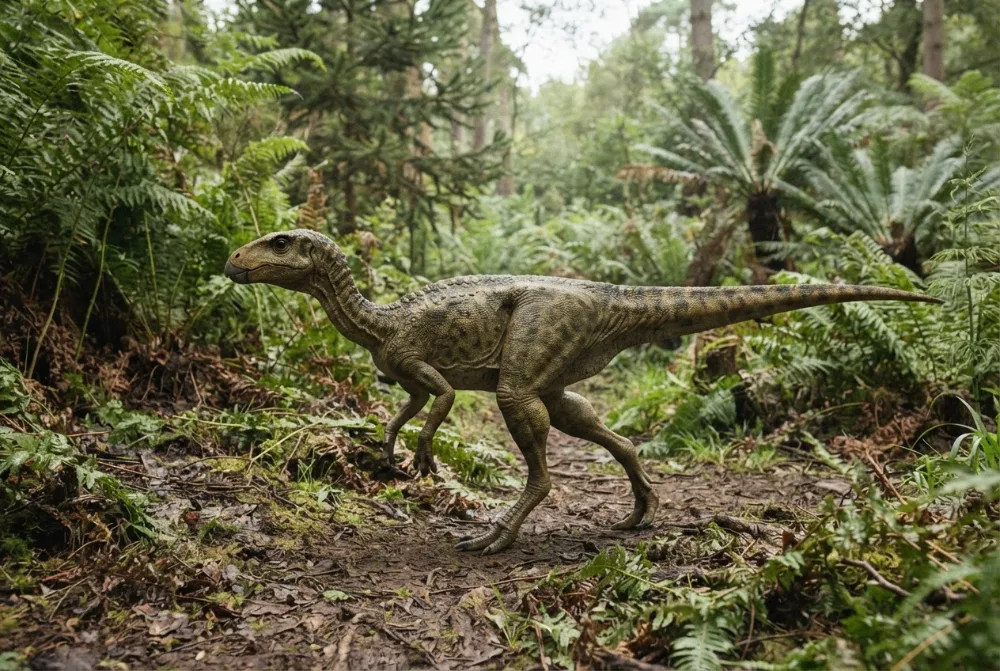
Hypsilophodon was a tiny, speedy plant-eater that sprinted through the forests of Early Cretaceous England. It had a sharp beak like a parrot and a long stiff tail to help it balance while running.12
Yabeerawo ddi?
Yali munene atya?
Yali muwanvu kwenkana wa?
Yali mugulumivu kwenkana wa?
Yali muzito kwenkana wa?
 obuwanvu nga kkapa 4 ab'awaka, ennyindo ku mukira🍌obuwanvu ng'amenvu 11 nga gaddiriŋŋana🍉obuzito ng'obwa wotamerooni 4🏃yandidduse mita 100 mu sikonda 9.2 (omuntu asinga embiro yeetaaga 9.6)
Hypsilophodon yali munene atya bw'ogeraageranya ku GGWE?
Kubala kwokka mu browser yo. Tewali kiterekebwa wadde okusindikibwa wonna.
Yali wa mbiro kwenkana wa?


Ebyewuunyisa
Hypsilophodon had five fingers on each hand, and one of them was opposable, like a thumb, so it could grasp branches and food.1
Its tail was stiffened by bony tendons, which helped it keep balance while running fast on two legs.1
Its teeth were self-sharpening: the upper and lower teeth rubbed together as it chewed, keeping them sharp.1
Hypsilophodon probably had cheeks, which helped it hold and chew food, just like modern plant-eaters.12
All the true Hypsilophodon fossils come from a single layer of rock called the Hypsilophodon Bed, on the Isle of Wight.1
Ebibuuzo ebisinga okubuuzibwa ku Hypsilophodon
?How big was Hypsilophodon?
It was about 1.5 to 2 metres (5 to 6.5 feet) long and weighed around 20 kilograms (44 pounds).12
?What did Hypsilophodon eat?
It was a herbivore, eating low-growing plants like young shoots and roots. It used its sharp beak to clip vegetation and probably had cheeks to help chew.21
?Could Hypsilophodon climb trees?
No, scientists used to think it climbed trees, but we now know it lived on the ground and was a fast runner.21
?How fast could Hypsilophodon run?
It was built for running with long legs, a stiff tail for balance, and a light body, but no exact speed is known.21
?Did Hypsilophodon have feathers?
No, there is no evidence that Hypsilophodon had feathers. It was a small ornithischian dinosaur with scaly skin.1
?Where did Hypsilophodon live?
It lived in what is now England, specifically on the Isle of Wight, during the Early Cretaceous period about 126 million years ago.21
?Was Hypsilophodon bigger than a chicken?
Yes, it was about the size of a large turkey or a small deer, much bigger than a chicken.2
?Did Hypsilophodon live in groups?
Yes, several fossils were found together, so some experts think it lived in groups, like deer.2
Omumenyi w'enfumo
Enfumo: Some people thought Hypsilophodon lived in trees, like a climbing dinosaur.
Amazima: Scientists now know it lived on the ground and was built for running, not climbing.2
Eri abakugu mu dayinoso
- Erinnya lya ssaayansi
- Hypsilophodon
- Yatuumibwa
- Huxley 18704
- Ekibinja
- Ezirya ebimera ez'omumwa ng'ogw'ekinyonyi
- Ekika / ekibinja
- Hypsilophodontidae4
- Engabanya
- Ornithischia > Ornithopoda4
- Emyaka gy'enjazi
- emyaka obukadde 155 okutuuka ku 120 (Kimmeridgian / Aptian)4
- Ensengeka z'enjazi
- Wessex, Vectis, Artoles4
- Ensi
- Bungereza, Sipeyini, Lomaniya, Japaani, Potugaali4
- Ebisigalira ebyazuulibwa
- 10 mu The Paleobiology Database4
- Okuzuulibwa
- The first fossils were found in 1849 on the Isle of Wight, but they were thought to be from a young Iguanodon. In 1869, Thomas Henry Huxley realized it was a new dinosaur and named it Hypsilophodon foxii.1
- Kikyakubaganyizibwako ebirowoozo
- Scientists are not sure exactly how Hypsilophodon is related to other plant-eating dinosaurs. Some think it belongs in Ornithopoda, but recent studies question that.1
Ebituufu gye biva
- Hypsilophodon (en.wikipedia.org)
- Hypsilophodon | Natural History Museum (nhm.ac.uk)
- enchantedlearning.com (enchantedlearning.com)
- Hypsilophodon in The Paleobiology Database (CC BY 4.0): emyaka, ebifo, ensengeka z'enjazi, engabanya.
Buli kituufu ku lupapula luno kirina ennamba eraga ensibuko yaakyo. Bwe tuba nga tukoze ensobi, tusonyiwe, ffe tuli bawagizi ba dayinoso, so si magazini ya ssaayansi. Tubuulire ku [email protected] tujja kugitereeza.
 Rex alumwa enjala! Dino Wiki pulojekiti ya taata eri mutabani we ayagala ennyo dayinoso, ya bwereere, tewali bulango era tewali bikulondoola. Abakulu basobola okuwa Rex akantu ak'okulya okuyamba okugikuuma ku mutimbagano.Liisa Rex
Endala okuva mu kibinja kye kimu: Ezirya ebimera ez'omumwa ng'ogw'ekinyonyi
 IguanodonEzirya ebimera ez'omumwa ng'ogw'ekinyonyi
 TenontosaurusEzirya ebimera ez'omumwa ng'ogw'ekinyonyi
 ThescelosaurusEzirya ebimera ez'omumwa ng'ogw'ekinyonyi
 ZalmoxesEzirya ebimera ez'omumwa ng'ogw'ekinyonyi
 CamptosaurusEzirya ebimera ez'omumwa ng'ogw'ekinyonyi
 RhabdodonEzirya ebimera ez'omumwa ng'ogw'ekinyonyi
 Stegosaurus
 Archaeopteryx
 Giganotosaurus
 Microraptor
 Deinonychus
 Baryonyx