 Kwizi: Oli dayinoso ki?
 Olutalo lwa dayinoso
 Empaka z'emisinde gya dayinoso
 Emizannyo emitono egya dayinoso
 Alubaamu ya sitika
 Enkalala za dayinoso eza TOP
 Mpa ekyewuunyisa!
Imparavis
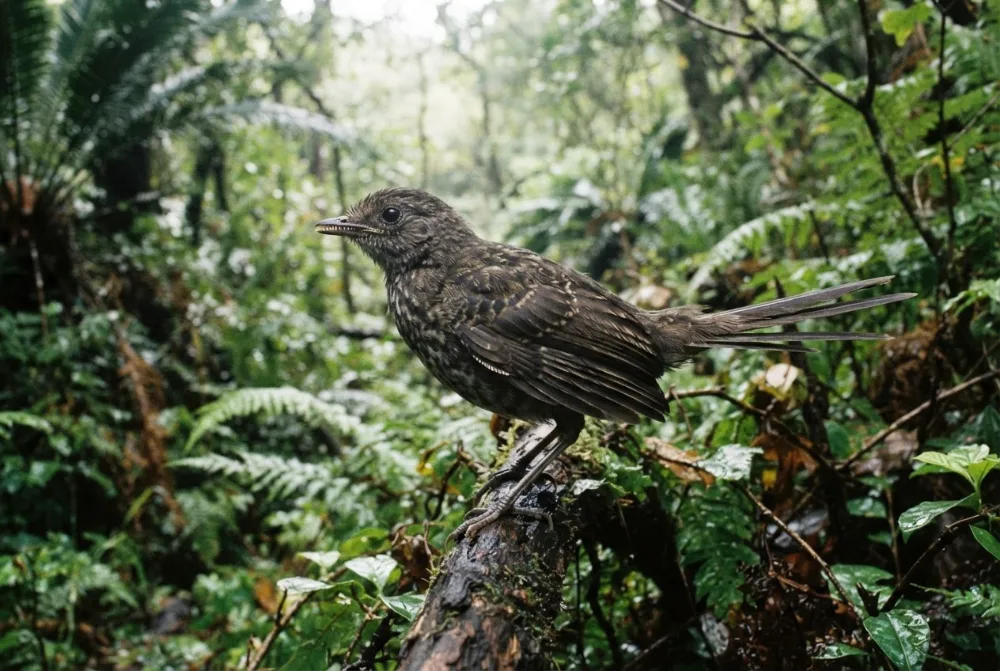
Imparavis was a tiny, toothless bird that lived about 120 million years ago in what is now China. It was one of the first of its kind to lose its teeth, and it had strong wings that might have let it flap really fast, like a modern quail or puffin.2
Yabeerawo ddi?
Yali munene atya?
Yali muwanvu kwenkana wa?
Yali mugulumivu kwenkana wa?
kuteebereza
Imparavis yali munene atya bw'ogeraageranya ku GGWE?
Kubala kwokka mu browser yo. Tewali kiterekebwa wadde okusindikibwa wonna.
Yali wa mbiro kwenkana wa?


Ebyewuunyisa
Imparavis is the earliest known toothless bird from a group called enantiornithines, or 'opposite birds'. Scientists used to think toothlessness in this group appeared only about 72 million years ago, but Imparavis pushes that back by 48 to 50 million years.2
Its name means 'odd bird' in Latin, and it was named after the famous naturalist Sir David Attenborough.1
Imparavis had a large bony crest on its upper arm bone where muscles attached. This might have let it flap its wings with extra power, similar to modern birds like puffins or quails.2
The fossil was found by an amateur collector and donated to the Shandong Tianyu Museum of Nature in China.2
Imparavis lived alongside many other early birds and dinosaurs in the Early Cretaceous period, about 120 million years ago.13
Unlike most other enantiornithines, which lived mainly in trees, Imparavis might have spent time on the ground foraging for food, like a modern robin.2
Omumenyi w'enfumo
Enfumo: All early birds had teeth.
Amazima: Imparavis shows that some early birds, like enantiornithines, lost their teeth much earlier than scientists thought. It was toothless about 120 million years ago.2
Eri abakugu mu dayinoso
- Erinnya lya ssaayansi
- Imparavis
- Yatuumibwa
- Wang et al. 20244
- Ekibinja
- Ebinyonyi eby'olubereberye
- Ekika / ekibinja
- Enantiornithes4
- Engabanya
- Theropoda > Avialae4
- Emyaka gy'enjazi
- emyaka obukadde 121 okutuuka ku 120 (Aptian)4
- Ensengeka z'enjazi
- Jiufotang4
- Ensi
- Cayina4
- Ebisigalira ebyazuulibwa
- 1 mu The Paleobiology Database4
- Okuzuulibwa
- Imparavis was named in 2024 by Wang and colleagues. The fossil was found by an amateur collector near Toudaoyingzi village in China and later studied by scientists at the Field Museum and Shandong Tianyu Museum.12
- Kikyakubaganyizibwako ebirowoozo
- Scientists are still debating why Imparavis lost its teeth and what it ate, since its toothless beak and lack of a gizzard make its diet unclear.2
Ebituufu gye biva
- Imparavis (en.wikipedia.org)
- Fossil named “Attenborough’s strange bird” was the first of its kind without teeth - Field Museum (fieldmuseum.org)
- PBDB Taxon (paleobiodb.org)
- Imparavis in The Paleobiology Database (CC BY 4.0): emyaka, ebifo, ensengeka z'enjazi, engabanya.
Buli kituufu ku lupapula luno kirina ennamba eraga ensibuko yaakyo. Bwe tuba nga tukoze ensobi, tusonyiwe, ffe tuli bawagizi ba dayinoso, so si magazini ya ssaayansi. Tubuulire ku [email protected] tujja kugitereeza.
 Rex alumwa enjala! Dino Wiki pulojekiti ya taata eri mutabani we ayagala ennyo dayinoso, ya bwereere, tewali bulango era tewali bikulondoola. Abakulu basobola okuwa Rex akantu ak'okulya okuyamba okugikuuma ku mutimbagano.Liisa Rex
 Archaeopteryx
 Hesperornis
 Ichthyornis
 Baptornis
 Jurapteryx
 Gobipteryx
 Stegosaurus
 Iguanodon
 Giganotosaurus
 Microraptor
 Deinonychus
 Baryonyx