 Kwizi: Oli dayinoso ki?
 Olutalo lwa dayinoso
 Empaka z'emisinde gya dayinoso
 Emizannyo emitono egya dayinoso
 Alubaamu ya sitika
 Enkalala za dayinoso eza TOP
 Mpa ekyewuunyisa!
Yabeerawo ddi?

Yali munene atya?
Yali muwanvu kwenkana wa?
Juravenator yali munene atya bw'ogeraageranya ku GGWE?
Kubala kwokka mu browser yo. Tewali kiterekebwa wadde okusindikibwa wonna.
Yali wa mbiro kwenkana wa?


Ebyewuunyisa
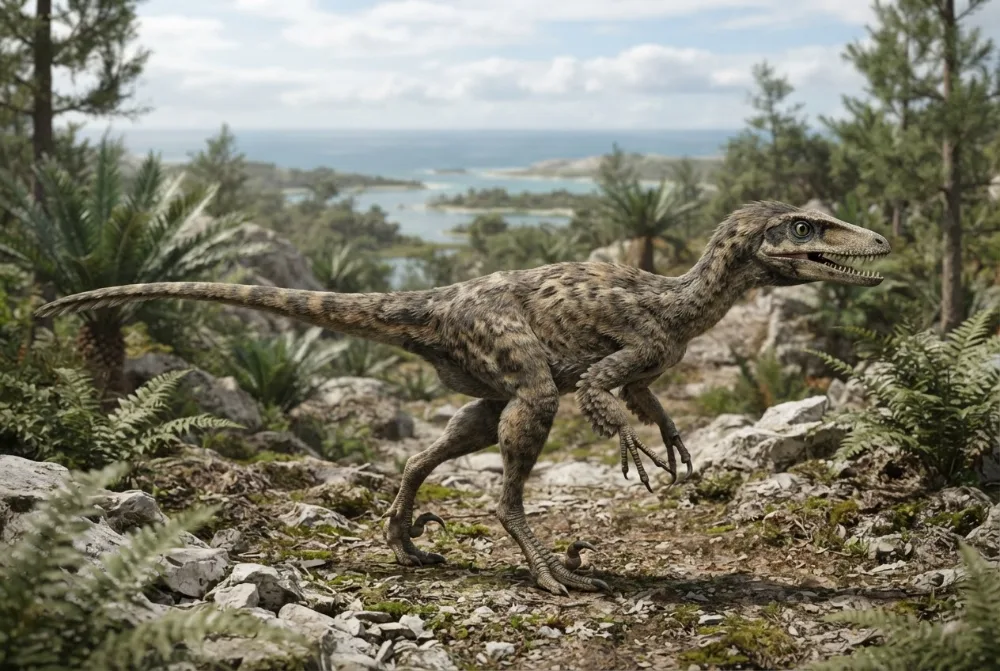
Juravenator is known from a single, nearly complete skeleton of a juvenile, making it one of the best-preserved predatory dinosaurs from Europe.21
Unlike many other small theropods from the same time, Juravenator did not have feathers or feather-like structures on its tail.21
Scientists think Juravenator may have been nocturnal, based on the shape of its eye bones.1
In 2020, researchers found tiny round structures on the sides of Juravenator's tail that might have been sensory organs, like those on crocodile scales.1
The only known Juravenator fossil was found in a lagoon deposit, suggesting it may have drowned after being washed into the water.1
Ebibuuzo ebisinga okubuuzibwa ku Juravenator
?How big was Juravenator?
About 75 centimetres (2.46 feet) long, which is roughly the size of a small dog.1
?Did Juravenator have feathers?
It had mostly scales on its tail and legs, but some faint impressions of possible simple feathers have been found on the top of the tail and hips.1
?What did Juravenator eat?
It was a small meat-eater that may have hunted fish and other small prey in shallow water.4
?Could Juravenator swim?
It may have waded in water to hunt, but it probably did not swim well. The only known fossil was found in a lagoon, possibly after drowning.1
?Was Juravenator nocturnal?
Yes, scientists think it may have been nocturnal based on the shape of its eye bones.1
?Where was Juravenator found?
In Germany, in the Franconian Jura region, from rocks that are about 151 to 152 million years old.1
Eri abakugu mu dayinoso
- Erinnya lya ssaayansi
- Juravenator
- Yatuumibwa
- Göhlich and Chiappe 20065
- Ekibinja
- Dayinoso ezirya ennyama
- Ekika / ekibinja
- Coelurosauria5
- Engabanya
- Theropoda5
- Emyaka gy'enjazi
- emyaka obukadde 152 okutuuka ku 149 (Kimmeridgian)5
- Ensengeka z'enjazi
- Painten5
- Ensi
- Bugirimaani5
- Ebisigalira ebyazuulibwa
- 1 mu The Paleobiology Database5
- Okuzuulibwa
- Juravenator was discovered in 1998 by volunteers Klaus-Dieter Weiß and Hans-Joachim Weiß in a quarry near Schamhaupten, Germany. It was named and described by Ursula Göhlich and Luis Chiappe in 2006.12
- Kikyakubaganyizibwako ebirowoozo
- Scientists are not sure if Juravenator was fully grown when it died, because the only known skeleton is from a juvenile.1
Ebituufu gye biva
- Juravenator (en.wikipedia.org)
- A new carnivorous dinosaur from the Late Jurassic Solnhofen archipelago | Nature (nature.com)
- PBDB Taxon (paleobiodb.org)
- This small dinosaur had a marvelous sense of touch, detailed fossils reveal | National Geographic (nationalgeographic.com)
- Juravenator in The Paleobiology Database (CC BY 4.0): emyaka, ebifo, ensengeka z'enjazi, engabanya.
Buli kituufu ku lupapula luno kirina ennamba eraga ensibuko yaakyo. Bwe tuba nga tukoze ensobi, tusonyiwe, ffe tuli bawagizi ba dayinoso, so si magazini ya ssaayansi. Tubuulire ku [email protected] tujja kugitereeza.
 Rex alumwa enjala! Dino Wiki pulojekiti ya taata eri mutabani we ayagala ennyo dayinoso, ya bwereere, tewali bulango era tewali bikulondoola. Abakulu basobola okuwa Rex akantu ak'okulya okuyamba okugikuuma ku mutimbagano.Liisa Rex
 Allosaurus
 Carnotaurus
 Dilophosaurus
 Giganotosaurus
 Compsognathus
 Paronychodon
 Brachiosaurus
 Diplodocus
 Brontosaurus
 Camarasaurus
 Morosaurus
 Apatosaurus