 Kwizi: Oli dayinoso ki?
 Olutalo lwa dayinoso
 Empaka z'emisinde gya dayinoso
 Emizannyo emitono egya dayinoso
 Alubaamu ya sitika
 Enkalala za dayinoso eza TOP
 Mpa ekyewuunyisa!
Kank
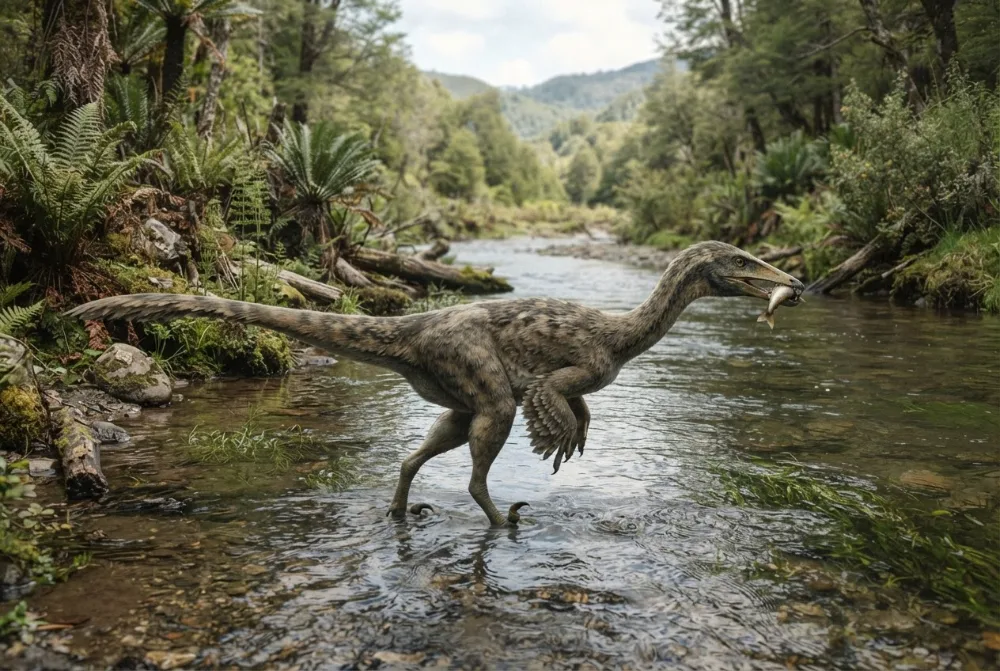
Kank was a fish-eating dinosaur that lived like a modern heron. It waded in rivers and streams in southern Patagonia, using its long neck to snatch fish. This raptor-like dinosaur was about the size of a small car.1
Yabeerawo ddi?
Yali munene atya?
Yali muwanvu kwenkana wa?
Yali mugulumivu kwenkana wa?
kuteebereza
 obuwanvu ng'embwa 3, ennyindo ku mukira🍌obuwanvu ng'amenvu 17 nga gaddiriŋŋana🏃yandidduse mita 100 mu sikonda 7.2 (omuntu asinga embiro yeetaaga 9.6)
Kank yali munene atya bw'ogeraageranya ku GGWE?
Kubala kwokka mu browser yo. Tewali kiterekebwa wadde okusindikibwa wonna.
Yali wa mbiro kwenkana wa?


Ebyewuunyisa
Kank lived about 70 million years ago in a warm, wet place with rivers and ponds.1
Its neck bones had air chambers inside, making them light and strong.1
Kank had a big claw on its second toe, like other raptors, but it probably used it for fishing, not hunting on land.1
The first Kank fossils were found in 2018, but scientists needed more bones to know it was a new species.1
Kank shared its home with giant predators like Maip macrothorax, a megaraptorid over 10 metres long.1
Kank is part of a group called unenlagiids, which are found in South America, Antarctica, Australia and Madagascar.1
Ebibuuzo ebisinga okubuuzibwa ku Kank
?What did Kank eat?
Kank mostly ate fish, like a modern heron. It may have also eaten frogs, lizards, turtles and small mammals that lived in its wetland home.12
?Did Kank have feathers?
Scientists think Kank probably had feathers, because it belongs to a group of dinosaurs called unenlagiids that are closely related to birds. No direct feather fossils of Kank have been found yet.2
?When did Kank live?
Kank lived about 70 million years ago, during the Late Cretaceous period. That was near the very end of the age of dinosaurs.12
?Where was Kank found?
Kank was discovered at La Anita farm near El Calafate in Santa Cruz, Argentina. The fossils come from the Chorrillo Formation in southern Patagonia.12
?Was Kank bigger than Velociraptor?
Yes, Kank was a bit bigger. Velociraptor was about 2 metres long, while Kank grew up to 3 metres long.1
Omumenyi w'enfumo
Enfumo: All raptor-like dinosaurs were fast land hunters like Velociraptor.
Amazima: Kank was a fish-eater that behaved like a heron, not a speedy land predator.1
Eri abakugu mu dayinoso
- Erinnya lya ssaayansi
- Kank
- Yatuumibwa
- Motta et al. 20263
- Ekibinja
- Dayinoso ezirya ennyama
- Ekika / ekibinja
- Unenlagiidae3
- Engabanya
- Theropoda3
- Emyaka gy'enjazi
- emyaka obukadde 72 okutuuka ku 66 (Maastrichtian)3
- Ensengeka z'enjazi
- Chorrillo3
- Ensi
- Arigentina3
- Ebisigalira ebyazuulibwa
- 2 mu The Paleobiology Database3
- Okuzuulibwa
- Kank was named by Matías Motta and his team in 2026, based on fossils found at La Anita farm in Argentina from 2018 to 2024.1
- Kikyakubaganyizibwako ebirowoozo
- Scientists are not sure if Kank also ate other animals like frogs or mammals, or only fish.1
Ebituufu gye biva
- Heron-like, fish-eating dinosaur from 70 million years ago discovered in Argentina | EurekAlert! (eurekalert.org)
- Kank (Wikipedia) (Wikipedia)
- Kank in The Paleobiology Database (CC BY 4.0): emyaka, ebifo, ensengeka z'enjazi, engabanya.
Buli kituufu ku lupapula luno kirina ennamba eraga ensibuko yaakyo. Bwe tuba nga tukoze ensobi, tusonyiwe, ffe tuli bawagizi ba dayinoso, so si magazini ya ssaayansi. Tubuulire ku [email protected] tujja kugitereeza.
 Rex alumwa enjala! Dino Wiki pulojekiti ya taata eri mutabani we ayagala ennyo dayinoso, ya bwereere, tewali bulango era tewali bikulondoola. Abakulu basobola okuwa Rex akantu ak'okulya okuyamba okugikuuma ku mutimbagano.Liisa Rex
 Allosaurus
 Carnotaurus
 Dilophosaurus
 Giganotosaurus
 Compsognathus
 Paronychodon
 Tyrannosaurus
 Triceratops
 Velociraptor
 Spinosaurus
 Ankylosaurus
 Parasaurolophus