 Kwizi: Oli dayinoso ki?
 Olutalo lwa dayinoso
 Empaka z'emisinde gya dayinoso
 Emizannyo emitono egya dayinoso
 Alubaamu ya sitika
 Enkalala za dayinoso eza TOP
 Mpa ekyewuunyisa!
Kinnareemimus
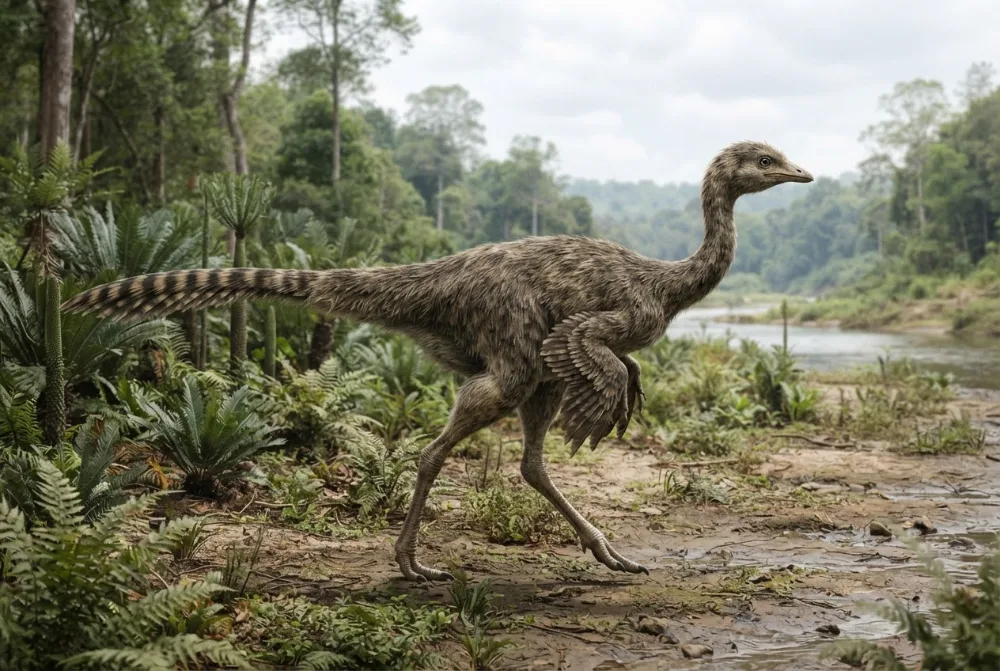
Kinnareemimus was a small, fast dinosaur that looked a bit like an ostrich. It lived in what is now Thailand during the Early Cretaceous period, about 125 million years ago. Scientists think it could run quickly on its long, bird-like legs.1
Yabeerawo ddi?
Yali munene atya?
Yali muwanvu kwenkana wa?
Yali mugulumivu kwenkana wa?
kuteebereza
Yali muzito kwenkana wa?
 obuwanvu nga kkapa 4 ab'awaka, ennyindo ku mukira🍌obuwanvu ng'amenvu 10 nga gaddiriŋŋana🍌obuzito ng'obw'amenvu 110🏃yandidduse mita 100 mu sikonda 7.1 (omuntu asinga embiro yeetaaga 9.6)
Kinnareemimus yali munene atya bw'ogeraageranya ku GGWE?
Kubala kwokka mu browser yo. Tewali kiterekebwa wadde okusindikibwa wonna.
Yali wa mbiro kwenkana wa?


Ebyewuunyisa
The name Kinnareemimus comes from a Kinnaree, a magical creature from Thai stories that has a woman's head and a bird's legs.1
Only a single foot bone, a metatarsal, was chosen as the main specimen. Other bones from the same site were also assigned to this dinosaur.1
Its foot had a special shape called semi-arctometatarsalian, where the middle toe bone gets narrow in the middle and then widens at the bottom.1
Kinnareemimus lived alongside many other dinosaurs, including the huge sauropod Phuwiangosaurus and the meat-eating Siamotyrannus.1
The fossils were found in red clay and sandstone that were once a river floodplain with lakes.1
Scientists think Kinnareemimus might have been a good runner, but not as fast as later ostrich dinosaurs like Gallimimus.1
Ebibuuzo ebisinga okubuuzibwa ku Kinnareemimus
?How big was Kinnareemimus?
About 1.8 metres (5.9 ft) long and possibly weighed around 13 kilograms (29 lb). Scientists are not sure because only a few foot bones have been found.1
?What did Kinnareemimus eat?
It was an ornithomimosaur, so it likely ate plants and small animals, like other ostrich dinosaurs. No direct evidence of its diet has been found.1
?Could Kinnareemimus run fast?
Probably yes, but not as fast as later ostrich dinosaurs like Gallimimus. Its leg bones suggest it was a good runner, though scientists are not certain.1
?Where was Kinnareemimus found?
In northeastern Thailand, in the Early Cretaceous Sao Khua Formation. The fossils were discovered at a site called Phu Wiang 5.1
Eri abakugu mu dayinoso
- Erinnya lya ssaayansi
- Kinnareemimus
- Yatuumibwa
- Buffetaut et al. 20093
- Ekibinja
- Dayinoso ezifaanana ostrich
- Ekika / ekibinja
- Ornithomimosauria3
- Engabanya
- Theropoda > Ornithomimosauria3
- Emyaka gy'enjazi
- emyaka obukadde 126 okutuuka ku 121 (Barremian)3
- Ensengeka z'enjazi
- Sao Khua3
- Ensi
- Tayilandi3
- Ebisigalira ebyazuulibwa
- 1 mu The Paleobiology Database3
- Okuzuulibwa
- The first fossils were reported in 1997, but the dinosaur was officially named Kinnareemimus khonkaenensis in 2009 by Eric Buffetaut, Varavudh Suteethorn, and Haiyan Tong.1
- Kikyakubaganyizibwako ebirowoozo
- Because only a few bones are known, scientists are not sure exactly how big Kinnareemimus was or what its whole body looked like.1
Ebituufu gye biva
- Kinnareemimus (en.wikipedia.org)
- PBDB Taxon (paleobiodb.org)
- Kinnareemimus in The Paleobiology Database (CC BY 4.0): emyaka, ebifo, ensengeka z'enjazi, engabanya.
Buli kituufu ku lupapula luno kirina ennamba eraga ensibuko yaakyo. Bwe tuba nga tukoze ensobi, tusonyiwe, ffe tuli bawagizi ba dayinoso, so si magazini ya ssaayansi. Tubuulire ku [email protected] tujja kugitereeza.
 Rex alumwa enjala! Dino Wiki pulojekiti ya taata eri mutabani we ayagala ennyo dayinoso, ya bwereere, tewali bulango era tewali bikulondoola. Abakulu basobola okuwa Rex akantu ak'okulya okuyamba okugikuuma ku mutimbagano.Liisa Rex
 Gallimimus
 Ornithomimus
 Struthiomimus
 Deinocheirus
 Dromiceiomimus
 Archaeornithomimus
 Stegosaurus
 Iguanodon
 Archaeopteryx
 Giganotosaurus
 Microraptor
 Deinonychus