 Kwizi: Oli dayinoso ki?
 Olutalo lwa dayinoso
 Empaka z'emisinde gya dayinoso
 Emizannyo emitono egya dayinoso
 Alubaamu ya sitika
 Enkalala za dayinoso eza TOP
 Mpa ekyewuunyisa!
Kosmoceratops
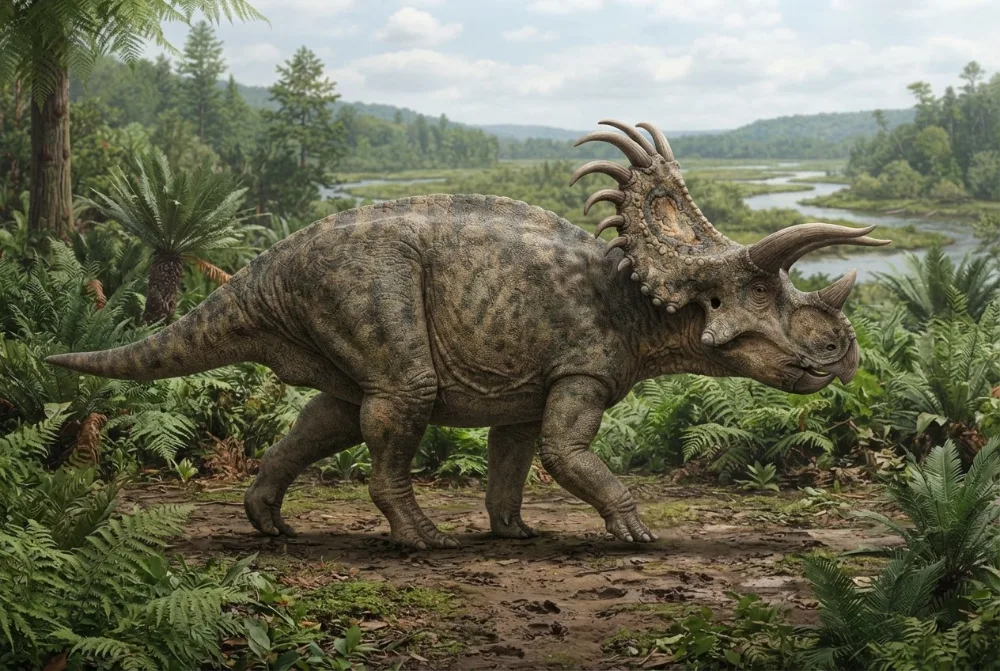
Kosmoceratops was a horned dinosaur with the most decorated skull of any dinosaur ever found. It had a short, wide frill with ten forward-curving hooks on the back, making it look like a living crown. This plant-eater lived in what is now southern Utah, USA, about 76 million years ago.1
Yabeerawo ddi?
Yali munene atya?
Yali muwanvu kwenkana wa?
Yali mugulumivu kwenkana wa?
kuteebereza
Yali muzito kwenkana wa?

 obuwanvu ng'embwa 5, ennyindo ku mukira🍌obuwanvu ng'amenvu 28 nga gaddiriŋŋanaobuzito ng'obw'embwa 75🍉obuzito ng'obwa wotamerooni 300🧸obuzito ng'obw'abaana 79 ab'omu nnasale🎒obuzito ng'obw'abaana b'essomero 47🐻❄️obuzito ng'obwa ddubu enjeru 3🏃yandidduse mita 100 mu sikonda 9.7 (omuntu asinga embiro yeetaaga 9.6)
Kosmoceratops yali munene atya bw'ogeraageranya ku GGWE?
Kubala kwokka mu browser yo. Tewali kiterekebwa wadde okusindikibwa wonna.
Yali wa mbiro kwenkana wa?


Ebyewuunyisa
Kosmoceratops had ten hook-like bones (epoccipitals) on the back edge of its frill, more than any other horned dinosaur.1
Its horns pointed out to the sides and then curved downward, like a sideways smile.1
Kosmoceratops lived at the same time and in the same place as another horned dinosaur called Utahceratops, which is rare for horned dinosaurs.1
The name Kosmoceratops comes from Greek words meaning 'ornate horned face' because of its fancy skull decorations.1
Its frill was short and wide, with a V-shaped notch at the back, unlike the long frills of many other horned dinosaurs.1
Kosmoceratops belonged to a group called chasmosaurines, which includes famous dinosaurs like Triceratops.1
Ebibuuzo ebisinga okubuuzibwa ku Kosmoceratops
?How big was Kosmoceratops?
Kosmoceratops was about 4.5 metres long and weighed about 1.2 tonnes, roughly the size of a rhinoceros.34
?What did Kosmoceratops eat?
It was a plant-eater, using its sharp beak and teeth to process fibrous plants. Fossilized dung with wood may have been left by ceratopsids like Kosmoceratops.3
?Why did Kosmoceratops have so many horns?
Scientists think the horns and frill were used for display, to attract mates, or to fight rivals of the same sex, not for defense against predators.5
?Was Kosmoceratops related to Triceratops?
Yes, Kosmoceratops was a chasmosaurine ceratopsid, making it a close relative of Triceratops.5
?Where did Kosmoceratops live?
It lived in what is now southern Utah, USA, about 76 million years ago, on the island continent of Laramidia.35
?When did Kosmoceratops live?
It lived during the Late Cretaceous period, about 76 to 75.9 million years ago.3
Eri abakugu mu dayinoso
- Erinnya lya ssaayansi
- Kosmoceratops
- Yatuumibwa
- Sampson et al. 20106
- Ekibinja
- Dayinoso ez'amayembe
- Ekika / ekibinja
- Ceratopsidae6
- Engabanya
- Ornithischia > Ceratopsia > Ceratopsidae6
- Emyaka gy'enjazi
- emyaka obukadde 84 okutuuka ku 72 (Campanian)6
- Ensengeka z'enjazi
- Kaiparowits6
- Ensi
- Amerika6
- Ebisigalira ebyazuulibwa
- 2 mu The Paleobiology Database6
- Okuzuulibwa
- Kosmoceratops was named by paleontologist Scott Sampson and his team in 2010, based on fossils found in the Kaiparowits Formation of Utah.21
- Kikyakubaganyizibwako ebirowoozo
- Scientists are not sure why Kosmoceratops had such an ornate frill with ten hooks. It may have been for attracting mates, scaring rivals, or recognizing its own kind.1
Ebituufu gye biva
- New Horned Dinosaurs from Utah Provide Evidence for Intracontinental Dinosaur Endemism | PLOS One (journals.plos.org)
- PBDB Taxon (paleobiodb.org)
- Kosmoceratops (en.wikipedia.org)
- Kosmoceratops - BYU Geology (geology.byu.edu)
- Amazing Horned Dinosaurs Unearthed on “Lost Continent” – UNews Archive (archive.unews.utah.edu)
- Kosmoceratops in The Paleobiology Database (CC BY 4.0): emyaka, ebifo, ensengeka z'enjazi, engabanya.
Buli kituufu ku lupapula luno kirina ennamba eraga ensibuko yaakyo. Bwe tuba nga tukoze ensobi, tusonyiwe, ffe tuli bawagizi ba dayinoso, so si magazini ya ssaayansi. Tubuulire ku [email protected] tujja kugitereeza.
 Rex alumwa enjala! Dino Wiki pulojekiti ya taata eri mutabani we ayagala ennyo dayinoso, ya bwereere, tewali bulango era tewali bikulondoola. Abakulu basobola okuwa Rex akantu ak'okulya okuyamba okugikuuma ku mutimbagano.Liisa Rex
 Triceratops
 Protoceratops
 Ojoceratops
 Tatankaceratops
 Psittacosaurus
 Centrosaurus
 Tyrannosaurus
 Velociraptor
 Spinosaurus
 Ankylosaurus
 Parasaurolophus
 Pteranodon