 Kwizi: Oli dayinoso ki?
 Olutalo lwa dayinoso
 Empaka z'emisinde gya dayinoso
 Emizannyo emitono egya dayinoso
 Alubaamu ya sitika
 Enkalala za dayinoso eza TOP
 Mpa ekyewuunyisa!
Latenivenatrix
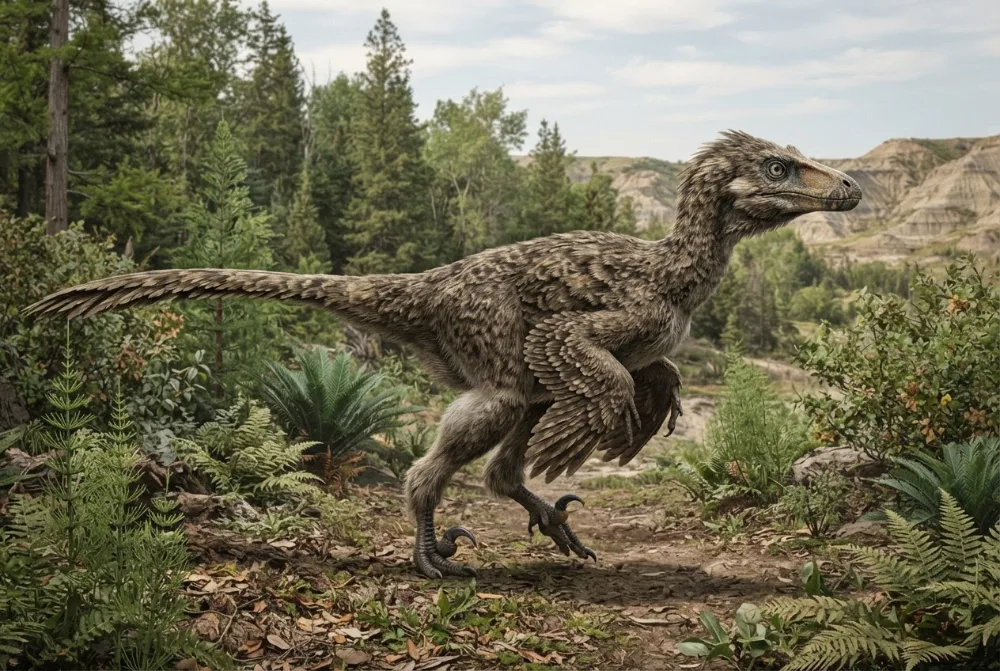
Latenivenatrix was a large, bird-like dinosaur that lived in what is now Canada. It was one of the biggest troodontids ever found, and it probably ate both plants and meat. Scientists are still debating whether it was really its own species or just a different name for another dinosaur called Stenonychosaurus.14
Yabeerawo ddi?
Yali munene atya?
Yali muwanvu kwenkana wa?
Yali mugulumivu kwenkana wa?
 obuwanvu ng'embwa 4, ennyindo ku mukira🍌obuwanvu ng'amenvu 19 nga gaddiriŋŋana🏃yandidduse mita 100 mu sikonda 7.1 (omuntu asinga embiro yeetaaga 9.6)
Latenivenatrix yali munene atya bw'ogeraageranya ku GGWE?
Kubala kwokka mu browser yo. Tewali kiterekebwa wadde okusindikibwa wonna.
Yali wa mbiro kwenkana wa?


Ebyewuunyisa
Latenivenatrix is the largest known troodontid, reaching up to 3.5 meters (11.5 feet) in length.1
Its name means 'hiding huntress' in Latin, because it was a stealthy predator.1
The first fossil of Latenivenatrix was found in 1968 by Irene Vanderloh in Alberta, Canada.1
Some scientists think Latenivenatrix might actually be the same species as Stenonychosaurus, not a separate dinosaur.1
Latenivenatrix had a special pelvis with a pubis bone that was tilted backward at a 17-degree angle.1
Ebibuuzo ebisinga okubuuzibwa ku Latenivenatrix
?How big was Latenivenatrix?
It was about 3 to 3.5 metres (9.8 to 11.5 ft) long, making it the largest known troodontid. Its skull was about 45 centimetres (18 in) long.1
?What did Latenivenatrix eat?
It was probably a semi-omnivore, meaning it ate both plants and meat. It was a bird-like dinosaur that likely hunted small prey and also ate plants.1
?Is Latenivenatrix a dinosaur?
Yes, it is a dinosaur. It belongs to a group of bird-like dinosaurs called troodontids.1
?When did Latenivenatrix live?
It lived about 75.5 million years ago during the Cretaceous Period. Its fossils were found in Alberta, Canada.1
?What does the name Latenivenatrix mean?
It means 'hiding huntress' in Latin, because it was a stealthy predator.3
?Could Latenivenatrix fly?
No, it could not fly. As a troodontid, it probably lost the ability to fly and was a biped that walked on two legs.1
Omumenyi w'enfumo
Enfumo: Latenivenatrix is definitely a unique dinosaur species.
Amazima: Some scientists argue that Latenivenatrix is actually a junior synonym of Stenonychosaurus, meaning it may not be a separate species.1
Eri abakugu mu dayinoso
- Erinnya lya ssaayansi
- Latenivenatrix
- Yatuumibwa
- van der Reest and Currie 20174
- Ekibinja
- Raputa
- Ekika / ekibinja
- Troodontidae4
- Engabanya
- Theropoda > Troodontidae4
- Emyaka gy'enjazi
- emyaka obukadde 84 okutuuka ku 72 (Campanian)4
- Ensengeka z'enjazi
- Dinosaur Park4
- Ensi
- Kanada4
- Ebisigalira ebyazuulibwa
- 4 mu The Paleobiology Database4
- Okuzuulibwa
- Latenivenatrix was named in 2017 by paleontologists Aaron van der Reest and Philip Currie. The type specimen was originally collected in 1968 and had been assigned to other troodontids before being recognized as a new genus.14
- Kikyakubaganyizibwako ebirowoozo
- Scientists still debate whether Latenivenatrix is a valid genus or just a synonym of Stenonychosaurus.1
Ebituufu gye biva
- Latenivenatrix (en.wikipedia.org)
- Two New Cretaceous Dinosaur Species Discovered in Canada | Sci.News (sci.news)
- Paleo Profile: The Hiding Hunter | Scientific American (scientificamerican.com)
- Latenivenatrix in The Paleobiology Database (CC BY 4.0): emyaka, ebifo, ensengeka z'enjazi, engabanya.
Buli kituufu ku lupapula luno kirina ennamba eraga ensibuko yaakyo. Bwe tuba nga tukoze ensobi, tusonyiwe, ffe tuli bawagizi ba dayinoso, so si magazini ya ssaayansi. Tubuulire ku [email protected] tujja kugitereeza.
 Rex alumwa enjala! Dino Wiki pulojekiti ya taata eri mutabani we ayagala ennyo dayinoso, ya bwereere, tewali bulango era tewali bikulondoola. Abakulu basobola okuwa Rex akantu ak'okulya okuyamba okugikuuma ku mutimbagano.Liisa Rex
 Velociraptor
 Microraptor
 Deinonychus
 Asiamericana
 Richardoestesia
 Saurornitholestes
 Tyrannosaurus
 Triceratops
 Spinosaurus
 Ankylosaurus
 Parasaurolophus
 Pteranodon