 Kwizi: Oli dayinoso ki?
 Olutalo lwa dayinoso
 Empaka z'emisinde gya dayinoso
 Emizannyo emitono egya dayinoso
 Alubaamu ya sitika
 Enkalala za dayinoso eza TOP
 Mpa ekyewuunyisa!
Yabeerawo ddi?

Yali munene atya?
Yali muwanvu kwenkana wa?
Yali mugulumivu kwenkana wa?
Yali muzito kwenkana wa?
 obuwanvu nga kkapa 4 ab'awaka, ennyindo ku mukira🍌obuwanvu ng'amenvu 10 nga gaddiriŋŋanaobuzito ng'obwa kkapa ow'awaka🍌obuzito ng'obw'amenvu 33🪑mutono nnyo nga asobola okuyita wansi w'entebe🏃yandidduse mita 100 mu sikonda 14 (omuntu asinga embiro yeetaaga 9.6)
Leaellynasaura yali munene atya bw'ogeraageranya ku GGWE?
Kubala kwokka mu browser yo. Tewali kiterekebwa wadde okusindikibwa wonna.
Yali wa mbiro kwenkana wa?


Ebyewuunyisa
Leaellynasaura lived inside the Antarctic Circle during the Early Cretaceous, about 118 to 110 million years ago, when the climate was warmer than today.1
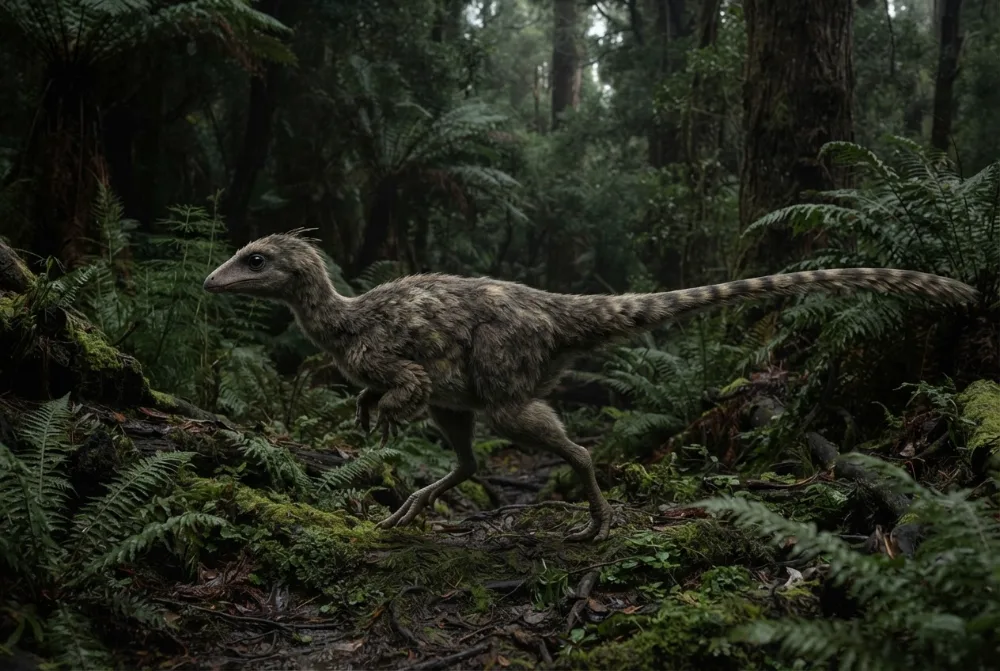
Its tail was extremely long, about three times the length of the rest of its body, and had more tail bones than most other plant-eating dinosaurs.1
It had enlarged eye sockets and large optic lobes in its brain, which helped it see in the dim light of polar winters.21
Bone growth lines show that Leaellynasaura grew continuously all year, meaning it did not hibernate or slow down much during the cold, dark winter.2
It may have lived in small herds or flocks, and dinosaur burrows found in Victoria suggest some small ornithopods might have sheltered underground in the coldest months.2
Its teeth had five ridges on each side, fewer than other small Victorian ornithopods like Qantassaurus and Atlascopcosaurus, which had at least eight.2
Ebibuuzo ebisinga okubuuzibwa ku Leaellynasaura
?How big was Leaellynasaura?
About 1.8 metres (6 feet) long including its tail, but some estimates based on a juvenile specimen suggest about 1 metre (3.3 feet).12
?What did Leaellynasaura eat?
It was a plant-eater that ate low-growing plants like horsetails, cycads, and ferns.12
?Did Leaellynasaura have feathers?
Scientists think it might have had hair-like filaments on its skin, but no feathers have been found yet.4
?Where was Leaellynasaura found?
It was discovered in Dinosaur Cove, Victoria, Australia, in rocks that were once inside the Antarctic Circle.12
?How fast could Leaellynasaura run?
Nobody knows for sure, but as a small, lightweight dinosaur it was probably quick and agile.1
Eri abakugu mu dayinoso
- Erinnya lya ssaayansi
- Leaellynasaura
- Yatuumibwa
- Rich and Vickers-Rich 19895
- Ekibinja
- Ezirya ebimera ez'omumwa ng'ogw'ekinyonyi
- Ekika / ekibinja
- Elasmaria5
- Engabanya
- Ornithischia > Ornithopoda > Iguanodontia5
- Emyaka gy'enjazi
- emyaka obukadde 113 okutuuka ku 110 (Albian)5
- Ensengeka z'enjazi
- Eumeralla5
- Ensi
- Awusitureeliya5
- Ebisigalira ebyazuulibwa
- 4 mu The Paleobiology Database5
- Okuzuulibwa
- Leaellynasaura was discovered in Dinosaur Cove, Australia, and named in 1989 by Tom Rich and Patricia Vickers-Rich. They named it after their daughter Leaellyn.15
- Kikyakubaganyizibwako ebirowoozo
- Scientists are not sure which fossils belong to Leaellynasaura, because most were found scattered, and some long-tailed skeletons may belong to a different dinosaur.1
Ebituufu gye biva
- Leaellynasaura (en.wikipedia.org)
- Dinosaurs - Leaellynasaura amicagraphica - The Australian Museum (australian.museum)
- LEAELLYNASAURA - DinoChecker dinosaur archive (dinochecker.com)
- Leaellynasaura | Western Australian Museum (museum.wa.gov.au)
- Leaellynasaura in The Paleobiology Database (CC BY 4.0): emyaka, ebifo, ensengeka z'enjazi, engabanya.
Buli kituufu ku lupapula luno kirina ennamba eraga ensibuko yaakyo. Bwe tuba nga tukoze ensobi, tusonyiwe, ffe tuli bawagizi ba dayinoso, so si magazini ya ssaayansi. Tubuulire ku [email protected] tujja kugitereeza.
 Rex alumwa enjala! Dino Wiki pulojekiti ya taata eri mutabani we ayagala ennyo dayinoso, ya bwereere, tewali bulango era tewali bikulondoola. Abakulu basobola okuwa Rex akantu ak'okulya okuyamba okugikuuma ku mutimbagano.Liisa Rex
Endala okuva mu kibinja kye kimu: Ezirya ebimera ez'omumwa ng'ogw'ekinyonyi
 IguanodonEzirya ebimera ez'omumwa ng'ogw'ekinyonyi
 TenontosaurusEzirya ebimera ez'omumwa ng'ogw'ekinyonyi
 ThescelosaurusEzirya ebimera ez'omumwa ng'ogw'ekinyonyi
 ZalmoxesEzirya ebimera ez'omumwa ng'ogw'ekinyonyi
 CamptosaurusEzirya ebimera ez'omumwa ng'ogw'ekinyonyi
 RhabdodonEzirya ebimera ez'omumwa ng'ogw'ekinyonyi
 Stegosaurus
 Archaeopteryx
 Giganotosaurus
 Microraptor
 Deinonychus
 Baryonyx