 Kwizi: Oli dayinoso ki?
 Olutalo lwa dayinoso
 Empaka z'emisinde gya dayinoso
 Emizannyo emitono egya dayinoso
 Alubaamu ya sitika
 Enkalala za dayinoso eza TOP
 Mpa ekyewuunyisa!
Leptoceratops
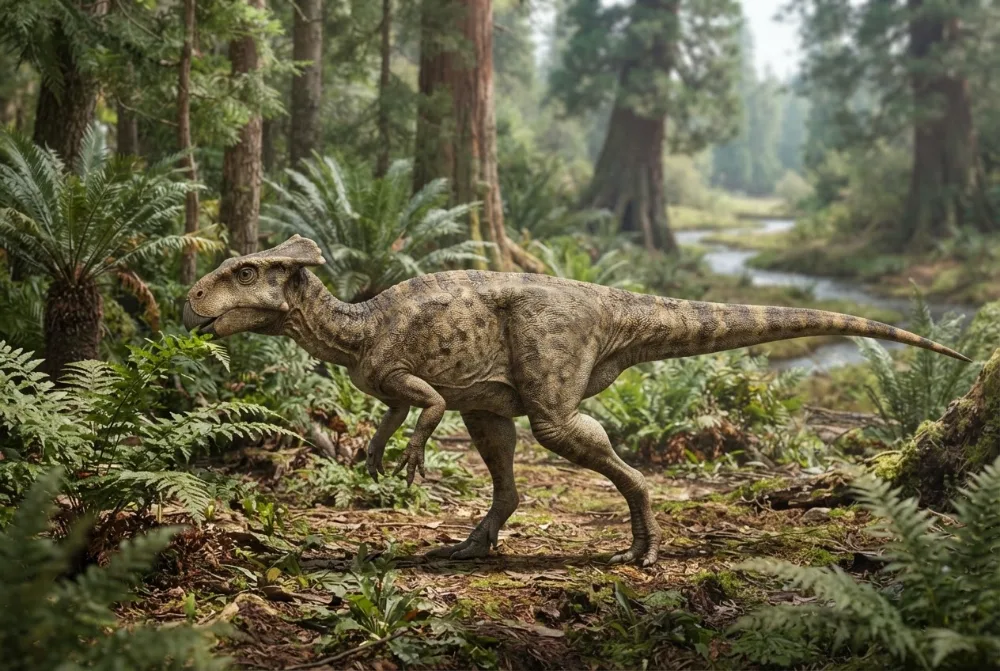
Leptoceratops was a tiny horned dinosaur that lived at the very end of the Age of Dinosaurs. It had a small frill on its head and no horns, and it walked on two legs. Even though it was small, it was a tough plant-eater that lived alongside giants like Triceratops and Tyrannosaurus.1
Yabeerawo ddi?
Yali munene atya?
Yali muwanvu kwenkana wa?
Yali mugulumivu kwenkana wa?
Yali muzito kwenkana wa?
 obuwanvu ng'embwa 3, ennyindo ku mukira🍌obuwanvu ng'amenvu 17 nga gaddiriŋŋana🍉obuzito ng'obwa wotamerooni 40🧸obuzito ng'obw'abaana 11 ab'omu nnasale🎒obuzito ng'obw'abaana b'essomero 6🏃yandidduse mita 100 mu sikonda 9.7 (omuntu asinga embiro yeetaaga 9.6)
Leptoceratops yali munene atya bw'ogeraageranya ku GGWE?
Kubala kwokka mu browser yo. Tewali kiterekebwa wadde okusindikibwa wonna.
Yali wa mbiro kwenkana wa?


Ebyewuunyisa
Leptoceratops is one of the smallest horned dinosaurs ever found, only about the size of a large dog.1
Unlike its big cousin Triceratops, Leptoceratops had no horns and only a tiny frill at the back of its skull.1
The first Leptoceratops fossils were discovered in 1910 by Barnum Brown along the Red Deer River in Alberta, Canada.13
Scientists have found at least eight Leptoceratops specimens, including several nearly complete skeletons.2
Leptoceratops lived right at the end of the Cretaceous Period, about 66 to 72 million years ago.6
Some bonebeds in Montana suggest that Leptoceratops may have dug burrows and lived in groups.3
Leptoceratops had a deep, pointed beak and teeth with simple roots, perfect for chewing tough plants.2
Ebibuuzo ebisinga okubuuzibwa ku Leptoceratops
?How big was Leptoceratops?
About 2 metres (6.6 feet) long and 0.6 to 0.9 metres (2 to 3 feet) tall at the hips, roughly the size of a large dog.14
?Did Leptoceratops have horns?
No, Leptoceratops had no horns, only a small frill on its head, unlike its big cousin Triceratops.14
?What did Leptoceratops eat?
It was a plant-eater that ate tough plants like angiosperms, conifers, and cycads, using its beak and special teeth to chew.1
?Could Leptoceratops walk on two legs?
Yes, it likely walked on two legs when moving fast and on all fours when moving slowly.14
Omumenyi w'enfumo
Enfumo: Leptoceratops is often thought to be a baby Triceratops because of its small size and simple frill.
Amazima: Leptoceratops is a separate, smaller species of horned dinosaur that lived at the same time as Triceratops. It had its own unique features like a tiny frill and no horns.1
Eri abakugu mu dayinoso
- Erinnya lya ssaayansi
- Leptoceratops
- Yatuumibwa
- Brown 19146
- Ekibinja
- Dayinoso ez'amayembe
- Ekika / ekibinja
- Leptoceratopsidae6
- Engabanya
- Ornithischia > Ceratopsia6
- Emyaka gy'enjazi
- emyaka obukadde 72 okutuuka ku 66 (Maastrichtian)6
- Ensengeka z'enjazi
- Scollard, Hell Creek, "Lance"6
- Ensi
- Amerika, Kanada6
- Ebisigalira ebyazuulibwa
- 8 mu The Paleobiology Database6
- Okuzuulibwa
- Leptoceratops was named by American paleontologist Barnum Brown in 1914, based on a partial skull and skeleton found in 1910 in Alberta, Canada.13
- Kikyakubaganyizibwako ebirowoozo
- Scientists still debate whether some fossils from Montana belong to Leptoceratops or to its close relatives Montanoceratops and Cerasinops.1
Ebituufu gye biva
- Leptoceratops - Wikipedia (en.wikipedia.org)
- A NEW PARTIAL SKELETON OF LEPTOCERATOPS GRACILIS FROM (experiment-uploads.s3.amazonaws.com)
- LEPTOCERATOPS - DinoChecker dinosaur archive (dinochecker.com)
- Leptoceratops Gracilis, Dinosaur Pictures, Dinosaur Facts - National Geographic | National Geographic (nationalgeographic.com)
- Leptoceratops | Natural History Museum (nhm.ac.uk)
- Leptoceratops in The Paleobiology Database (CC BY 4.0): emyaka, ebifo, ensengeka z'enjazi, engabanya.
Buli kituufu ku lupapula luno kirina ennamba eraga ensibuko yaakyo. Bwe tuba nga tukoze ensobi, tusonyiwe, ffe tuli bawagizi ba dayinoso, so si magazini ya ssaayansi. Tubuulire ku [email protected] tujja kugitereeza.
 Rex alumwa enjala! Dino Wiki pulojekiti ya taata eri mutabani we ayagala ennyo dayinoso, ya bwereere, tewali bulango era tewali bikulondoola. Abakulu basobola okuwa Rex akantu ak'okulya okuyamba okugikuuma ku mutimbagano.Liisa Rex
 Triceratops
 Protoceratops
 Ojoceratops
 Tatankaceratops
 Psittacosaurus
 Centrosaurus
 Tyrannosaurus
 Velociraptor
 Spinosaurus
 Ankylosaurus
 Parasaurolophus
 Pteranodon