 Kwizi: Oli dayinoso ki?
 Olutalo lwa dayinoso
 Empaka z'emisinde gya dayinoso
 Emizannyo emitono egya dayinoso
 Alubaamu ya sitika
 Enkalala za dayinoso eza TOP
 Mpa ekyewuunyisa!
Magnamanus
Magnamanus was a big, plant-eating dinosaur that lived in what is now Spain about 130 million years ago. It had huge hands with a thumb spike and a fifth finger, which helped it grab plants. This dinosaur was as long as a bus and weighed as much as a small car.1
Yabeerawo ddi?
Yali munene atya?
Yali muwanvu kwenkana wa?
Yali mugulumivu kwenkana wa?
kuteebereza
Yali muzito kwenkana wa?
 obuwanvu ng'emmotoka 2 ezisimbiddwa mu lunyiriri🍌obuwanvu ng'amenvu 56 nga gaddiriŋŋana
 obuzito ng'obw'embwa 150🍉obuzito ng'obwa wotamerooni 600🎒obuzito ng'obw'ebibiina 4 ebijjuvu eby'abaana b'essomero🐻❄️obuzito ng'obwa ddubu enjeru 7🏃yandidduse mita 100 mu sikonda 15 (omuntu asinga embiro yeetaaga 9.6)
Magnamanus yali munene atya bw'ogeraageranya ku GGWE?
Kubala kwokka mu browser yo. Tewali kiterekebwa wadde okusindikibwa wonna.
Yali wa mbiro kwenkana wa?


Ebyewuunyisa
Magnamanus had a hand that was very wide, with the wrist making up 70% of the hand's length.1
Its thumb had a sharp spike, similar to the famous Iguanodon, which might have been used for defense or digging.1
The name Magnamanus means 'large hand' in Latin, because its hands were big compared to its body.1
This dinosaur lived during the Early Cretaceous period, about 130 million years ago, in a warm, wet environment with rivers and lakes.1
The skeleton of Magnamanus was found scattered over an area of eight square meters, but all bones belonged to one old adult.1
Magnamanus is a styracosternan, a group of plant-eating dinosaurs that includes Iguanodon and its close relatives.1
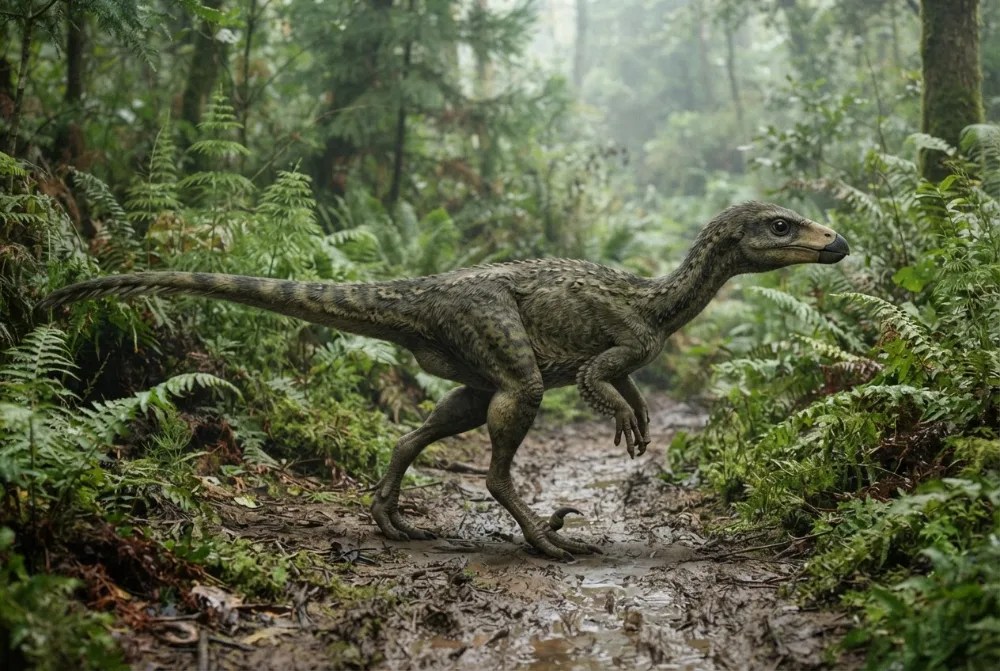
Ebibuuzo ebisinga okubuuzibwa ku Magnamanus
?How big was Magnamanus?
Magnamanus was about 9 to 10 metres long and weighed around 3 tonnes, about the size of a bus and as heavy as a large elephant.1
?What did Magnamanus eat?
Magnamanus was a herbivore, meaning it ate plants. It used its big hands and thumb spike to grab and pull plants.1
?Why is it called Magnamanus?
The name Magnamanus means 'large hand' in Latin, because its hands were big compared to its body.1
?Where was Magnamanus found?
Magnamanus was found in the Golmayo Formation near Soria, Spain. Its skeleton was discovered in a marsh area called Zorralbo I.1
Eri abakugu mu dayinoso
- Erinnya lya ssaayansi
- Magnamanus
- Yatuumibwa
- Fuentes Vidarte et al. 20162
- Ekibinja
- Ezirya ebimera ez'omumwa ng'ogw'ekinyonyi
- Ekika / ekibinja
- Styracosterna2
- Engabanya
- Ornithischia > Ornithopoda > Iguanodontia2
- Emyaka gy'enjazi
- emyaka obukadde 133 okutuuka ku 121 (Hauterivian / Barremian)2
- Ensengeka z'enjazi
- Golmayo2
- Ensi
- Sipeyini2
- Ebisigalira ebyazuulibwa
- 1 mu The Paleobiology Database2
- Okuzuulibwa
- Magnamanus was discovered between 2000 and 2004 by Carolina Fuentes and Manuel Meijide, along with their children, at the Zorralbo I site near Soria, Spain. It was named and described in 2016 by Fuentes Vidarte and colleagues.1
- Kikyakubaganyizibwako ebirowoozo
- Scientists are still debating exactly where Magnamanus fits on the family tree of iguanodontian dinosaurs, as it has some unique features in its hands and wrists.1
Ebituufu gye biva
- Magnamanus (en.wikipedia.org)
- Magnamanus in The Paleobiology Database (CC BY 4.0): emyaka, ebifo, ensengeka z'enjazi, engabanya.
Buli kituufu ku lupapula luno kirina ennamba eraga ensibuko yaakyo. Bwe tuba nga tukoze ensobi, tusonyiwe, ffe tuli bawagizi ba dayinoso, so si magazini ya ssaayansi. Tubuulire ku [email protected] tujja kugitereeza.
 Rex alumwa enjala! Dino Wiki pulojekiti ya taata eri mutabani we ayagala ennyo dayinoso, ya bwereere, tewali bulango era tewali bikulondoola. Abakulu basobola okuwa Rex akantu ak'okulya okuyamba okugikuuma ku mutimbagano.Liisa Rex
Endala okuva mu kibinja kye kimu: Ezirya ebimera ez'omumwa ng'ogw'ekinyonyi
 IguanodonEzirya ebimera ez'omumwa ng'ogw'ekinyonyi
 TenontosaurusEzirya ebimera ez'omumwa ng'ogw'ekinyonyi
 ThescelosaurusEzirya ebimera ez'omumwa ng'ogw'ekinyonyi
 ZalmoxesEzirya ebimera ez'omumwa ng'ogw'ekinyonyi
 CamptosaurusEzirya ebimera ez'omumwa ng'ogw'ekinyonyi
 RhabdodonEzirya ebimera ez'omumwa ng'ogw'ekinyonyi
 Stegosaurus
 Archaeopteryx
 Giganotosaurus
 Microraptor
 Deinonychus
 Baryonyx