 Kwizi: Oli dayinoso ki?
 Olutalo lwa dayinoso
 Empaka z'emisinde gya dayinoso
 Emizannyo emitono egya dayinoso
 Alubaamu ya sitika
 Enkalala za dayinoso eza TOP
 Mpa ekyewuunyisa!
Yabeerawo ddi?

Yali munene atya?
Yali muwanvu kwenkana wa?
Yali mugulumivu kwenkana wa?
kuteebereza
Yali muzito kwenkana wa?
 obuwanvu nga kkapa 4 ab'awaka, ennyindo ku mukira🍌obuwanvu ng'amenvu 12 nga gaddiriŋŋana🍌obuzito ng'obw'amenvu 110🏃yandidduse mita 100 mu sikonda 9.2 (omuntu asinga embiro yeetaaga 9.6)
Megapnosaurus yali munene atya bw'ogeraageranya ku GGWE?
Kubala kwokka mu browser yo. Tewali kiterekebwa wadde okusindikibwa wonna.
Yali wa mbiro kwenkana wa?


Ebyewuunyisa
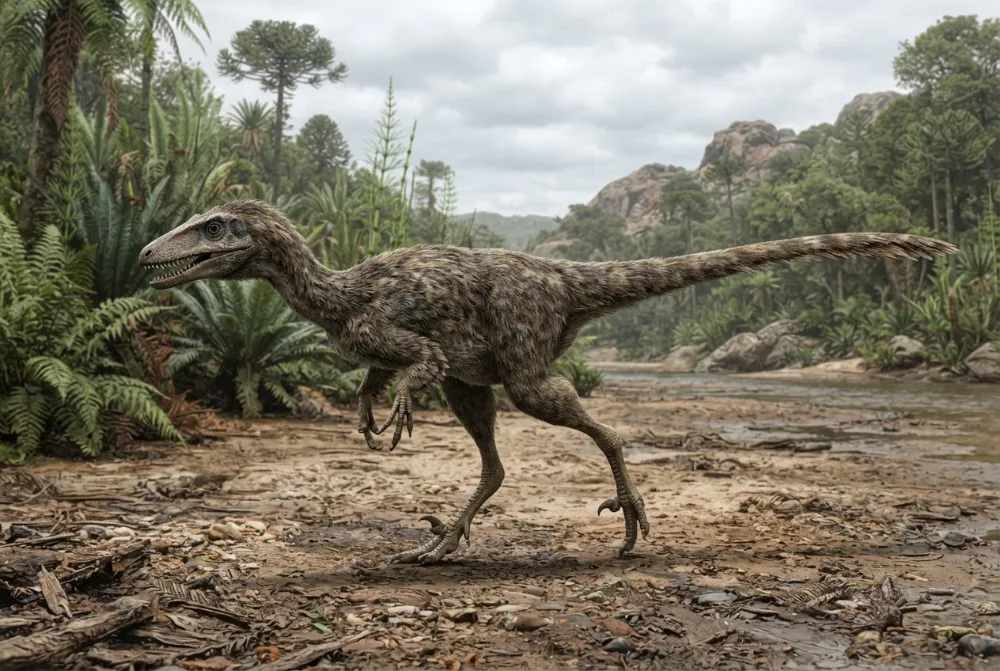
Megapnosaurus was one of the first dinosaurs ever shown with feathers in pictures, even though no one has found actual feathers with its fossils.1
At least 30 Megapnosaurus skeletons were found together in Zimbabwe, which suggests they might have lived or hunted in groups.1
Its name changed over time: first it was called Syntarsus, but that name was already used for a beetle, so scientists gave it a new name in 2001.1
Megapnosaurus had an S-shaped neck and long hind legs that looked like the legs of a secretary bird.1
Its hands had four fingers, which is more than most later meat-eating dinosaurs had.1
Some scientists think Megapnosaurus might actually belong to the genus Coelophysis, but most recent studies say it is its own genus.1
Ebibuuzo ebisinga okubuuzibwa ku Megapnosaurus
?How big was Megapnosaurus?
Megapnosaurus grew up to about 2.2 metres (7.2 feet) long and weighed up to 13 kilograms (29 pounds).1
?What did Megapnosaurus eat?
Megapnosaurus was a carnivore, meaning it ate meat. It may have hunted in packs and preyed on early plant-eating dinosaurs and lizards.1
?When did Megapnosaurus live?
Megapnosaurus lived during the Early Jurassic Period, about 199 to 188 million years ago.1
?Where was Megapnosaurus found?
Fossils of Megapnosaurus were found in Zimbabwe and South Africa in Africa.1
?Did Megapnosaurus have feathers?
Nobody knows for sure. It was one of the first dinosaurs shown with feathers in pictures, but no actual feathers have been found with its fossils.1
?Why is it called Megapnosaurus?
Megapnosaurus means 'big dead lizard' in Greek. It got this name after its first name, Syntarsus, was already used for a beetle.1
Eri abakugu mu dayinoso
- Erinnya lya ssaayansi
- Megapnosaurus
- Yatuumibwa
- Ivie et al. 20012
- Ekibinja
- Dayinoso ezirya ennyama
- Ekika / ekibinja
- Coelophysidae2
- Engabanya
- Theropoda > Coelophysoidea2
- Emyaka gy'enjazi
- emyaka obukadde 201 okutuuka ku 193 (Hettangian / Sinemurian)2
- Ensengeka z'enjazi
- Forest Sandstone, Nyamandhlovu Sandstones, Elliot2
- Ensi
- Zimbabwe, Afirika ey'Obukiikaddyo, Cayina, Amerika2
- Ebisigalira ebyazuulibwa
- 8 mu The Paleobiology Database2
- Okuzuulibwa
- The first fossils were found in 1963 by students in Zimbabwe. Scientist Michael Raath named it Syntarsus rhodesiensis in 1969, and later it was renamed Megapnosaurus in 2001.1
- Kikyakubaganyizibwako ebirowoozo
- Scientists still debate whether Megapnosaurus should be its own genus or just a species of Coelophysis.1
Ebituufu gye biva
- Megapnosaurus (en.wikipedia.org)
- Megapnosaurus in The Paleobiology Database (CC BY 4.0): emyaka, ebifo, ensengeka z'enjazi, engabanya.
Buli kituufu ku lupapula luno kirina ennamba eraga ensibuko yaakyo. Bwe tuba nga tukoze ensobi, tusonyiwe, ffe tuli bawagizi ba dayinoso, so si magazini ya ssaayansi. Tubuulire ku [email protected] tujja kugitereeza.
 Rex alumwa enjala! Dino Wiki pulojekiti ya taata eri mutabani we ayagala ennyo dayinoso, ya bwereere, tewali bulango era tewali bikulondoola. Abakulu basobola okuwa Rex akantu ak'okulya okuyamba okugikuuma ku mutimbagano.Liisa Rex
 Allosaurus
 Carnotaurus
 Dilophosaurus
 Giganotosaurus
 Compsognathus
 Paronychodon
 Stenopterygius
 Dorygnathus
 Lufengosaurus
 Scutellosaurus
 Yunnanosaurus
 Temnodontosaurus