 Kwizi: Oli dayinoso ki?
 Olutalo lwa dayinoso
 Empaka z'emisinde gya dayinoso
 Emizannyo emitono egya dayinoso
 Alubaamu ya sitika
 Enkalala za dayinoso eza TOP
 Mpa ekyewuunyisa!
Microvenator
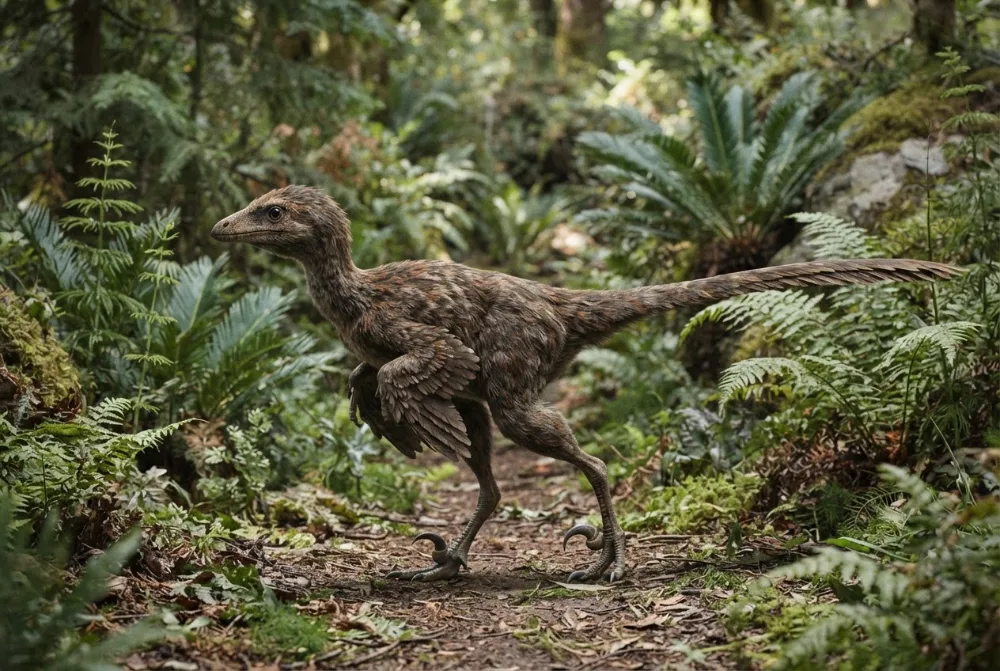
Microvenator was a tiny, fast-running dinosaur that lived in North America during the Early Cretaceous. It had long legs and was probably covered in feathers, making it look a bit like a small, speedy bird.1
Yabeerawo ddi?
Yali munene atya?
Yali muwanvu kwenkana wa?
Yali muzito kwenkana wa?
 obuwanvu nga kkapa 2.5 ab'awaka, ennyindo ku mukira🍌obuwanvu ng'amenvu 7 nga gaddiriŋŋanaobuzito ng'obwa kkapa ow'awaka🍌obuzito ng'obw'amenvu 25🏃yandidduse mita 100 mu sikonda 16 (omuntu asinga embiro yeetaaga 9.6)
Microvenator yali munene atya bw'ogeraageranya ku GGWE?
Kubala kwokka mu browser yo. Tewali kiterekebwa wadde okusindikibwa wonna.
Yali wa mbiro kwenkana wa?


Ebyewuunyisa
Microvenator means 'small hunter', and its species name 'celer' means 'swift' because of its long, fast legs.1
The only known Microvenator fossil is a partial skeleton of a juvenile, so scientists are not sure how big the adults grew.1
Microvenator lived alongside famous dinosaurs like Deinonychus, Sauropelta, and Acrocanthosaurus in the Cloverly Formation.1
It is one of the earliest oviraptorosaurs known from North America, a group of bird-like dinosaurs that often had beaks and feathers.1
Microvenator fossils are very rare, probably because its bones were fragile and it had no teeth, making them harder to preserve.1
The first Microvenator fossil was collected in 1933 by Barnum Brown, but it was not named until 1970 by John Ostrom.1
Brown originally called it 'Megadontosaurus' (big-toothed lizard) because he mistakenly thought Deinonychus teeth belonged to it.1
Ebibuuzo ebisinga okubuuzibwa ku Microvenator
?How big was Microvenator?
The only known fossil is a juvenile about 1.3 metres (4.3 feet) long. Adults may have been larger, but their size is unknown.1
?Did Microvenator have feathers?
Yes, it was an oviraptorosaur, a group of bird-like dinosaurs that often had feathers. It probably looked like a small, speedy bird.1
?What did Microvenator eat?
It was an omnivore, meaning it ate both plants and meat. Its lack of teeth suggests it may have used a beak.3
?When did Microvenator live?
It lived during the Early Cretaceous period, about 110 million years ago.1
Eri abakugu mu dayinoso
- Erinnya lya ssaayansi
- Microvenator
- Yatuumibwa
- Ostrom 19703
- Ekibinja
- Dayinoso ez'ebyoya ez'enjawulo
- Ekika / ekibinja
- Caenagnathidae3
- Engabanya
- Theropoda > Oviraptorosauria3
- Emyaka gy'enjazi
- emyaka obukadde 121 okutuuka ku 94 (Aptian / Cenomanian)3
- Ensengeka z'enjazi
- Cloverly3
- Ensi
- Amerika3
- Ebisigalira ebyazuulibwa
- 4 mu The Paleobiology Database3
- Okuzuulibwa
- Barnum Brown collected the first Microvenator fossil in 1933 in Montana, but it was not named until 1970 by John Ostrom, who called it Microvenator celer.1
- Kikyakubaganyizibwako ebirowoozo
- Scientists are still unsure how big adult Microvenator grew, because the only known skeleton is from a juvenile.1
Ebituufu gye biva
- Microvenator (en.wikipedia.org)
- PBDB Taxon (paleobiodb.org)
- Microvenator in The Paleobiology Database (CC BY 4.0): emyaka, ebifo, ensengeka z'enjazi, engabanya.
Buli kituufu ku lupapula luno kirina ennamba eraga ensibuko yaakyo. Bwe tuba nga tukoze ensobi, tusonyiwe, ffe tuli bawagizi ba dayinoso, so si magazini ya ssaayansi. Tubuulire ku [email protected] tujja kugitereeza.
 Rex alumwa enjala! Dino Wiki pulojekiti ya taata eri mutabani we ayagala ennyo dayinoso, ya bwereere, tewali bulango era tewali bikulondoola. Abakulu basobola okuwa Rex akantu ak'okulya okuyamba okugikuuma ku mutimbagano.Liisa Rex
 Therizinosaurus
 Oviraptor
 Chirostenotes
 Citipes
 Leptorhynchos
 Avimimus
 Stegosaurus
 Iguanodon
 Archaeopteryx
 Giganotosaurus
 Microraptor
 Deinonychus