 Kwizi: Oli dayinoso ki?
 Olutalo lwa dayinoso
 Empaka z'emisinde gya dayinoso
 Emizannyo emitono egya dayinoso
 Alubaamu ya sitika
 Enkalala za dayinoso eza TOP
 Mpa ekyewuunyisa!
Mierasaurus
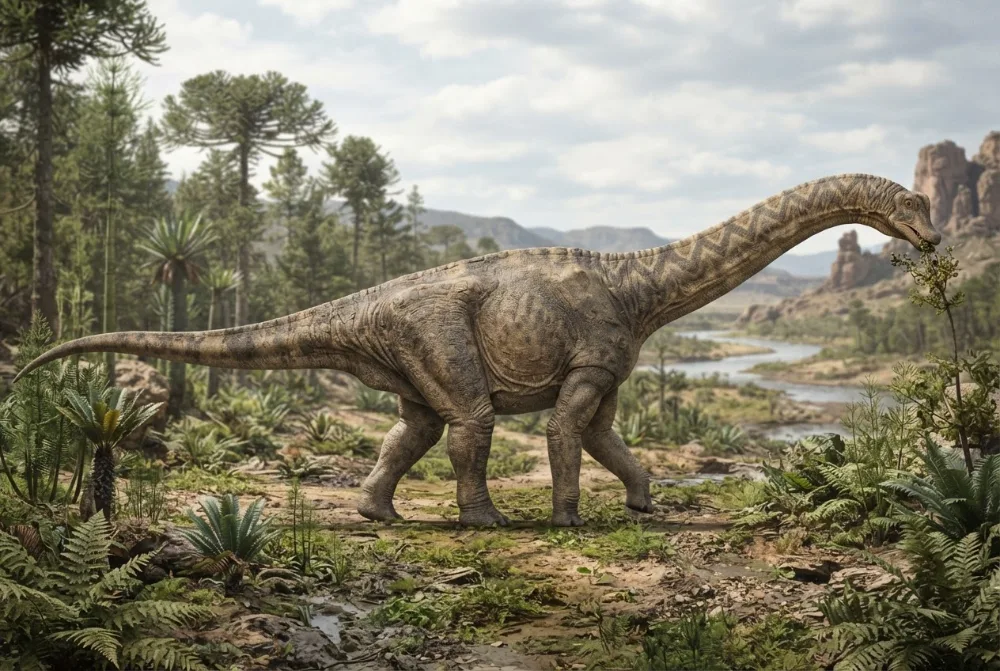
Mierasaurus was a giant long necked plant eater that lived in what is now Utah, USA. It was one of the last survivors of an older group of sauropods, the turiasaurs, that were once only known from Europe. Its fossils are some of the most complete sauropod remains ever found in North America.12
Yabeerawo ddi?
Yali munene atya?
Yali muwanvu kwenkana wa?
Yali mugulumivu kwenkana wa?
kuteebereza
Yali muzito kwenkana wa?
 obuwanvu ng'emmotoka 2.5 ezisimbiddwa mu lunyiriri🍌obuwanvu ng'amenvu 64 nga gaddiriŋŋana
 obuzito ng'obw'enjovu🍉obuzito ng'obwa wotamerooni 960🎒obuzito ng'obw'ebibiina 6 ebijjuvu eby'abaana b'essomero🐻❄️obuzito ng'obwa ddubu enjeru 11🏃yandidduse mita 100 mu sikonda 19 (omuntu asinga embiro yeetaaga 9.6)
Mierasaurus yali munene atya bw'ogeraageranya ku GGWE?
Kubala kwokka mu browser yo. Tewali kiterekebwa wadde okusindikibwa wonna.
Yali wa mbiro kwenkana wa?


Ebyewuunyisa
Mierasaurus is named after Bernardo de Miera y Pacheco, the first European scientist to explore Utah in 1776.12
Its fossils were dug up from a huge bone bed covering about 5,000 square meters, like almost one and a half football fields.2
Mierasaurus is a turiasaur, a group of sauropods that scientists thought lived only in Europe until this dinosaur was found in North America.1
The type specimen is a subadult, because some bones like the vertebrae were not fully fused together.1
The Doelling's Bowl site has also produced bones of an iguanodont dinosaur and a spiky armored ankylosaur.1
Ebibuuzo ebisinga okubuuzibwa ku Mierasaurus
?How big was Mierasaurus?
Scientists do not know its exact size yet, but it was a large sauropod. The only known skeleton is from a subadult, so it was still growing when it died.24
?What did Mierasaurus eat?
Mierasaurus was a plant eater. It had heart-shaped teeth that helped it strip leaves from plants.2
?Where was Mierasaurus found?
Its fossils were found in east-central Utah, USA, at a site called Doelling's Bowl in the Cedar Mountain Formation.24
?Is Mierasaurus a dinosaur?
Yes, Mierasaurus is a dinosaur. It is a type of sauropod, which is a long-necked, plant-eating dinosaur.2
Eri abakugu mu dayinoso
- Erinnya lya ssaayansi
- Mierasaurus
- Yatuumibwa
- Royo-Torres et al. 20175
- Ekibinja
- Ez'ensingo empanvu
- Ekika / ekibinja
- Turiasauria5
- Engabanya
- Sauropodomorpha > Sauropoda5
- Emyaka gy'enjazi
- emyaka obukadde 139 okutuuka ku 133 (Berriasian / Valanginian)5
- Ensengeka z'enjazi
- Cedar Mountain5
- Ensi
- Amerika5
- Ebisigalira ebyazuulibwa
- 1 mu The Paleobiology Database5
- Okuzuulibwa
- Mierasaurus was named and described in 2017 by Rafael Royo-Torres and colleagues. They studied a mostly complete skeleton dug up at Doelling's Bowl in eastern Utah, USA, during excavations by the Utah Geological Survey starting in 2005.12
- Kikyakubaganyizibwako ebirowoozo
- Scientists are not sure exactly how big Mierasaurus grew, because the only known skeleton is from a subadult that had not finished growing.1
Ebituufu gye biva
- preview-www.nature.com (preview-www.nature.com)
- Mierasaurus (en.wikipedia.org)
- Mierasaurus bobyoungi | Dinosaur Database by DinoAnimals.com (dinoanimals.com)
- Descendants of the Jurassic turiasaurs from Iberia found refuge in the Early Cretaceous of western USA | Scientific Reports (nature.com)
- Mierasaurus in The Paleobiology Database (CC BY 4.0): emyaka, ebifo, ensengeka z'enjazi, engabanya.
Buli kituufu ku lupapula luno kirina ennamba eraga ensibuko yaakyo. Bwe tuba nga tukoze ensobi, tusonyiwe, ffe tuli bawagizi ba dayinoso, so si magazini ya ssaayansi. Tubuulire ku [email protected] tujja kugitereeza.
 Rex alumwa enjala! Dino Wiki pulojekiti ya taata eri mutabani we ayagala ennyo dayinoso, ya bwereere, tewali bulango era tewali bikulondoola. Abakulu basobola okuwa Rex akantu ak'okulya okuyamba okugikuuma ku mutimbagano.Liisa Rex
 Brachiosaurus
 Diplodocus
 Brontosaurus
 Argentinosaurus
 Camarasaurus
 Morosaurus
 Stegosaurus
 Iguanodon
 Archaeopteryx
 Giganotosaurus
 Microraptor
 Deinonychus