 Kwizi: Oli dayinoso ki?
 Olutalo lwa dayinoso
 Empaka z'emisinde gya dayinoso
 Emizannyo emitono egya dayinoso
 Alubaamu ya sitika
 Enkalala za dayinoso eza TOP
 Mpa ekyewuunyisa!
Nichollsia
Nichollssaura was a small, fast-swimming marine reptile that lived in the sea that once covered Alberta, Canada. It was a plesiosaur, not a dinosaur, and had a long neck and four flippers for paddling through the water. This creature helps scientists fill in a big 40-million-year gap in the plesiosaur fossil record of North America.1
Yabeerawo ddi?
Yali munene atya?
Yali muwanvu kwenkana wa?
Yali muzito kwenkana wa?
 obuwanvu ng'embwa 3, ennyindo ku mukira🍌obuwanvu ng'amenvu 16 nga gaddiriŋŋana🍉obuzito ng'obwa wotamerooni 27🧸obuzito ng'obw'abaana 7 ab'omu nnasale🎒obuzito ng'obw'abaana b'essomero 4🏊yandiwuze obuwanvu bw'ekidiba ekinene (50 m) mu sikonda 6.4
Nichollsia yali munene atya bw'ogeraageranya ku GGWE?
Kubala kwokka mu browser yo. Tewali kiterekebwa wadde okusindikibwa wonna.
Yali wa mbiro kwenkana wa?


Ebyewuunyisa
The fossil was discovered accidentally by giant electric shovel operators in an oilsand mine. The shovel cut off some bones, but the rest of the skeleton was almost complete.1
This plesiosaur was named after Dr. Betsy Nicholls, a famous paleontologist. The first name Nichollsia was already used for a type of isopod, so scientists changed it to Nichollssaura.1
Nichollssaura had 165 gastroliths (stomach stones) inside it. The stones were smooth and round, probably swallowed to help grind food.1
The stomach stones came from rocks that were 8 to 10 million years older than the plesiosaur itself. This suggests Nichollssaura may have swum west to collect pebbles from ancient beaches.1
It lived about 110 million years ago in the Boreal Sea, a warm shallow sea that covered parts of North America.1
The holotype specimen is on display at the Royal Tyrrell Museum in Alberta, Canada.1
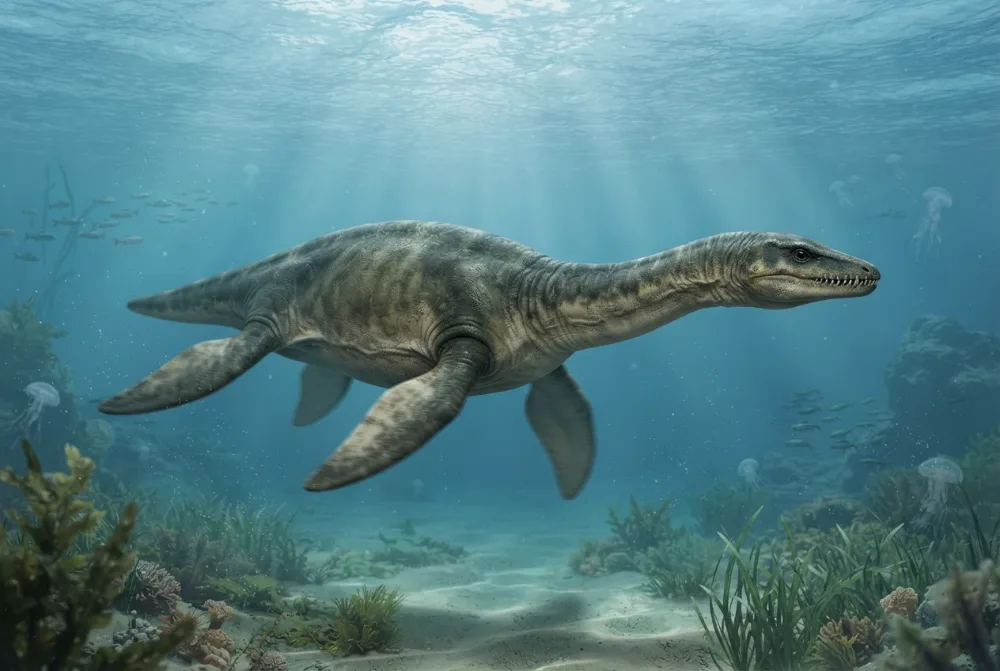
Eri abakugu mu dayinoso
- Erinnya lya ssaayansi
- Nichollsia
- Yatuumibwa
- Druckenmiller and Russell 20082
- Ekibinja
- Pulesiyosawulu
- Ekika / ekibinja
- Leptocleididae2
- Engabanya
- Plesiosauria > Sauropterygia2
- Emyaka gy'enjazi
- emyaka obukadde 113 okutuuka ku 100 (Albian)2
- Ebisigalira ebyazuulibwa
- 1 mu The Paleobiology Database2
- Okuzuulibwa
- The specimen was found in 1994 by shovel operators Greg Fisher and Lorne Cundal at a Syncrude oilsand mine in Alberta. It was named Nichollsia borealis by Druckenmiller and Russell in 2008, but the name was changed to Nichollssaura in 2009 because Nichollsia was already taken.12
Ebituufu gye biva
- Nichollssaura (en.wikipedia.org)
- Nichollsia in The Paleobiology Database (CC BY 4.0): emyaka, ebifo, ensengeka z'enjazi, engabanya.
Buli kituufu ku lupapula luno kirina ennamba eraga ensibuko yaakyo. Bwe tuba nga tukoze ensobi, tusonyiwe, ffe tuli bawagizi ba dayinoso, so si magazini ya ssaayansi. Tubuulire ku [email protected] tujja kugitereeza.
 Rex alumwa enjala! Dino Wiki pulojekiti ya taata eri mutabani we ayagala ennyo dayinoso, ya bwereere, tewali bulango era tewali bikulondoola. Abakulu basobola okuwa Rex akantu ak'okulya okuyamba okugikuuma ku mutimbagano.Liisa Rex
 Elasmosaurus
 Pliosaurus
 Plesiosaurus
 Cimoliasaurus
 Colymbosaurus
 Trinacromerum
 Stegosaurus
 Iguanodon
 Archaeopteryx
 Giganotosaurus
 Microraptor
 Deinonychus