 Kwizi: Oli dayinoso ki?
 Olutalo lwa dayinoso
 Empaka z'emisinde gya dayinoso
 Emizannyo emitono egya dayinoso
 Alubaamu ya sitika
 Enkalala za dayinoso eza TOP
 Mpa ekyewuunyisa!
Yabeerawo ddi?

Yali munene atya?
Yali muwanvu kwenkana wa?
Yali mugulumivu kwenkana wa?
kuteebereza
 obuwanvu nga kkapa 2 ab'awaka, ennyindo ku mukira🍌obuwanvu ng'amenvu 6 nga gaddiriŋŋana🪑mutono nnyo nga asobola okuyita wansi w'entebe🏃yandidduse mita 100 mu sikonda 15 (omuntu asinga embiro yeetaaga 9.6)
Papiliovenator yali munene atya bw'ogeraageranya ku GGWE?
Kubala kwokka mu browser yo. Tewali kiterekebwa wadde okusindikibwa wonna.
Yali wa mbiro kwenkana wa?


Ebyewuunyisa
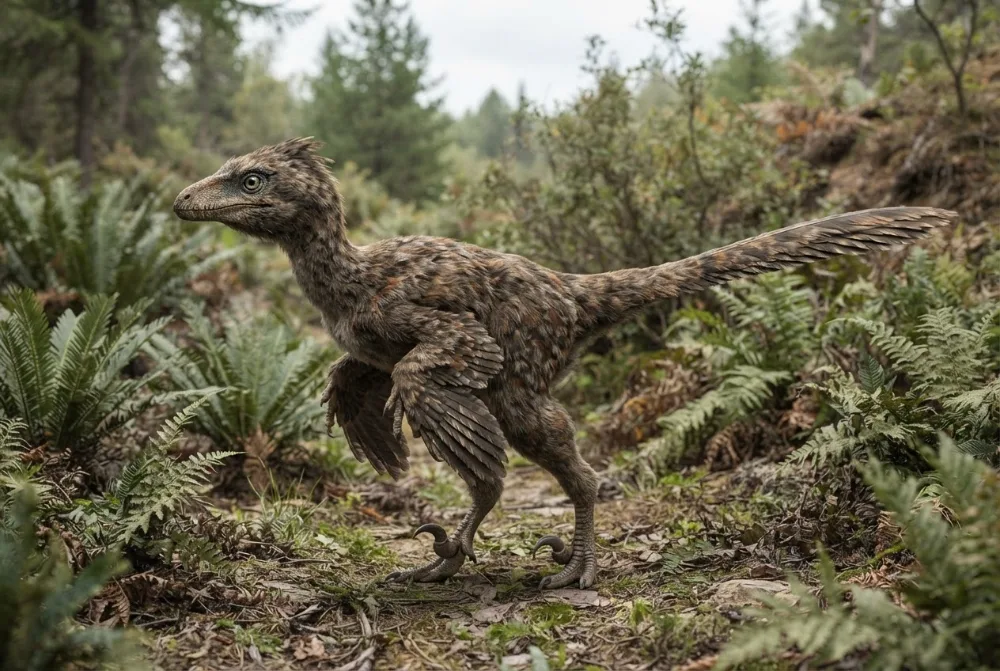
Papiliovenator gets its name from a butterfly-shaped bone in its back. The first two vertebrae of its spine had wide, wing-like parts that looked like a butterfly.1
Its snout was short and triangular, more like older troodontids from the Early Cretaceous. Most Late Cretaceous troodontids had long, low snouts.1
This dinosaur lived about 83 to 72 million years ago, during the Campanian age of the Late Cretaceous.12
Scientists think Papiliovenator was one of the earliest Late Cretaceous troodontids. Only one other troodontid, Almas, was more primitive.1
The only known fossil is a partial skeleton of a subadult, including a nearly complete skull and many other bones.1
Ebibuuzo ebisinga okubuuzibwa ku Papiliovenator
?How big was Papiliovenator?
It was a small dinosaur. Scientists have not given an exact length or weight, but troodontids were usually about the size of a turkey or a small dog.14
?What did Papiliovenator eat?
It probably hunted small animals and maybe ate plants too. Its teeth had no serrations, which is unusual for a meat-eater, so it may have eaten softer food.1
?Did Papiliovenator have feathers?
Yes, it was a troodontid, a type of bird-like raptor, and scientists think it had feathers.1
Eri abakugu mu dayinoso
- Erinnya lya ssaayansi
- Papiliovenator
- Yatuumibwa
- Pei et al. 20225
- Ekibinja
- Raputa
- Ekika / ekibinja
- Troodontidae5
- Engabanya
- Theropoda > Troodontidae5
- Emyaka gy'enjazi
- emyaka obukadde 84 okutuuka ku 72 (Campanian)5
- Ensengeka z'enjazi
- Wulansuhai5
- Ensi
- Cayina5
- Ebisigalira ebyazuulibwa
- 1 mu The Paleobiology Database5
- Okuzuulibwa
- Papiliovenator was named in 2022 by a team of scientists led by R. Pei. The fossils were found at the Bayan Mandahu Fossil Preserve in Inner Mongolia, China.15
- Kikyakubaganyizibwako ebirowoozo
- Scientists are not sure exactly what Papiliovenator ate. Its teeth lack serrations, which is rare for a carnivore, so its diet may have included plants or soft-bodied prey.12
Ebituufu gye biva
- Papiliovenator (en.wikipedia.org)
- PBDB Taxon (paleobiodb.org)
- Papiliovenator neimengguensis a Short-snouted Troodontid (blog.everythingdinosaur.com)
- 【中国科学报】内蒙古发现小型伤齿龙科恐龙新属种----中国科学院古脊椎动物与古人类研究所 (ivpp.cas.cn)
- Papiliovenator in The Paleobiology Database (CC BY 4.0): emyaka, ebifo, ensengeka z'enjazi, engabanya.
Buli kituufu ku lupapula luno kirina ennamba eraga ensibuko yaakyo. Bwe tuba nga tukoze ensobi, tusonyiwe, ffe tuli bawagizi ba dayinoso, so si magazini ya ssaayansi. Tubuulire ku [email protected] tujja kugitereeza.
 Rex alumwa enjala! Dino Wiki pulojekiti ya taata eri mutabani we ayagala ennyo dayinoso, ya bwereere, tewali bulango era tewali bikulondoola. Abakulu basobola okuwa Rex akantu ak'okulya okuyamba okugikuuma ku mutimbagano.Liisa Rex
 Velociraptor
 Microraptor
 Deinonychus
 Asiamericana
 Richardoestesia
 Saurornitholestes
 Tyrannosaurus
 Triceratops
 Spinosaurus
 Ankylosaurus
 Parasaurolophus
 Pteranodon