 Kwizi: Oli dayinoso ki?
 Olutalo lwa dayinoso
 Empaka z'emisinde gya dayinoso
 Emizannyo emitono egya dayinoso
 Alubaamu ya sitika
 Enkalala za dayinoso eza TOP
 Mpa ekyewuunyisa!
Polycotylus
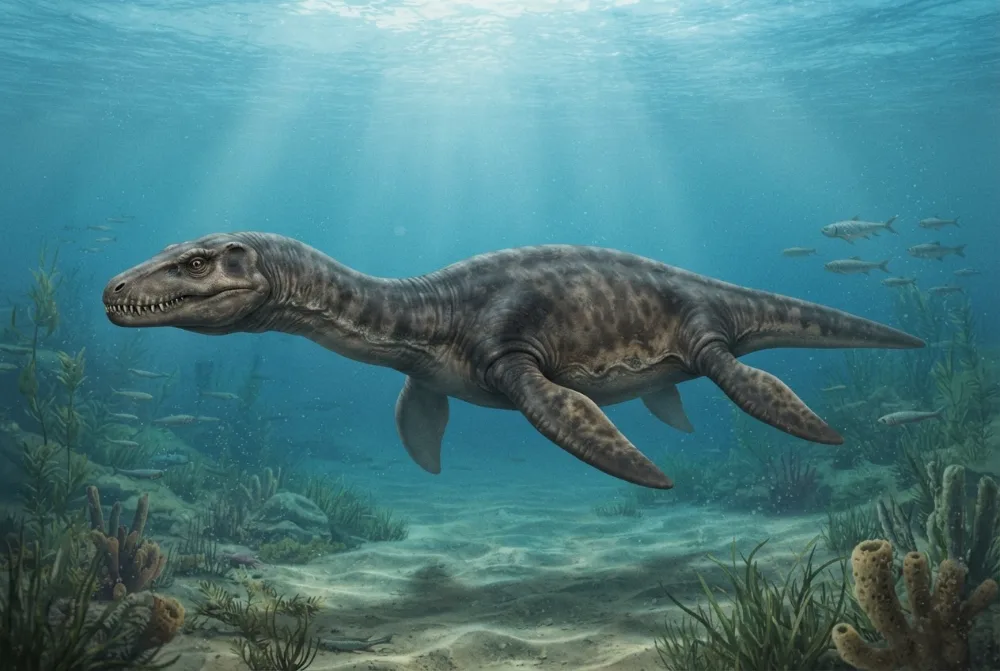
Polycotylus was a short-necked plesiosaur that swam in the warm seas of North America and Europe during the Cretaceous. It had a big head, strong flippers, and gave birth to live babies in the water, just like whales do today.1
Yabeerawo ddi?
Yali munene atya?
Yali muwanvu kwenkana wa?
Yali muzito kwenkana wa?
 obuwanvu ng'embwa 5, ennyindo ku mukira🍌obuwanvu ng'amenvu 30 nga gaddiriŋŋana🍉obuzito ng'obwa wotamerooni 200🧸obuzito ng'obw'abaana 53 ab'omu nnasale🎒obuzito ng'obw'abaana b'essomero 31🐻❄️obuzito ng'obwa ddubu enjeru 2🏊yandiwuze obuwanvu bw'ekidiba ekinene (50 m) mu sikonda 6.7
Polycotylus yali munene atya bw'ogeraageranya ku GGWE?
Kubala kwokka mu browser yo. Tewali kiterekebwa wadde okusindikibwa wonna.
Yali wa mbiro kwenkana wa?


Ebyewuunyisa
Polycotylus was named by famous paleontologist Edward Drinker Cope in 1869 from fossils found in Kansas.1
A fossil of Polycotylus found in Kansas contains a single large fetus inside the mother, proving that these plesiosaurs gave live birth.1
The baby Polycotylus was about 1.5 metres (4.9 feet) long, which is about 32 percent of the mother's length.1
Polycotylus had a short neck and a long head, making it look a bit like a pliosaur, but it is actually a type of plesiosaur called a polycotylid.1
Its name means 'much-cupped vertebrae' because the bones in its spine have deep cup-like hollows.1
Polycotylus lived in the Western Interior Seaway, a shallow sea that split North America in two during the Cretaceous.1
Scientists think Polycotylus gave birth to just one large baby at a time, a strategy called K-selection.1
Ebibuuzo ebisinga okubuuzibwa ku Polycotylus
?How big was Polycotylus?
Polycotylus was a medium-sized plesiosaur, measuring about 4.7 to 5.4 metres (15 to 18 feet) long and weighing over 1 metric ton (1.1 short tons).1
?Did Polycotylus have a short neck?
Yes, Polycotylus had a short neck and a long head, unlike the long-necked plesiosaurs like Elasmosaurus.1
?What did Polycotylus eat?
Polycotylus had thick teeth with striations on their surfaces, which suggests it ate fish and other marine animals, but the sources do not give a specific diet.1
?When did Polycotylus live?
Polycotylus lived toward the end of the Cretaceous period, about 84 to 66 million years ago.1
Omumenyi w'enfumo
Enfumo: Many people think all plesiosaurs had long necks like the Loch Ness Monster.
Amazima: Polycotylus had a short neck and a large head, very different from long-necked plesiosaurs like Elasmosaurus.1
Eri abakugu mu dayinoso
- Erinnya lya ssaayansi
- Polycotylus
- Yatuumibwa
- Cope 18693
- Ekibinja
- Pulesiyosawulu
- Ekika / ekibinja
- Polycotylidae3
- Engabanya
- Plesiosauria > Sauropterygia3
- Emyaka gy'enjazi
- emyaka obukadde 152 okutuuka ku 72 (Kimmeridgian / Campanian)3
- Ensengeka z'enjazi
- Niobrara, Frontier, Mooreville Chalk3
- Ensi
- Amerika, Bufalansa, Rwasha3
- Ebisigalira ebyazuulibwa
- 10 mu The Paleobiology Database3
- Okuzuulibwa
- Edward Drinker Cope named Polycotylus in 1869 from fragmentary bones found in the Niobrara Formation of Kansas. A nearly complete skeleton was later found in Alabama in 1949 but not described until 2002.1
- Kikyakubaganyizibwako ebirowoozo
- Scientists are not sure exactly how many species of Polycotylus existed, and some species may be the same as others.1
Ebituufu gye biva
- Polycotylus (en.wikipedia.org)
- PBDB Taxon (paleobiodb.org)
- Polycotylus in The Paleobiology Database (CC BY 4.0): emyaka, ebifo, ensengeka z'enjazi, engabanya.
Buli kituufu ku lupapula luno kirina ennamba eraga ensibuko yaakyo. Bwe tuba nga tukoze ensobi, tusonyiwe, ffe tuli bawagizi ba dayinoso, so si magazini ya ssaayansi. Tubuulire ku [email protected] tujja kugitereeza.
 Rex alumwa enjala! Dino Wiki pulojekiti ya taata eri mutabani we ayagala ennyo dayinoso, ya bwereere, tewali bulango era tewali bikulondoola. Abakulu basobola okuwa Rex akantu ak'okulya okuyamba okugikuuma ku mutimbagano.Liisa Rex
 Elasmosaurus
 Pliosaurus
 Plesiosaurus
 Cimoliasaurus
 Colymbosaurus
 Trinacromerum
 Stegosaurus
 Iguanodon
 Archaeopteryx
 Giganotosaurus
 Microraptor
 Deinonychus