 Kwizi: Oli dayinoso ki?
 Olutalo lwa dayinoso
 Empaka z'emisinde gya dayinoso
 Emizannyo emitono egya dayinoso
 Alubaamu ya sitika
 Enkalala za dayinoso eza TOP
 Mpa ekyewuunyisa!
Protopteryx
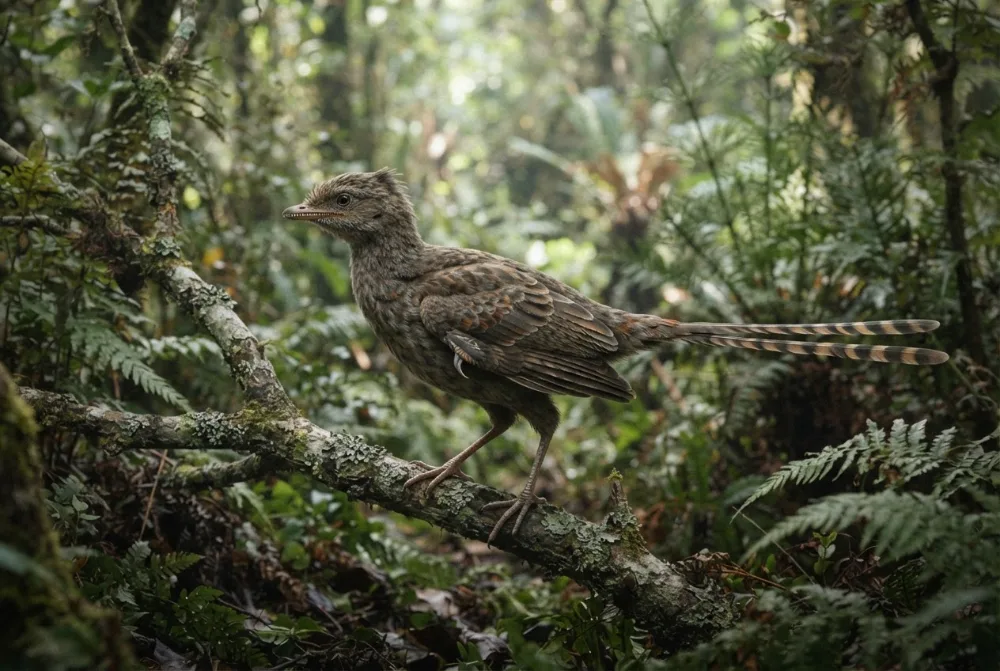
Protopteryx was a tiny early bird that lived about 131 million years ago in what is now China. It had two long, ribbon-like tail feathers that were different from any modern bird's feathers. This little bird could fly and probably ate small animals like insects.14
Yabeerawo ddi?
Yali munene atya?
Yali muwanvu kwenkana wa?
Yali mugulumivu kwenkana wa?
kuteebereza
Yali muzito kwenkana wa?
Protopteryx yali munene atya bw'ogeraageranya ku GGWE?
Kubala kwokka mu browser yo. Tewali kiterekebwa wadde okusindikibwa wonna.
Yali wa mbiro kwenkana wa?


Ebyewuunyisa
Protopteryx is one of the oldest and most primitive members of the group Enantiornithes, which were early birds that lived alongside dinosaurs.1
Its two central tail feathers were scalelike without barbs near the body, only having barbs at the tips. This is similar to the tail feathers of the modern red bird-of-paradise.12
Protopteryx was about the size of a modern starling, with a body length of only 10 centimetres (3.9 inches) not counting its long tail feathers.1
Its body was covered in three types of feathers: down feathers, flight feathers, and the long ribbon-like tail feathers.1
The down feathers of Protopteryx had flat, frayed tips instead of the hairlike barbs seen in modern birds.1
Protopteryx had a triosseal canal, a feature in the shoulder that helped with flight, and this is one of the earliest examples in birds.2
Ebibuuzo ebisinga okubuuzibwa ku Protopteryx
?How big was Protopteryx?
About 10 centimetres long, not counting its long tail feathers. It was roughly the size of a modern starling.1
?What did Protopteryx eat?
It probably ate small animals like insects. Its teeth are similar to those of Archaeopteryx, which suggests a similar diet.1
?Could Protopteryx fly?
Yes, it was adapted for flying. It had a triosseal canal in its shoulder and asymmetric wing feathers, just like modern flying birds.1
?Why did Protopteryx have long tail feathers?
The long, ribbon-like tail feathers were probably used for display, not for flying. They only had barbs at the tips, similar to the red bird-of-paradise today.1
Eri abakugu mu dayinoso
- Erinnya lya ssaayansi
- Protopteryx
- Yatuumibwa
- Zhang and Zhou 20004
- Ekibinja
- Ebinyonyi eby'olubereberye
- Ekika / ekibinja
- Enantiornithes4
- Engabanya
- Theropoda > Avialae4
- Emyaka gy'enjazi
- emyaka obukadde 133 okutuuka ku 121 (Hauterivian / Barremian)4
- Ensengeka z'enjazi
- Huajiying4
- Ensi
- Cayina4
- Ebisigalira ebyazuulibwa
- 2 mu The Paleobiology Database4
- Okuzuulibwa
- Protopteryx was named by Chinese paleontologists Fucheng Zhang and Zhonghe Zhou in 2000 based on a fossil found in the Yixian Formation of Hebei Province, China.14
- Kikyakubaganyizibwako ebirowoozo
- Scientists are still debating whether the long, ribbon-like tail feathers of Protopteryx were used for display, thermoregulation, or sensing the environment.1
Ebituufu gye biva
- Protopteryx (en.wikipedia.org)
- A Primitive Enantiornithine Bird and the Origin of Feathers (science.org)
- Anatomy and Flight Performance of the Early Enantiornithine Bird Protopteryx fengningensis : Information from New Specimens of the Early Cretaceous Huajiying Formation of China (anatomypubs.onlinelibrary.wiley.com)
- Protopteryx in The Paleobiology Database (CC BY 4.0): emyaka, ebifo, ensengeka z'enjazi, engabanya.
Buli kituufu ku lupapula luno kirina ennamba eraga ensibuko yaakyo. Bwe tuba nga tukoze ensobi, tusonyiwe, ffe tuli bawagizi ba dayinoso, so si magazini ya ssaayansi. Tubuulire ku [email protected] tujja kugitereeza.
 Rex alumwa enjala! Dino Wiki pulojekiti ya taata eri mutabani we ayagala ennyo dayinoso, ya bwereere, tewali bulango era tewali bikulondoola. Abakulu basobola okuwa Rex akantu ak'okulya okuyamba okugikuuma ku mutimbagano.Liisa Rex
 Archaeopteryx
 Hesperornis
 Ichthyornis
 Baptornis
 Jurapteryx
 Gobipteryx
 Stegosaurus
 Iguanodon
 Giganotosaurus
 Microraptor
 Deinonychus
 Baryonyx