 Kwizi: Oli dayinoso ki?
 Olutalo lwa dayinoso
 Empaka z'emisinde gya dayinoso
 Emizannyo emitono egya dayinoso
 Alubaamu ya sitika
 Enkalala za dayinoso eza TOP
 Mpa ekyewuunyisa!
Qiaowanlong
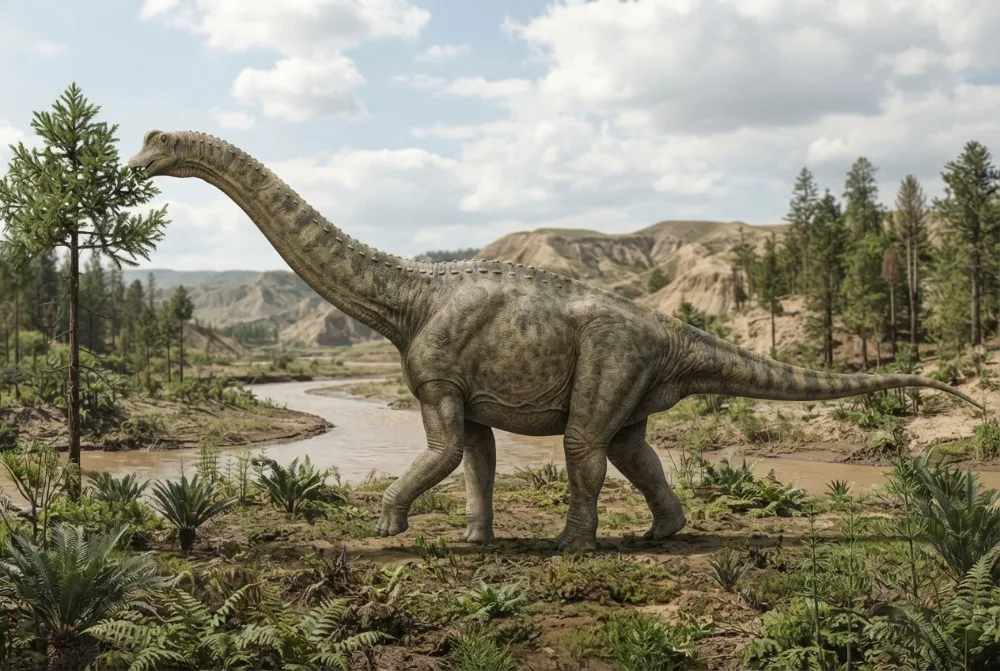
Qiaowanlong was a long-necked plant-eating dinosaur that lived in China during the Early Cretaceous. It was a brachiosaurid, meaning it had front legs as long as or longer than its back legs, like a giant giraffe. This dinosaur is one of the first well-preserved brachiosaurids ever found in Asia.21
Yabeerawo ddi?
Yali munene atya?
Yali muwanvu kwenkana wa?
Yali mugulumivu kwenkana wa?
Yali muzito kwenkana wa?

 obuwanvu ng'emmotoka 5 ezisimbiddwa mu lunyiriri🍌obuwanvu ng'amenvu 120 nga gaddiriŋŋanaobuzito ng'obw'emmotoka 9🍉obuzito ng'obwa wotamerooni 2600🎒obuzito ng'obw'ebibiina 16 ebijjuvu eby'abaana b'essomero🐻❄️obuzito ng'obwa ddubu enjeru 29🏃yandidduse mita 100 mu sikonda 22 (omuntu asinga embiro yeetaaga 9.6)
Qiaowanlong yali munene atya bw'ogeraageranya ku GGWE?
Kubala kwokka mu browser yo. Tewali kiterekebwa wadde okusindikibwa wonna.
Yali wa mbiro kwenkana wa?


Ebyewuunyisa
Qiaowanlong is known from eight neck vertebrae and part of the hip, found in two rock blocks in 2007.1
Its neck bones were short compared to other brachiosaurids. For example, its sixth neck vertebra was only 43 cm long, while the same bone in Brachiosaurus was 90 cm.1
Even though Qiaowanlong was small for a brachiosaurid, the fused bones in its spine show it was an adult or nearly full-grown.1
Qiaowanlong had a special feature in its neck: the neural spines (bumps on top of the vertebrae) were deeply split into two branches.1
This dinosaur shared a trait with the North American brachiosaurid Sauroposeidon: both lacked a certain bone ridge in the neck vertebrae.21
The hip bone called the ischium was very reduced in Qiaowanlong, with a shaft only about half as wide as the pubis bone.1
Qiaowanlong lived alongside many other dinosaurs in the Yujingzi Basin, including therizinosaurs, tyrannosaurs, and early duck-billed dinosaurs.1
Ebibuuzo ebisinga okubuuzibwa ku Qiaowanlong
?How big was Qiaowanlong?
Scientists disagree on its size. One estimate says it was about 12 metres (39 feet) long and weighed 6 tons, while another says it was 20.7 metres (68 feet) long and weighed 13 tons.3
?What did Qiaowanlong eat?
Qiaowanlong was a plant-eater. It used its long neck to reach leaves high in trees, like a giant giraffe.31
Eri abakugu mu dayinoso
- Erinnya lya ssaayansi
- Qiaowanlong
- Yatuumibwa
- You and Li 20094
- Ekibinja
- Ez'ensingo empanvu
- Ekika / ekibinja
- Euhelopodidae4
- Engabanya
- Sauropodomorpha > Sauropoda > Macronaria4
- Emyaka gy'enjazi
- emyaka obukadde 121 okutuuka ku 113 (Aptian)4
- Ensengeka z'enjazi
- Xiagou4
- Ensi
- Cayina4
- Ebisigalira ebyazuulibwa
- 1 mu The Paleobiology Database4
- Okuzuulibwa
- Qiaowanlong was named in 2009 by paleontologists Hailu You and Daqing Li. The fossils were dug up in 2007 by a field crew from the Fossil Research and Development Center in Gansu, China.41
- Kikyakubaganyizibwako ebirowoozo
- Scientists are not sure exactly how big Qiaowanlong grew, because only a partial skeleton has been found.1
Ebituufu gye biva
- The first well-preserved Early Cretaceous brachiosaurid dinosaur in Asia (pmc.ncbi.nlm.nih.gov)
- The first well-preserved Early Cretaceous brachiosaurid dinosaur in Asia | Proceedings B | The Royal Society (royalsocietypublishing.org)
- Qiaowanlong (en.wikipedia.org)
- Qiaowanlong in The Paleobiology Database (CC BY 4.0): emyaka, ebifo, ensengeka z'enjazi, engabanya.
Buli kituufu ku lupapula luno kirina ennamba eraga ensibuko yaakyo. Bwe tuba nga tukoze ensobi, tusonyiwe, ffe tuli bawagizi ba dayinoso, so si magazini ya ssaayansi. Tubuulire ku [email protected] tujja kugitereeza.
 Rex alumwa enjala! Dino Wiki pulojekiti ya taata eri mutabani we ayagala ennyo dayinoso, ya bwereere, tewali bulango era tewali bikulondoola. Abakulu basobola okuwa Rex akantu ak'okulya okuyamba okugikuuma ku mutimbagano.Liisa Rex
 Brachiosaurus
 Diplodocus
 Brontosaurus
 Argentinosaurus
 Camarasaurus
 Morosaurus
 Stegosaurus
 Iguanodon
 Archaeopteryx
 Giganotosaurus
 Microraptor
 Deinonychus