 Kwizi: Oli dayinoso ki?
 Olutalo lwa dayinoso
 Empaka z'emisinde gya dayinoso
 Emizannyo emitono egya dayinoso
 Alubaamu ya sitika
 Enkalala za dayinoso eza TOP
 Mpa ekyewuunyisa!
Rajasaurus
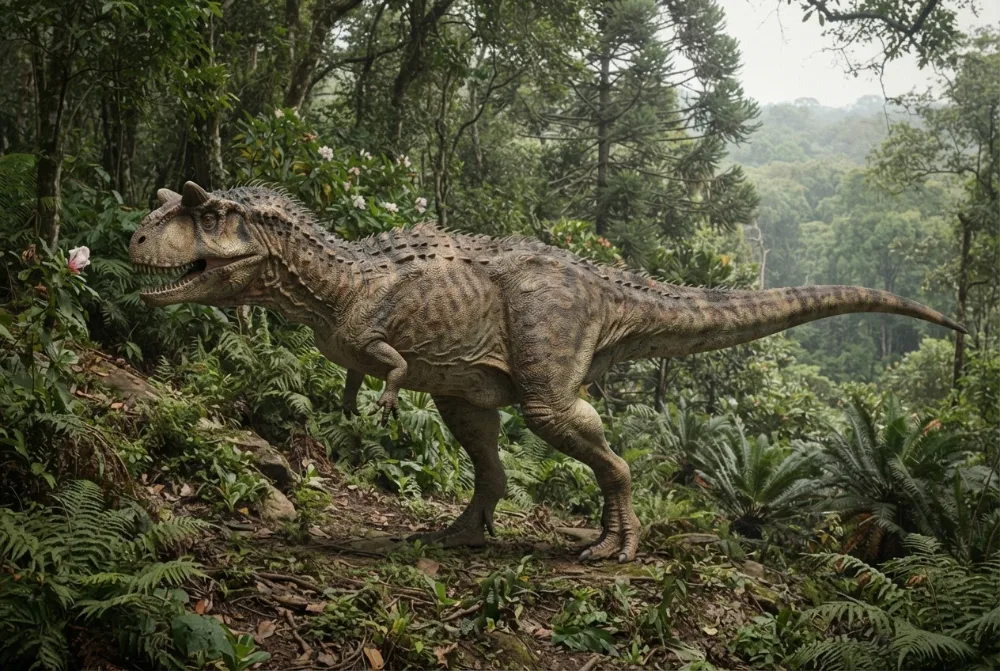
Rajasaurus was a meat-eating dinosaur that lived in India near the end of the Cretaceous Period. It had a single short horn on its forehead and used its strong neck and jaws to catch prey. This dinosaur was an ambush predator, hiding and then pouncing on its food.1
Yabeerawo ddi?
Yali munene atya?
Yali muwanvu kwenkana wa?
Yali mugulumivu kwenkana wa?
Yali muzito kwenkana wa?

 obuwanvu ng'embwa 7, ennyindo ku mukira🍌obuwanvu ng'amenvu 37 nga gaddiriŋŋanaobuzito ng'obw'embwa 200🍉obuzito ng'obwa wotamerooni 800🎒obuzito ng'obw'ebibiina 5 ebijjuvu eby'abaana b'essomero🐻❄️obuzito ng'obwa ddubu enjeru 9🏃yandidduse mita 100 mu sikonda 14 (omuntu asinga embiro yeetaaga 9.6)
Rajasaurus yali munene atya bw'ogeraageranya ku GGWE?
Kubala kwokka mu browser yo. Tewali kiterekebwa wadde okusindikibwa wonna.
Yali wa mbiro kwenkana wa?


Ebyewuunyisa
Rajasaurus had a single low horn on its forehead made mostly of nasal bone, unlike the horn of its relative Majungasaurus.2
It was one of the larger abelisaurids, measuring about 6.6 metres (22 feet) long.1
Rajasaurus lived on the island of India during the Late Cretaceous, when India was isolated from other continents.1
Its fossils were found in the Lameta Formation, which was once a river valley with an arid or semi-arid climate.2
The horn on its head might have been used for display or for head-butting other Rajasaurus during fights.12
Rajasaurus had short arms and four fingers, so it relied on its powerful head and jaws to catch prey.2
It is the first Indian theropod dinosaur to have preserved bones from the spine, hips, legs, and tail.2
Ebibuuzo ebisinga okubuuzibwa ku Rajasaurus
?How big was Rajasaurus?
Rajasaurus was about 6.6 metres (22 feet) long, though one scientist estimated it at 11 metres (36 feet). It weighed around 4 metric tons (4.4 short tons).21
?What did Rajasaurus eat?
Rajasaurus was a carnivore that ate meat. It probably hunted large prey like sauropod dinosaurs and may have also scavenged for food.13
?Did Rajasaurus have feathers?
No one knows for sure. The fossils don't show feathers, and most abelisaurids are not known to have had them, but some scientists think many theropods might have had simple feathers.21
?Was Rajasaurus bigger than T. rex?
No, Rajasaurus was smaller. T. rex could reach about 12 metres (40 feet) long, while Rajasaurus was only about 6.6 metres (22 feet) long.12
?Why did Rajasaurus have a horn?
The horn was probably used for display to attract mates or for head-butting other Rajasaurus during fights. It was made mostly of nasal bone.12
?Could Rajasaurus swim?
Probably not. It was a land dinosaur with strong legs for walking and running, not swimming. It lived near rivers but likely stayed on land.21
Eri abakugu mu dayinoso
- Erinnya lya ssaayansi
- Rajasaurus
- Yatuumibwa
- Wilson et al. 20034
- Ekibinja
- Dayinoso ezirya ennyama
- Ekika / ekibinja
- Abelisauridae4
- Engabanya
- Theropoda > Ceratosauria > Abelisauridae4
- Emyaka gy'enjazi
- emyaka obukadde 72 okutuuka ku 66 (Maastrichtian)4
- Ensengeka z'enjazi
- Lameta4
- Ensi
- Buyindi4
- Ebisigalira ebyazuulibwa
- 1 mu The Paleobiology Database4
- Okuzuulibwa
- Rajasaurus was named in 2003 by Jeffrey A. Wilson and colleagues. The fossils were found in the Lameta Formation of Gujarat, India, after dinosaur eggs were discovered there in 1981.24
- Kikyakubaganyizibwako ebirowoozo
- Scientists are not sure what the horn on its head was used for. It may have been for display or for head-butting, but no one knows for certain.1
Ebituufu gye biva
- Rajasaurus | Natural History Museum (nhm.ac.uk)
- Rajasaurus (en.wikipedia.org)
- Discoveries | Paul Sereno - Paleontologist | The University of Chicago (paulsereno.uchicago.edu)
- Rajasaurus in The Paleobiology Database (CC BY 4.0): emyaka, ebifo, ensengeka z'enjazi, engabanya.
Buli kituufu ku lupapula luno kirina ennamba eraga ensibuko yaakyo. Bwe tuba nga tukoze ensobi, tusonyiwe, ffe tuli bawagizi ba dayinoso, so si magazini ya ssaayansi. Tubuulire ku [email protected] tujja kugitereeza.
 Rex alumwa enjala! Dino Wiki pulojekiti ya taata eri mutabani we ayagala ennyo dayinoso, ya bwereere, tewali bulango era tewali bikulondoola. Abakulu basobola okuwa Rex akantu ak'okulya okuyamba okugikuuma ku mutimbagano.Liisa Rex
 Allosaurus
 Carnotaurus
 Dilophosaurus
 Giganotosaurus
 Compsognathus
 Paronychodon
 Tyrannosaurus
 Triceratops
 Velociraptor
 Spinosaurus
 Ankylosaurus
 Parasaurolophus