 Kwizi: Oli dayinoso ki?
 Olutalo lwa dayinoso
 Empaka z'emisinde gya dayinoso
 Emizannyo emitono egya dayinoso
 Alubaamu ya sitika
 Enkalala za dayinoso eza TOP
 Mpa ekyewuunyisa!
Yabeerawo ddi?

Yali munene atya?
Yali muwanvu kwenkana wa?
Yali mugulumivu kwenkana wa?
Yali muzito kwenkana wa?
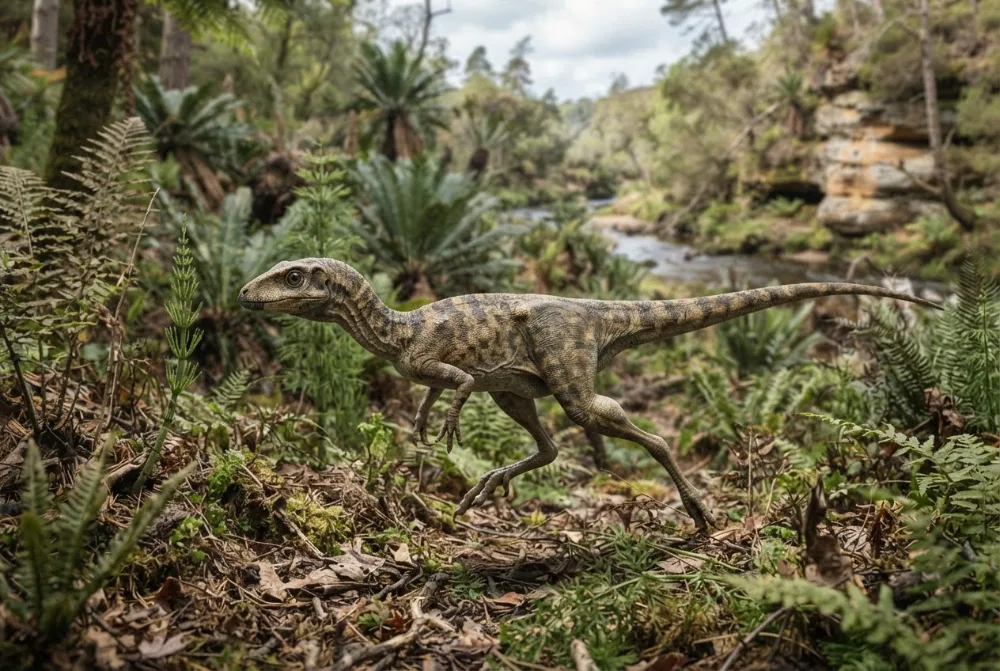
 obuwanvu nga kkapa 2 ab'awaka, ennyindo ku mukira🍌obuwanvu ng'amenvu 6 nga gaddiriŋŋana🪶obuzito butono okusinga kkapa ow'awaka🍌obuzito ng'obw'amenvu 8🪑mutono nnyo nga asobola okuyita wansi w'entebe🏃yandidduse mita 100 mu sikonda 24 (omuntu asinga embiro yeetaaga 9.6)
Saltopus yali munene atya bw'ogeraageranya ku GGWE?
Kubala kwokka mu browser yo. Tewali kiterekebwa wadde okusindikibwa wonna.
Yali wa mbiro kwenkana wa?


Ebyewuunyisa
Saltopus had hollow bones, just like birds and many other dinosaurs, which made it light and fast.1
The only known fossil of Saltopus was discovered in 1867 by William Taylor, but it was not named until 1910 by Friedrich von Huene.1
Saltopus had five fingers on each hand, but the fourth and fifth fingers were smaller than the others.1
Scientists are not sure if Saltopus was a true dinosaur or a very close relative. Some think it might be the closest relative of all dinosaurs.1
The fossil of Saltopus is mostly impressions and natural casts in sandstone, with very little actual bone preserved.1
Saltopus lived between 237 and 205 million years ago, during the Carnian to Norian stages of the Late Triassic.3
Ebibuuzo ebisinga okubuuzibwa ku Saltopus
?How big was Saltopus?
About 80 to 100 centimetres (31 to 39 inches) long, about the size of a domestic cat. It may have weighed around 1 kilogram (2.2 pounds).1
?Was Saltopus a dinosaur?
Scientists are not sure. It is a dinosauriform, a close relative of dinosaurs, and some studies think it might be the closest relative of true dinosaurs, while others think it was an early archosaur.1
?What did Saltopus eat?
It was a carnivore, or meat-eater, and it may have eaten mostly insects and other small prey.2
?When did Saltopus live?
It lived during the Late Triassic period, about 237 to 205 million years ago.1
?Where was Saltopus found?
Its only fossil was found in Scotland, in the Lossiemouth Sandstone Formation.1
?Why is it called Saltopus?
The name means 'hopping foot', from Latin and Greek words, because it probably hopped or jumped around.1
Eri abakugu mu dayinoso
- Erinnya lya ssaayansi
- Saltopus
- Yatuumibwa
- Huene 19103
- Ekibinja
- Dayinoso ezaasooka
- Ekika / ekibinja
- Saurischia3
- Emyaka gy'enjazi
- emyaka obukadde 237 okutuuka ku 206 (Carnian / Norian)3
- Ensengeka z'enjazi
- Lossiemouth Sandstone3
- Ensi
- Bungereza3
- Ebisigalira ebyazuulibwa
- 1 mu The Paleobiology Database3
- Okuzuulibwa
- The only fossil of Saltopus was found in 1867 by William Taylor in Scotland. It was first thought to be another animal, but in 1910 Friedrich von Huene named it Saltopus elginensis.1
- Kikyakubaganyizibwako ebirowoozo
- Scientists still debate whether Saltopus was a true dinosaur or a dinosauriform (a close relative). Some recent studies suggest it might be one of the earliest ornithischian dinosaurs.1
Ebituufu gye biva
- Saltopus (en.wikipedia.org)
- Saltopus Fact Sheet (enchantedlearning.com)
- Saltopus in The Paleobiology Database (CC BY 4.0): emyaka, ebifo, ensengeka z'enjazi, engabanya.
Buli kituufu ku lupapula luno kirina ennamba eraga ensibuko yaakyo. Bwe tuba nga tukoze ensobi, tusonyiwe, ffe tuli bawagizi ba dayinoso, so si magazini ya ssaayansi. Tubuulire ku [email protected] tujja kugitereeza.
 Rex alumwa enjala! Dino Wiki pulojekiti ya taata eri mutabani we ayagala ennyo dayinoso, ya bwereere, tewali bulango era tewali bikulondoola. Abakulu basobola okuwa Rex akantu ak'okulya okuyamba okugikuuma ku mutimbagano.Liisa Rex
 Herrerasaurus
 Tawa
Tawa Chindesaurus
 Nyasasaurus
 Staurikosaurus
 Alwalkeria
 Nothosaurus
 Massospondylus
 Plateosaurus
 Coelophysis
 Podokesaurus
 Simosaurus