 Kwizi: Oli dayinoso ki?
 Olutalo lwa dayinoso
 Empaka z'emisinde gya dayinoso
 Emizannyo emitono egya dayinoso
 Alubaamu ya sitika
 Enkalala za dayinoso eza TOP
 Mpa ekyewuunyisa!
Stegoceras
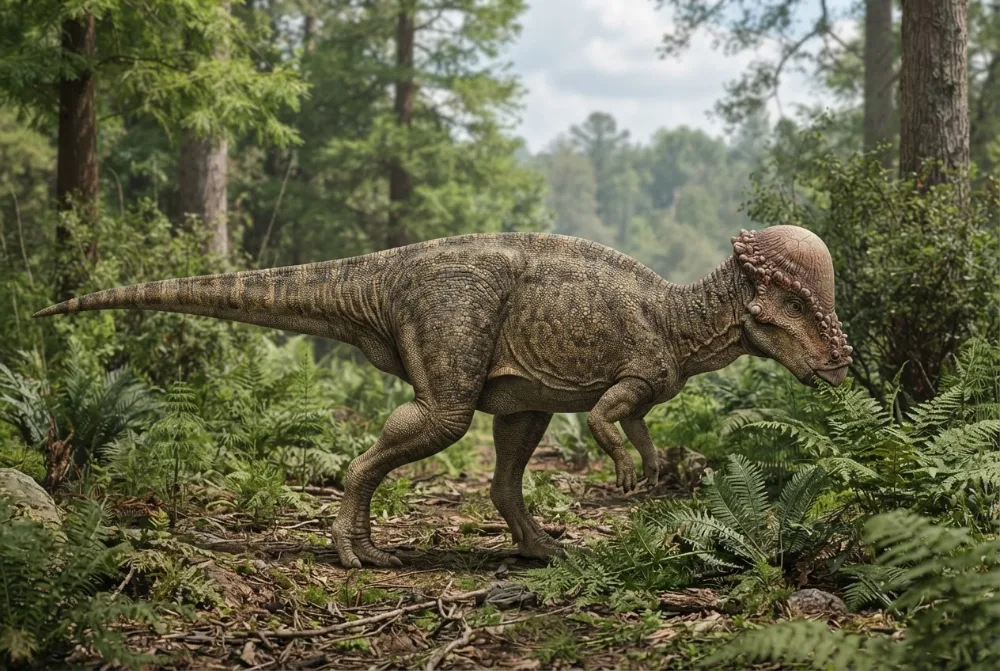
Stegoceras was a small dinosaur with a thick, bony dome on its head. It lived in North America during the Late Cretaceous period, about 77 to 74 million years ago. Scientists think it used its dome for head-butting or showing off to other Stegoceras.1
Yabeerawo ddi?
Yali munene atya?
Yali muwanvu kwenkana wa?
Yali muzito kwenkana wa?
 obuwanvu ng'embwa 2.5, ennyindo ku mukira🍌obuwanvu ng'amenvu 14 nga gaddiriŋŋana
 obuzito ng'obwa kkapa 10 ab'awaka🍉obuzito ng'obwa wotamerooni 8🧸obuzito ng'obw'abaana 2 ab'omu nnasale🎒obuzito ng'obw'abaana b'essomero 1🏃yandidduse mita 100 mu sikonda 9.2 (omuntu asinga embiro yeetaaga 9.6)
Stegoceras yali munene atya bw'ogeraageranya ku GGWE?
Kubala kwokka mu browser yo. Tewali kiterekebwa wadde okusindikibwa wonna.
Yali wa mbiro kwenkana wa?


Ebyewuunyisa
Stegoceras had a thick, smooth dome on top of its skull that grew bigger as it got older.1
The back of its skull had a shelf with small horns made from knobby bumps.1
It had a stiff tail and a broad pelvis, which might have held a big gut for digesting plants.1
Stegoceras was one of the first dome-headed dinosaurs ever discovered, known from skull domes found in 1898.1
Its teeth were small and serrated, good for shearing plants but not for chewing tough fibers.1
Scientists once thought some flat-headed pachycephalosaurs were different species, but they may just be young Stegoceras.1
Ebibuuzo ebisinga okubuuzibwa ku Stegoceras
?How big was Stegoceras?
About 2 to 2.5 metres (6.6 to 8.2 ft) long and weighed around 10 to 40 kilograms (22 to 88 lb).1
?What did Stegoceras eat?
It was an herbivore, eating plants. Its small, serrated teeth were good for shearing leaves, seeds, and fruit.12
?Did Stegoceras really head-butt?
Scientists are not sure. Some think it used its dome for head-butting or flank-butting, while others think it was for showing off or recognizing its own kind.13
Omumenyi w'enfumo
Enfumo: Many people think Stegoceras used its dome only for head-butting like a battering ram.
Amazima: Scientists debate whether the dome was used for head-butting, flank-butting, or just for display to attract mates.1
Eri abakugu mu dayinoso
- Erinnya lya ssaayansi
- Stegoceras
- Yatuumibwa
- Lambe 19024
- Ekibinja
- Ez'emitwe egy'enkulungo
- Ekika / ekibinja
- Eupachycephalosauria4
- Engabanya
- Ornithischia > Pachycephalosauria4
- Emyaka gy'enjazi
- emyaka obukadde 84 okutuuka ku 66 (Campanian / Maastrichtian)4
- Ensengeka z'enjazi
- Judith River, Dinosaur Park, Fruitland4
- Ensi
- Amerika, Kanada4
- Ebisigalira ebyazuulibwa
- 46 mu The Paleobiology Database4
- Era emanyiddwa nga
- Gravitholus, Hanssuessia, Ornatotholus (amannya ag'edda kati gabalibwa ng'ekisolo kye kimu)4
- Okuzuulibwa
- Stegoceras was named by paleontologist Lawrence Lambe in 1902, based on partial skull domes found in Alberta, Canada, in 1898 and 1901.1
- Kikyakubaganyizibwako ebirowoozo
- Scientists are still unsure whether the species Stegoceras novomexicanum from New Mexico really belongs to Stegoceras or to a different dinosaur.1
Ebituufu gye biva
- Stegoceras (en.wikipedia.org)
- Stegoceras | Natural History Museum (nhm.ac.uk)
- Stegoceras- Enchanted Learning Software (enchantedlearning.com)
- Stegoceras in The Paleobiology Database (CC BY 4.0): emyaka, ebifo, ensengeka z'enjazi, engabanya.
Buli kituufu ku lupapula luno kirina ennamba eraga ensibuko yaakyo. Bwe tuba nga tukoze ensobi, tusonyiwe, ffe tuli bawagizi ba dayinoso, so si magazini ya ssaayansi. Tubuulire ku [email protected] tujja kugitereeza.
 Rex alumwa enjala! Dino Wiki pulojekiti ya taata eri mutabani we ayagala ennyo dayinoso, ya bwereere, tewali bulango era tewali bikulondoola. Abakulu basobola okuwa Rex akantu ak'okulya okuyamba okugikuuma ku mutimbagano.Liisa Rex
 Pachycephalosaurus
 Prenocephale
 Sphaerotholus
 Foraminacephale
 Brontotholus
 Colepiocephale
 Tyrannosaurus
 Triceratops
 Velociraptor
 Spinosaurus
 Ankylosaurus
 Parasaurolophus