 Kwizi: Oli dayinoso ki?
 Olutalo lwa dayinoso
 Empaka z'emisinde gya dayinoso
 Emizannyo emitono egya dayinoso
 Alubaamu ya sitika
 Enkalala za dayinoso eza TOP
 Mpa ekyewuunyisa!
Yabeerawo ddi?

Yali wa mbiro kwenkana wa?


Ebyewuunyisa
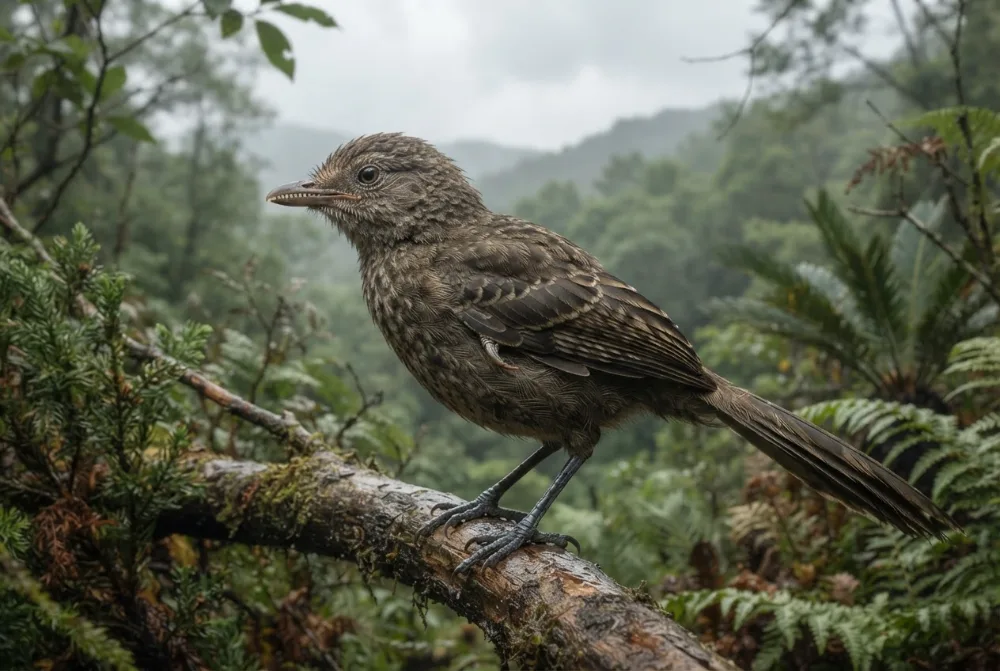
Sulcavis is the first bird ever found with decorated tooth enamel. Its teeth had grooves on the inside that made them stronger.12
It lived about 121 to 125 million years ago during the Early Cretaceous period.1
Sulcavis belonged to a group of ancient birds called enantiornitheans, which still had teeth and claws unlike modern birds.1
The fossil was found in the Yixian Formation, a famous rock layer in China that has preserved many feathered dinosaurs and early birds.1
Its name comes from Latin words meaning 'groove bird', because of the grooves on its teeth.1
Eri abakugu mu dayinoso
- Erinnya lya ssaayansi
- Sulcavis
- Yatuumibwa
- O'Connor et al. 20133
- Ekibinja
- Ebinyonyi eby'olubereberye
- Ekika / ekibinja
- Bohaiornithidae3
- Engabanya
- Theropoda > Avialae3
- Emyaka gy'enjazi
- emyaka obukadde 121 okutuuka ku 113 (Aptian)3
- Ensengeka z'enjazi
- Jiufotang3
- Ensi
- Cayina3
- Ebisigalira ebyazuulibwa
- 1 mu The Paleobiology Database3
- Okuzuulibwa
- Sulcavis was named in 2013 by a team of scientists including Jingmai O'Connor. The fossil was found near Lamadong in Liaoning, China, and prepared by Maureen Walsh at the Natural History Museum of Los Angeles County.1
- Kikyakubaganyizibwako ebirowoozo
- Scientists are not sure exactly what Sulcavis ate, but the strong grooved teeth suggest it could handle harder food than other early birds.12
Ebituufu gye biva
- Sulcavis (en.wikipedia.org)
- A new enantiornithine from the Yixian Formation with the first recognized avian enamel specialization: Journal of Vertebrate Paleontology: Vol 33, No 1 (tandfonline.com)
- Sulcavis in The Paleobiology Database (CC BY 4.0): emyaka, ebifo, ensengeka z'enjazi, engabanya.
Buli kituufu ku lupapula luno kirina ennamba eraga ensibuko yaakyo. Bwe tuba nga tukoze ensobi, tusonyiwe, ffe tuli bawagizi ba dayinoso, so si magazini ya ssaayansi. Tubuulire ku [email protected] tujja kugitereeza.
 Rex alumwa enjala! Dino Wiki pulojekiti ya taata eri mutabani we ayagala ennyo dayinoso, ya bwereere, tewali bulango era tewali bikulondoola. Abakulu basobola okuwa Rex akantu ak'okulya okuyamba okugikuuma ku mutimbagano.Liisa Rex
 Archaeopteryx
 Hesperornis
 Ichthyornis
 Baptornis
 Jurapteryx
 Gobipteryx
 Stegosaurus
 Iguanodon
 Giganotosaurus
 Microraptor
 Deinonychus
 Baryonyx