 Kwizi: Oli dayinoso ki?
 Olutalo lwa dayinoso
 Empaka z'emisinde gya dayinoso
 Emizannyo emitono egya dayinoso
 Alubaamu ya sitika
 Enkalala za dayinoso eza TOP
 Mpa ekyewuunyisa!
Tamarro
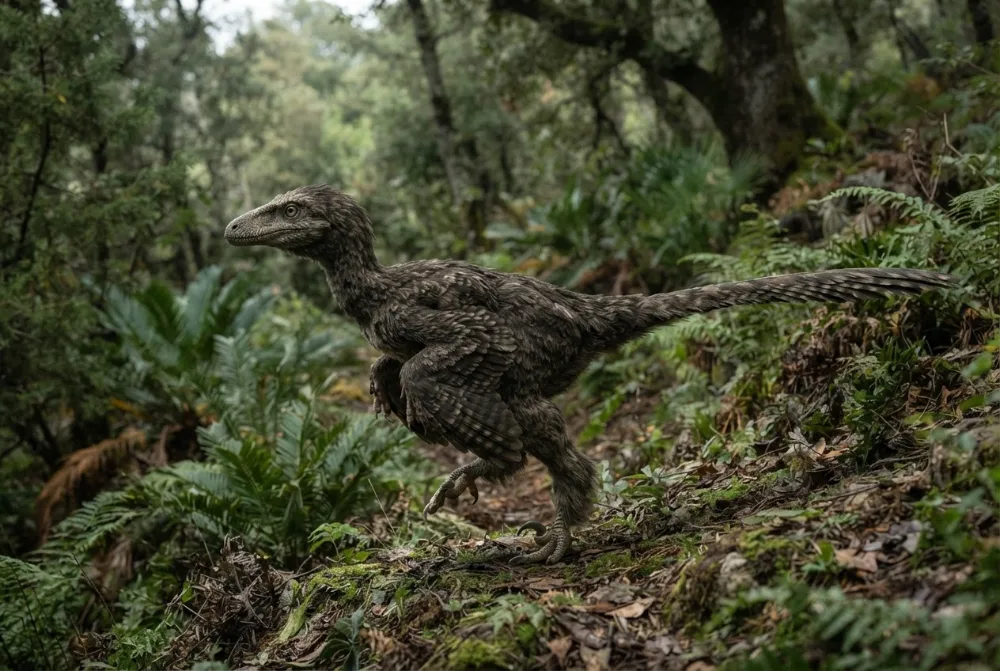
Tamarro was a small, fast-growing dinosaur that lived on an ancient island in what is now Spain. It was a troodontid, a group of bird-like, meat-eating dinosaurs. Scientists only know it from a single foot bone, but that bone has a unique hole not seen in any other troodontid.1
Yabeerawo ddi?
Yali munene atya?
Yali muwanvu kwenkana wa?
Yali mugulumivu kwenkana wa?
Yali muzito kwenkana wa?
 obuwanvu nga kkapa 4 ab'awaka, ennyindo ku mukira🍌obuwanvu ng'amenvu 11 nga gaddiriŋŋana🍉obuzito ng'obwa wotamerooni 4🏃yandidduse mita 100 mu sikonda 8.4 (omuntu asinga embiro yeetaaga 9.6)
Tamarro yali munene atya bw'ogeraageranya ku GGWE?
Kubala kwokka mu browser yo. Tewali kiterekebwa wadde okusindikibwa wonna.
Yali wa mbiro kwenkana wa?


Ebyewuunyisa
Tamarro lived at the very end of the Cretaceous period, within 200,000 years of the asteroid that wiped out the dinosaurs.1
Its foot bone shows that Tamarro was a fast grower, reaching nearly adult size quickly, like many island animals.1
Tamarro is the first troodontid dinosaur ever found in Europe.1
The only known fossil of Tamarro is a single right second metatarsal, a bone from the foot.1
This foot bone has a special hole (a foramen) that is not found in any other troodontid, which helped scientists identify it as a new species.1
Tamarro lived on the Ibero-Armorican island, a large island that included parts of modern Spain, Portugal, and France.1
Scientists think Tamarro may have migrated from Asia to Europe, either by land bridges or by island hopping.1
Ebibuuzo ebisinga okubuuzibwa ku Tamarro
?What did Tamarro eat?
Tamarro was a meat-eating dinosaur, a troodontid, so it likely ate small animals. Scientists know this from its group, not from its single foot bone.31
?How big was Tamarro?
Tamarro was a small, mid-sized troodontid, but its exact size is unknown because only a foot bone has been found. It was a fast grower, reaching nearly adult size quickly.13
Eri abakugu mu dayinoso
- Erinnya lya ssaayansi
- Tamarro
- Yatuumibwa
- Sellés et al. 20214
- Ekibinja
- Raputa
- Ekika / ekibinja
- Troodontidae4
- Engabanya
- Theropoda > Troodontidae4
- Emyaka gy'enjazi
- emyaka obukadde 72 okutuuka ku 66 (Maastrichtian)4
- Ensengeka z'enjazi
- Talarn4
- Ensi
- Sipeyini4
- Ebisigalira ebyazuulibwa
- 1 mu The Paleobiology Database4
- Okuzuulibwa
- Tamarro was discovered in September 2003 by a team from the Museu de la Conca Dellà at the Sant Romà d'Abella site in Spain. It was named in 2021 by Sellés and colleagues.1
- Kikyakubaganyizibwako ebirowoozo
- Scientists are not sure whether Tamarro was a dwarf species, like many other dinosaurs that lived on islands, or if it was just a young animal that hadn't finished growing.1
Ebituufu gye biva
- A fast-growing basal troodontid (Dinosauria: Theropoda) from the latest Cretaceous of Europe | Scientific Reports (nature.com)
- Tamarro insperatus, uno de los últimos dinosaurios que vivió en los Pirineos (nationalgeographic.com.es)
- Tamarro (en.wikipedia.org)
- Tamarro in The Paleobiology Database (CC BY 4.0): emyaka, ebifo, ensengeka z'enjazi, engabanya.
Buli kituufu ku lupapula luno kirina ennamba eraga ensibuko yaakyo. Bwe tuba nga tukoze ensobi, tusonyiwe, ffe tuli bawagizi ba dayinoso, so si magazini ya ssaayansi. Tubuulire ku [email protected] tujja kugitereeza.
 Rex alumwa enjala! Dino Wiki pulojekiti ya taata eri mutabani we ayagala ennyo dayinoso, ya bwereere, tewali bulango era tewali bikulondoola. Abakulu basobola okuwa Rex akantu ak'okulya okuyamba okugikuuma ku mutimbagano.Liisa Rex
 Velociraptor
 Microraptor
 Deinonychus
 Asiamericana
 Richardoestesia
 Saurornitholestes
 Tyrannosaurus
 Triceratops
 Spinosaurus
 Ankylosaurus
 Parasaurolophus
 Pteranodon