 Kwizi: Oli dayinoso ki?
 Olutalo lwa dayinoso
 Empaka z'emisinde gya dayinoso
 Emizannyo emitono egya dayinoso
 Alubaamu ya sitika
 Enkalala za dayinoso eza TOP
 Mpa ekyewuunyisa!
Yabeerawo ddi?

Yali munene atya?
Yali muwanvu kwenkana wa?
Yali mugulumivu kwenkana wa?
Yali muzito kwenkana wa?
 obuwanvu ng'embwa 3, ennyindo ku mukira🍌obuwanvu ng'amenvu 17 nga gaddiriŋŋana
 obuzito ng'obwa kkapa 12 ab'awaka🍉obuzito ng'obwa wotamerooni 10🧸obuzito ng'obw'abaana 2.5 ab'omu nnasale🎒obuzito ng'obw'abaana b'essomero 1.5🏃yandidduse mita 100 mu sikonda 7.5 (omuntu asinga embiro yeetaaga 9.6)
Teihivenator yali munene atya bw'ogeraageranya ku GGWE?
Kubala kwokka mu browser yo. Tewali kiterekebwa wadde okusindikibwa wonna.
Yali wa mbiro kwenkana wa?


Ebyewuunyisa
Teihivenator was named in 2017, making it one of the newest dinosaurs to get a scientific name.1
Its fossils were first discovered in the 1860s and were originally called 'Laelaps macropus'.1
Only a few leg bones and toe bones have been found, so scientists are still learning about this dinosaur.1
Teihivenator lived during the Maastrichtian age, about 72 to 66 million years ago.1
It belonged to a group called Tyrannosauroidea, which includes T. rex and its smaller cousins.1
The fossils were found in the Navesink Formation, which was once a shallow sea environment.1
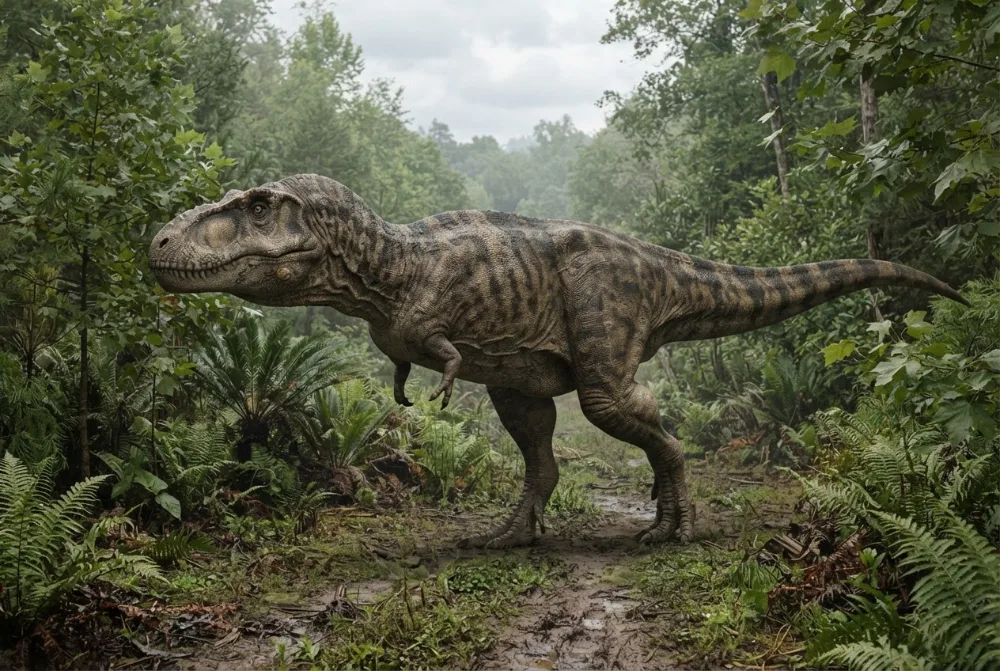
Ebibuuzo ebisinga okubuuzibwa ku Teihivenator
?What does the name Teihivenator mean?
It means 'strong hunter' from the Arapaho word 'Teihiihan' and the Greek word 'venator'.2
?How big was Teihivenator?
Only a few leg bones have been found, so its exact size is unknown, but it was much smaller than T. rex.3
?When did Teihivenator live?
It lived during the Maastrichtian age, about 72 to 66 million years ago.3
?Where was Teihivenator found?
Its fossils were found in the Navesink Formation in New Jersey, USA, which was once a shallow sea.3
?Is Teihivenator a dinosaur?
Yes, it is a theropod dinosaur and a relative of T. rex.3
?What did Teihivenator eat?
It was a carnivore, meaning it ate meat.3
?Why is Teihivenator's name new?
It was named in 2017 because its fossils were originally called 'Laelaps macropus' but that name was already used for a mite.2
?Could Teihivenator grasp its prey?
Its toe bones suggest it had strong grasping feet, similar to modern predatory birds, but scientists are not certain.2
Eri abakugu mu dayinoso
- Erinnya lya ssaayansi
- Teihivenator
- Yatuumibwa
- Yun 20173
- Ekibinja
- Tiranosawulu
- Ekika / ekibinja
- Tyrannosauroidea3
- Engabanya
- Theropoda > Tyrannosauroidea3
- Emyaka gy'enjazi
- emyaka obukadde 72 okutuuka ku 66 (Maastrichtian)3
- Ensengeka z'enjazi
- Navesink3
- Ensi
- Amerika3
- Ebisigalira ebyazuulibwa
- 1 mu The Paleobiology Database3
- Okuzuulibwa
- The first fossils were found in the 1860s by Edward Drinker Cope, who named them Laelaps macropus. In 2017, paleontologist Chan-gyu Yun gave them the new name Teihivenator.1
- Kikyakubaganyizibwako ebirowoozo
- Scientists are not sure if Teihivenator is a valid species or if the few bones belong to a different dinosaur. Some experts think it might be a 'nomen dubium' (doubtful name).1
Ebituufu gye biva
- PBDB Taxon (paleobiodb.org)
- 1Vertebrate Paleontological Institute of Incheon, Incheon 21974, Republic of Korea 2Biological Sciences, Inha University, Incheon 22212, Republic of Korea (dinodata.de)
- Teihivenator in The Paleobiology Database (CC BY 4.0): emyaka, ebifo, ensengeka z'enjazi, engabanya.
Buli kituufu ku lupapula luno kirina ennamba eraga ensibuko yaakyo. Bwe tuba nga tukoze ensobi, tusonyiwe, ffe tuli bawagizi ba dayinoso, so si magazini ya ssaayansi. Tubuulire ku [email protected] tujja kugitereeza.
 Rex alumwa enjala! Dino Wiki pulojekiti ya taata eri mutabani we ayagala ennyo dayinoso, ya bwereere, tewali bulango era tewali bikulondoola. Abakulu basobola okuwa Rex akantu ak'okulya okuyamba okugikuuma ku mutimbagano.Liisa Rex
 Tyrannosaurus
 Tarbosaurus
 Albertosaurus
 Daspletosaurus
 Gorgosaurus
 Alectrosaurus
 Triceratops
 Velociraptor
 Spinosaurus
 Ankylosaurus
 Parasaurolophus
 Pteranodon