 Kwizi: Oli dayinoso ki?
 Olutalo lwa dayinoso
 Empaka z'emisinde gya dayinoso
 Emizannyo emitono egya dayinoso
 Alubaamu ya sitika
 Enkalala za dayinoso eza TOP
 Mpa ekyewuunyisa!
Yamatosaurus
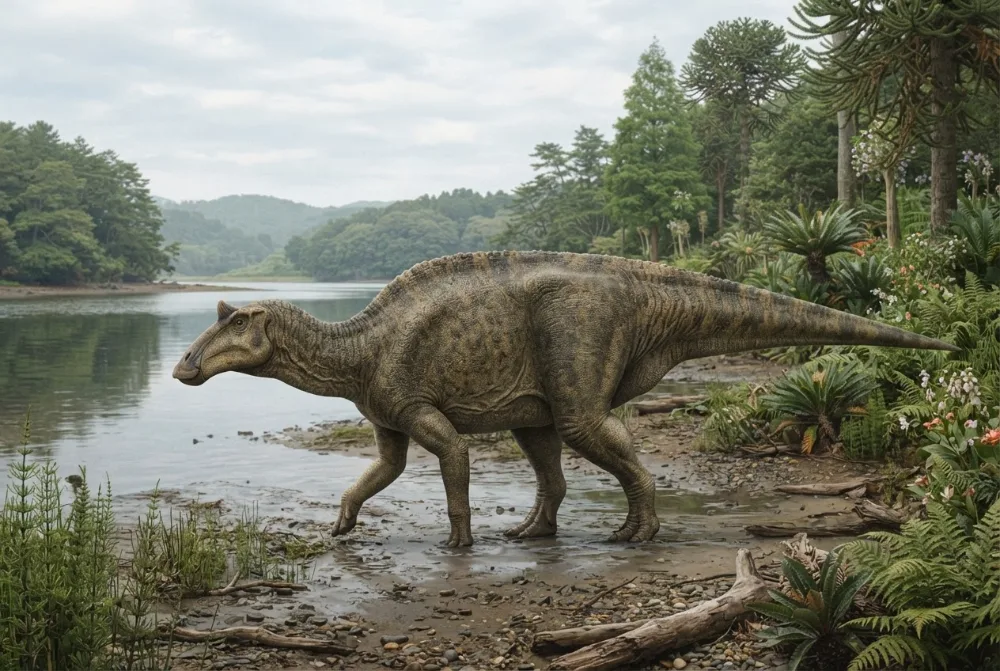
Yamatosaurus was a duck-billed dinosaur that lived in Japan near the end of the age of dinosaurs. It had a special jaw with only one tooth at a time in each spot, which is different from most other duck-billed dinosaurs. This plant-eater probably lived in coastal areas.21
Yabeerawo ddi?
Yali munene atya?
Yali muwanvu kwenkana wa?
Yali mugulumivu kwenkana wa?
Yali muzito kwenkana wa?
 obuwanvu ng'emmotoka 2 ezisimbiddwa mu lunyiriri🍌obuwanvu ng'amenvu 56 nga gaddiriŋŋana
 obuzito ng'obw'embwa 85🍉obuzito ng'obwa wotamerooni 340🧸obuzito ng'obw'abaana 89 ab'omu nnasale🎒obuzito ng'obw'abaana b'essomero 53🐻❄️obuzito ng'obwa ddubu enjeru 4🏃yandidduse mita 100 mu sikonda 13 (omuntu asinga embiro yeetaaga 9.6)
Yamatosaurus yali munene atya bw'ogeraageranya ku GGWE?
Kubala kwokka mu browser yo. Tewali kiterekebwa wadde okusindikibwa wonna.
Yali wa mbiro kwenkana wa?


Ebyewuunyisa
Yamatosaurus had only one tooth in each tooth socket at a time, which is very unusual for a duck-billed dinosaur.2
It lived about 72 to 66 million years ago during the Maastrichtian stage of the Late Cretaceous.3
The fossils were found in marine rocks, meaning the dinosaur's body was washed into the sea after it died.2
Yamatosaurus is one of the oldest known hadrosaurids, or duck-billed dinosaurs, from Japan.2
Its shoulder bone, the coracoid, lacks a bump called the biceps tubercle, which is a primitive feature.2
The name Yamatosaurus comes from Yamato, an ancient name for Japan.1
Ebibuuzo ebisinga okubuuzibwa ku Yamatosaurus
?How big was Yamatosaurus?
Scientists do not know its exact size because only a partial skeleton has been found, including parts of the jaw, neck bones, and shoulder bone.12
?What did Yamatosaurus eat?
It was a plant-eater, like other duck-billed dinosaurs. Its teeth were adapted for chewing plants.1
Eri abakugu mu dayinoso
- Erinnya lya ssaayansi
- Yamatosaurus
- Yatuumibwa
- Kobayashi et al. 20215
- Ekibinja
- Ez'emimwa gy'embaata
- Ekika / ekibinja
- Hadrosauridae5
- Engabanya
- Ornithischia > Ornithopoda > Iguanodontia > Hadrosauridae5
- Emyaka gy'enjazi
- emyaka obukadde 72 okutuuka ku 66 (Maastrichtian)5
- Ensengeka z'enjazi
- Kita-ama5
- Ensi
- Japaani5
- Ebisigalira ebyazuulibwa
- 1 mu The Paleobiology Database5
- Okuzuulibwa
- An amateur fossil collector named Shingo Kishimoto discovered the partial skeleton in May 2004 on Awaji Island, Japan. Scientists Yoshitsugu Kobayashi and colleagues named it Yamatosaurus izanagii in 2021.12
- Kikyakubaganyizibwako ebirowoozo
- Scientists are not sure exactly how Yamatosaurus is related to other duck-billed dinosaurs, but they think it is a very early member of the group.2
Ebituufu gye biva
- Yamatosaurus (en.wikipedia.org)
- nature.com (nature.com)
- PBDB Taxon (paleobiodb.org)
- Yamatosaurus izanagii | Dinosaur Database by DinoAnimals.com (dinoanimals.com)
- Yamatosaurus in The Paleobiology Database (CC BY 4.0): emyaka, ebifo, ensengeka z'enjazi, engabanya.
Buli kituufu ku lupapula luno kirina ennamba eraga ensibuko yaakyo. Bwe tuba nga tukoze ensobi, tusonyiwe, ffe tuli bawagizi ba dayinoso, so si magazini ya ssaayansi. Tubuulire ku [email protected] tujja kugitereeza.
 Rex alumwa enjala! Dino Wiki pulojekiti ya taata eri mutabani we ayagala ennyo dayinoso, ya bwereere, tewali bulango era tewali bikulondoola. Abakulu basobola okuwa Rex akantu ak'okulya okuyamba okugikuuma ku mutimbagano.Liisa Rex
 Parasaurolophus
 Edmontosaurus
 Saurolophus
 Hypacrosaurus
 Corythosaurus
 Kritosaurus
 Tyrannosaurus
 Triceratops
 Velociraptor
 Spinosaurus
 Ankylosaurus
 Pteranodon