 Kwizi: Oli dayinoso ki?
 Olutalo lwa dayinoso
 Empaka z'emisinde gya dayinoso
 Emizannyo emitono egya dayinoso
 Alubaamu ya sitika
 Enkalala za dayinoso eza TOP
 Mpa ekyewuunyisa!
Yabeerawo ddi?

Yali munene atya?
Yali muwanvu kwenkana wa?
Yali mugulumivu kwenkana wa?
kuteebereza
Yali muzito kwenkana wa?
 obuwanvu nga kkapa 4 ab'awaka, ennyindo ku mukira🍌obuwanvu ng'amenvu 11 nga gaddiriŋŋana🍌obuzito ng'obw'amenvu 120🏃yandidduse mita 100 mu sikonda 10 (omuntu asinga embiro yeetaaga 9.6)
Yuanyanglong yali munene atya bw'ogeraageranya ku GGWE?
Kubala kwokka mu browser yo. Tewali kiterekebwa wadde okusindikibwa wonna.
Yali wa mbiro kwenkana wa?


Ebyewuunyisa
Yuanyanglong is the first Early Cretaceous oviraptorosaur named from the Gobi Desert region, while other Gobi relatives come from later rocks.1
The name Yuanyanglong comes from the Mandarin word for lovebirds, because the two fossil skeletons were found together on the same block.1
The species name bainian means 'a hundred years' in Chinese, celebrating 100 years since the first oviraptorosaurs were named in 1924.1
Scientists found two partial skeletons, one with a poorly preserved skull and the other with parts of the hips, legs, and arms.1
Yuanyanglong is a basal oviraptorosaur, meaning it branched off early in the group's family tree, before many other oviraptorosaurs.1
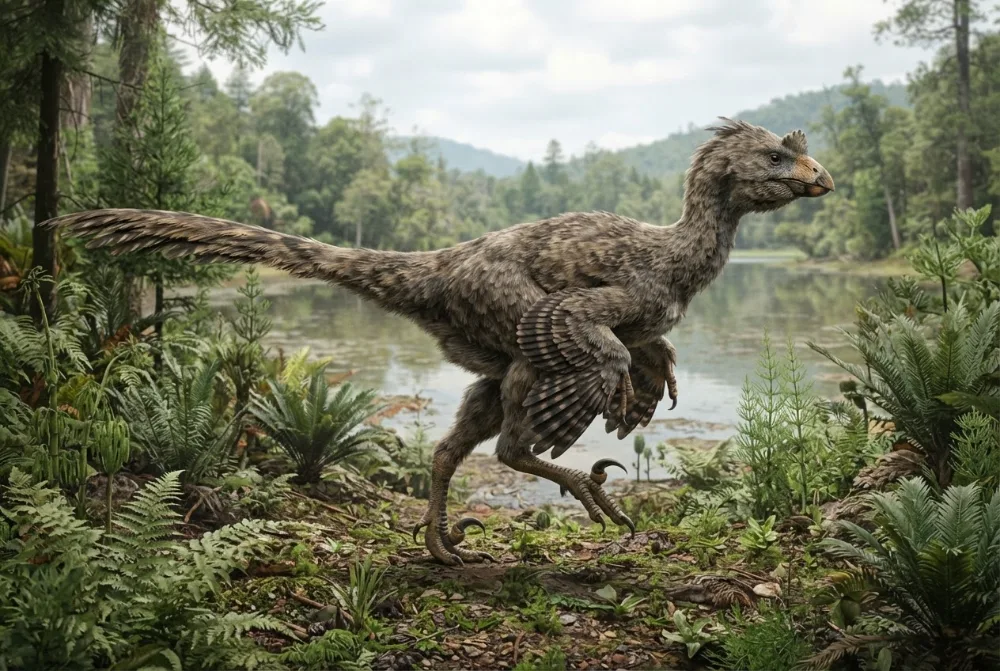
Ebibuuzo ebisinga okubuuzibwa ku Yuanyanglong
?How big was Yuanyanglong?
It was a relatively small dinosaur, though its exact size is not given in the sources. It is described as a 'smaller' oviraptorosaur based on the two partial skeletons found.3
?What did Yuanyanglong eat?
It was an omnivore, meaning it ate both plants and small animals. Scientists found gastroliths (stomach stones) in its body cavity, which helped it grind up food.43
?Could Yuanyanglong run fast?
It had long legs and narrow feet, which usually help with running, but its hip bone had a very short area for leg muscles to attach. Scientists think it was probably not a fast runner and may have been better at wading in water like a modern wading bird.3
?Why was it called Yuanyanglong?
The name means 'lovebird dragon' in Chinese, because the two fossil skeletons were found lying together on the same rock block, like a pair of lovebirds.1
Eri abakugu mu dayinoso
- Erinnya lya ssaayansi
- Yuanyanglong
- Yatuumibwa
- Hao et al. 20254
- Ekibinja
- Dayinoso ez'ebyoya ez'enjawulo
- Ekika / ekibinja
- Oviraptorosauria4
- Engabanya
- Theropoda > Oviraptorosauria4
- Emyaka gy'enjazi
- emyaka obukadde 121 okutuuka ku 100 (Aptian / Albian)4
- Ensengeka z'enjazi
- Miaogou4
- Ensi
- Cayina4
- Ebisigalira ebyazuulibwa
- 1 mu The Paleobiology Database4
- Okuzuulibwa
- The fossils were discovered in 2021 in the Miaogou Formation in Inner Mongolia, China. In 2024, Hao and colleagues announced the new genus and species Yuanyanglong bainian, and the full description was published in 2025.1
- Kikyakubaganyizibwako ebirowoozo
- Scientists are still debating exactly where Yuanyanglong sits on the oviraptorosaur family tree, since its skeleton is incomplete.1
Ebituufu gye biva
- Yuanyanglong (en.wikipedia.org)
- Yuanyanglong bainian | Dinosaur Database by DinoAnimals.com (dinoanimals.com)
- 内蒙古发现窃蛋龙类恐龙新属种——百年鸳鸯龙----中国科学院古脊椎动物与古人类研究所 (ivpp.ac.cn)
- Yuanyanglong in The Paleobiology Database (CC BY 4.0): emyaka, ebifo, ensengeka z'enjazi, engabanya.
Buli kituufu ku lupapula luno kirina ennamba eraga ensibuko yaakyo. Bwe tuba nga tukoze ensobi, tusonyiwe, ffe tuli bawagizi ba dayinoso, so si magazini ya ssaayansi. Tubuulire ku [email protected] tujja kugitereeza.
 Rex alumwa enjala! Dino Wiki pulojekiti ya taata eri mutabani we ayagala ennyo dayinoso, ya bwereere, tewali bulango era tewali bikulondoola. Abakulu basobola okuwa Rex akantu ak'okulya okuyamba okugikuuma ku mutimbagano.Liisa Rex
 Therizinosaurus
 Oviraptor
 Chirostenotes
 Citipes
 Leptorhynchos
 Avimimus
 Stegosaurus
 Iguanodon
 Archaeopteryx
 Giganotosaurus
 Microraptor
 Deinonychus