 Ozali dino nini? Kwizi
 Etumba ya badino
 Mbangu ya badino
 Masano mike ya badino
 Albumu ya bastika
 Bilisti TOP ya badino
 Kamwisa ngai!
Amanzia
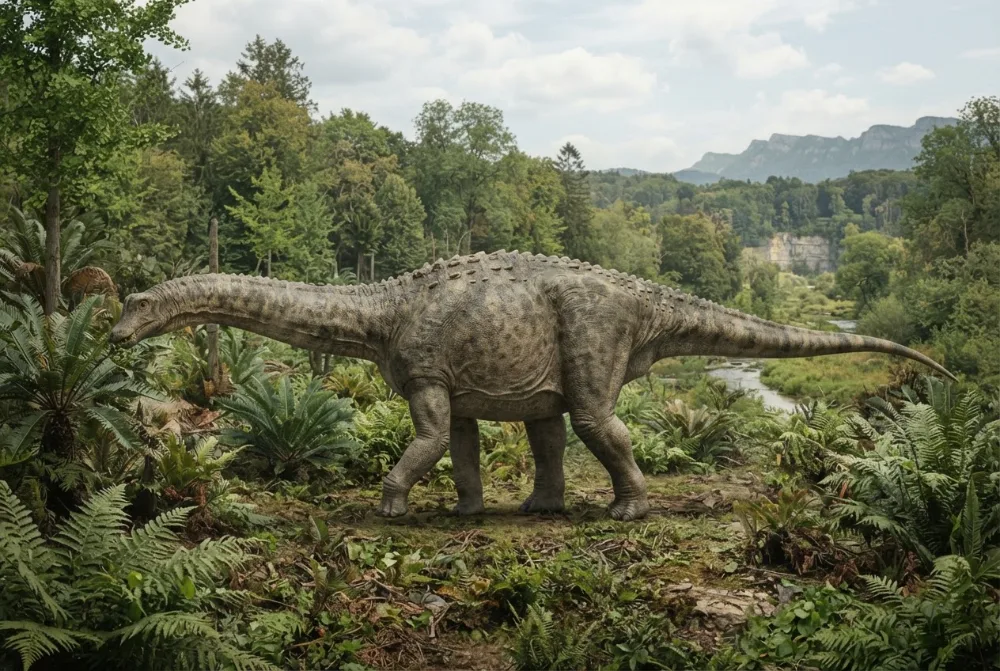
Amanzia was a long-necked plant-eater that lived in what is now Switzerland about 157 million years ago. It was a small sauropod, not much longer than a school bus, and it munched on leaves and ferns. Its bones were found in an old quarry near the town of Moutier.12
Azalaki na bomoi ntango nini?
Azalaki monene boni?
Azalaki molai boni?
Azalaki molai boni na likolo?
kokanisa
 molai lokola bamotuka 2 oyo batelemi na molongo🍌molai lokola matoko 56 oyo balandani🏃akokaki kopota metele 100 na sekonde 16 (moto oyo aleki mbangu asalelaka 9,6)
Amanzia azalaki monene boni soki tokokanisi na YO?
Kaka matematiki na navigatere na yo. Eloko moko te ebombami to etindami esika moko.
Azalaki na mbangu boni?


Makambo ya kosepelisa
Amanzia was first thought to be a different dinosaur called Ornithopsis, and later Cetiosauriscus, before scientists gave it its own name in 2020.12
The fossils include bones from at least four different individuals, some of which were different sizes.1
Amanzia had a special rough patch on the back of its upper arm bone that no other sauropod has.1
Its tail bones were long and had small holes for blood vessels.1
The bones were found in a greenish layer of marl and limestone, which was once a muddy seafloor.1
Amanzia is one of the few sauropods known from Switzerland, and its discovery helped scientists understand European dinosaurs better.1
Mituna oyo batunaka mingi na ntina na Amanzia
?How big was Amanzia?
Amanzia was a small sauropod, not more than 10 metres long. That is about as long as a school bus.12
?What did Amanzia eat?
Amanzia was a plant-eater. It munched on leaves and ferns, like other sauropods.2
Mpo na bayebi ya badino
- Nkombo ya siansi
- Amanzia
- Nkombo epesamaki na
- Schwarz et al. 20203
- Lisanga
- Nkingo milai
- Libota / klade
- Turiasauria3
- Klasifikasio
- Sauropodomorpha > Sauropoda3
- Mbula ya mabanga
- mbula milio 155 kino 152 (Kimmeridgian)3
- Milongo ya mabanga
- Reuchenette3
- Bikolo
- Swisi3
- Bafosile oyo ekomami
- 2 na The Paleobiology Database3
- Ntango bamonaki yango
- The first bones were found in the 1860s in a quarry near Moutier, Switzerland. In 1922, German scientist Friedrich von Huene named them Ornithopsis greppini. In 2020, a new study gave them the new genus name Amanzia, after Swiss geologist Amanz Gressly.12
- Naino bazali kowelana
- Scientists are not sure whether Amanzia was a member of the group Turiasauria or just a close relative of all later sauropods.1
Esika makambo euti
- Re-description of the sauropod dinosaur Amanzia (“Ornithopsis/Cetiosauriscus”) greppini n. gen. and other vertebrate remains from the Kimmeridgian (Late Jurassic) Reuchenette Formation of Moutier, Switzerland | Swiss Journal of Geosciences | Springer Nature Link (link.springer.com)
- Amanzia (en.wikipedia.org)
- Amanzia in The Paleobiology Database (CC BY 4.0): mbula, bisika, milongo ya mabanga, klasifikasio.
Likambo nyonso na lokasa oyo ezali na nimero oyo elakisi liziba na yango. Soki tosali libunga, limbisa biso, tozali bato balingaka badino, zulunalo ya siansi te. Yebisa biso na [email protected] mpe tokobongisa yango.
 Rex azali na nzala! Dino Wiki ezali mosala ya tata moko mpo na mwana na ye ya mobali oyo alingaka badino, ofele, piblisite te mpe batrakere te. Bato bakolo bakoki kopesa Rex biskwi mpo na kosalisa ete etikala na internet.Leisa Rex
 Brachiosaurus
 Diplodocus
 Brontosaurus
 Argentinosaurus
 Camarasaurus
 Morosaurus
 Allosaurus
 Compsognathus
 Camptosaurus
 Nanosaurus
 Rhamphorhynchus
 Ceratosaurus