 Ozali dino nini? Kwizi
 Etumba ya badino
 Mbangu ya badino
 Masano mike ya badino
 Albumu ya bastika
 Bilisti TOP ya badino
 Kamwisa ngai!
Harpactognathus
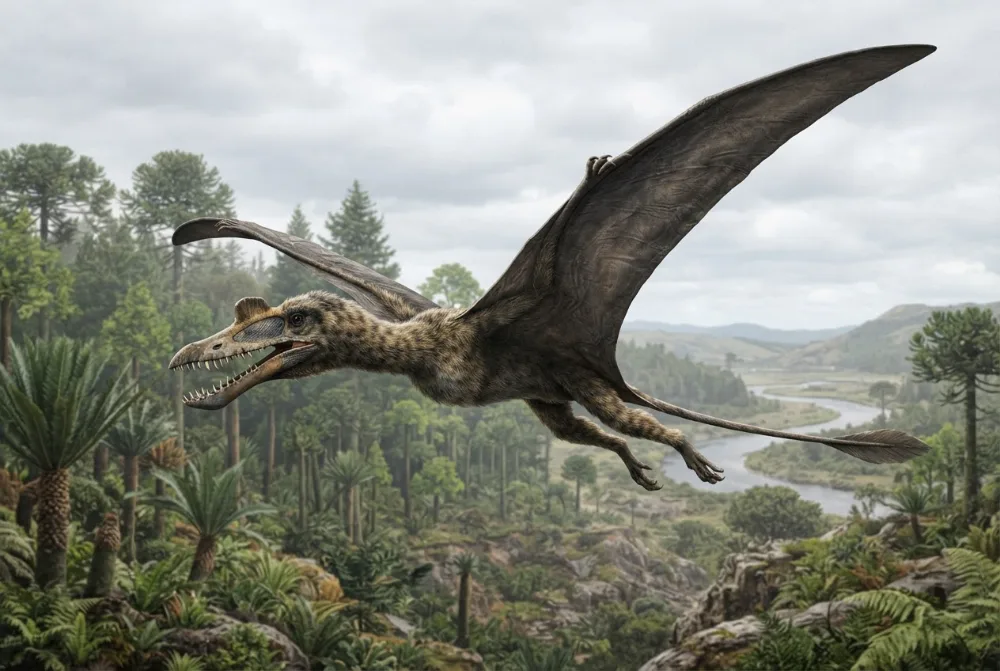
Harpactognathus was a large flying reptile that lived during the Jurassic period. It had a strong, wide beak and sharp teeth for grabbing prey. This pterosaur was one of the biggest of its kind that did not belong to the short-tailed pterodactyl group.1
Azalaki na bomoi ntango nini?
Azalaki monene boni?
Mapapu na ye ezalaki monene boni?
 mapapu monene lokola bavelo 1,5 na molongo⚽akokaki kopumbwa kokatisa esika mobimba ya ndembo na sekonde 7,3
Harpactognathus azalaki monene boni soki tokokanisi na YO?
Kaka matematiki na navigatere na yo. Eloko moko te ebombami to etindami esika moko.
Azalaki na mbangu boni?


Makambo ya kosepelisa
Harpactognathus is known from only a partial skull and a few other bones, so scientists are still learning about its full appearance.1
It had a crest on the front of its skull that might have been used for display to attract mates or show off to rivals.1
With a wingspan of about 2.5 metres (8.2 feet), Harpactognathus was among the largest non-pterodactyloid pterosaurs.1
Its fossils were found in the Morrison Formation, the same rock layer that contains famous dinosaurs like Stegosaurus and Diplodocus.1
Unlike many other pterosaurs that ate fish, Harpactognathus probably hunted small animals on land near rivers and lakes.1
The name Harpactognathus comes from Greek words meaning 'seizing jaw', which describes its strong, grabbing beak.1
Mituna oyo batunaka mingi na ntina na Harpactognathus
?Was Harpactognathus a dinosaur?
No, Harpactognathus was a pterosaur, a flying reptile, not a dinosaur.1
?How big was Harpactognathus?
It had an estimated wingspan of about 2.5 metres (8.2 feet) and a skull length of 280 to 300 millimetres (11 to 12 inches).1
?What did Harpactognathus eat?
It was a terrestrial carnivore that probably hunted small animals on land near rivers and lakes, not fish like many other pterosaurs.1
?Where was Harpactognathus found?
Its fossils were found in the Morrison Formation in Wyoming, USA, the same rock layer as Stegosaurus and Diplodocus.1
?Did Harpactognathus have a crest?
Yes, it had a thin crest on the front of its skull that may have been used for display to attract mates or show off to rivals.1
?When did Harpactognathus live?
It lived during the Kimmeridgian stage of the Late Jurassic period, about 157 to 152 million years ago.1
Mobuki masapo
Lisapo: Harpactognathus is often thought to be a dinosaur.
Solo: Harpactognathus was a pterosaur, a flying reptile that is not a dinosaur.1
Mpo na bayebi ya badino
- Nkombo ya siansi
- Harpactognathus
- Nkombo epesamaki na
- Carpenter et al. 20032
- Lisanga
- Bareptile oyo bapumbwaka
- Libota / klade
- Lonchognatha2
- Klasifikasio
- Pterosauria2
- Mbula ya mabanga
- mbula milio 152 kino 145 (Kimmeridgian / Tithonian)2
- Milongo ya mabanga
- Morrison2
- Bikolo
- Amerika2
- Bafosile oyo ekomami
- 1 na The Paleobiology Database2
- Ntango bamonaki yango
- Harpactognathus was named in 2003 by paleontologist Kenneth Carpenter and his team. The first fossil, a partial snout, was found in 1996 at Bone Cabin Quarry in Wyoming, USA. The species name honors Joe Gentry, a volunteer who helped with fossil preparation.1
- Naino bazali kowelana
- Scientists are not sure whether Harpactognathus belongs to the scaphognathine or rhamphorhynchine group of pterosaurs, because its fossils are so incomplete.1
Esika makambo euti
- Harpactognathus (en.wikipedia.org)
- Harpactognathus in The Paleobiology Database (CC BY 4.0): mbula, bisika, milongo ya mabanga, klasifikasio.
Likambo nyonso na lokasa oyo ezali na nimero oyo elakisi liziba na yango. Soki tosali libunga, limbisa biso, tozali bato balingaka badino, zulunalo ya siansi te. Yebisa biso na [email protected] mpe tokobongisa yango.
 Rex azali na nzala! Dino Wiki ezali mosala ya tata moko mpo na mwana na ye ya mobali oyo alingaka badino, ofele, piblisite te mpe batrakere te. Bato bakolo bakoki kopesa Rex biskwi mpo na kosalisa ete etikala na internet.Leisa Rex
 Pteranodon
 Quetzalcoatlus
 Dorygnathus
 Rhamphorhynchus
 Anhanguera
 Pterodactylus
 Brachiosaurus
 Diplodocus
 Allosaurus
 Brontosaurus
 Compsognathus
 Camarasaurus