 Ozali dino nini? Kwizi
 Etumba ya badino
 Mbangu ya badino
 Masano mike ya badino
 Albumu ya bastika
 Bilisti TOP ya badino
 Kamwisa ngai!
Incisivosaurus
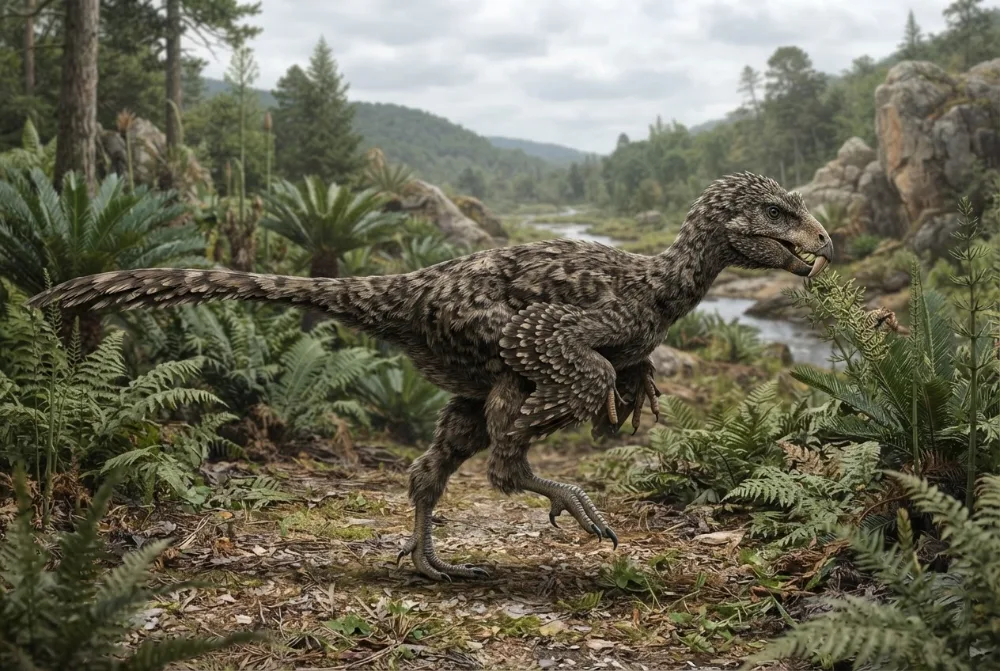
Incisivosaurus was a small, feathered dinosaur with a pair of big front teeth that looked like a rodent's incisors. It used these teeth to gnaw on plants, making it one of the first meat-eating dinosaurs known to eat mostly plants.12
Azalaki na bomoi ntango nini?
Azalaki monene boni?
Azalaki molai boni?
Azalaki molai boni na likolo?
kokanisa
 molai lokola bapusu 3 ya ndako zolo kino mokila🍌molai lokola matoko 8 oyo balandani🏃akokaki kopota metele 100 na sekonde 9,5 (moto oyo aleki mbangu asalelaka 9,6)
Incisivosaurus azalaki monene boni soki tokokanisi na YO?
Kaka matematiki na navigatere na yo. Eloko moko te ebombami to etindami esika moko.
Azalaki na mbangu boni?


Makambo ya kosepelisa
Incisivosaurus had a pair of very large, chisel-like front teeth that stuck out forward, just like a beaver or rabbit. No other meat-eating dinosaur had teeth like that.12
Its cheek teeth were small and shaped like lance heads, with big wear facets from chewing plants. This shows Incisivosaurus chewed its food, unlike many other dinosaurs.12
Incisivosaurus lived about 128 million years ago, making it the oldest known oviraptorosaur dinosaur. It was a basal member of this group.12
Its skull was low and had teeth, unlike later oviraptorosaurs which had short, toothless beaks. This helps scientists understand how oviraptorosaurs evolved.12
The name Incisivosaurus means 'incisor lizard' because of its rodent-like front teeth. The species name gauthieri honors paleontologist Jacques Gauthier.12
Incisivosaurus is known from a nearly complete skull and a neck vertebra. Its body size is estimated from the skull, which is about 10 cm long.2
It was a feathered dinosaur, like other oviraptorosaurs, and probably walked on two legs. It was a small dinosaur, about the size of a turkey.4
Mituna oyo batunaka mingi na ntina na Incisivosaurus
?What did Incisivosaurus eat?
It ate plants. Its rodent-like front teeth and worn cheek teeth show it was adapted for herbivory.31
?Did Incisivosaurus have feathers?
Yes, it had feathers. Two juvenile specimens show long vaned feathers on the hands and tail, and downy feathers on the body.3
Mpo na bayebi ya badino
- Nkombo ya siansi
- Incisivosaurus
- Nkombo epesamaki na
- Xu et al. 20024
- Lisanga
- Badino ya nsala ya kokamwa
- Libota / klade
- Oviraptorosauria4
- Klasifikasio
- Theropoda > Oviraptorosauria4
- Mbula ya mabanga
- mbula milio 126 kino 100 (Barremian / Albian)4
- Milongo ya mabanga
- Fuxin, Yixian, Shahai4
- Bikolo
- Sina4
- Bafosile oyo ekomami
- 4 na The Paleobiology Database4
- Ntango bamonaki yango
- Incisivosaurus was named in 2002 by Xing Xu and colleagues from a skull and neck vertebra found in Liaoning, China. The fossils came from the Yixian Formation, which is about 128 million years old.12
- Naino bazali kowelana
- Scientists are not sure if Incisivosaurus had feathers all over its body or just on some parts, because only the skull and a neck bone have been found.4
Esika makambo euti
- An unusual oviraptorosaurian dinosaur from China | Nature (nature.com)
- An unusual oviraptorosaurian dinosaur from China (ivpp.cas.cn)
- Incisivosaurus (en.wikipedia.org)
- Incisivosaurus in The Paleobiology Database (CC BY 4.0): mbula, bisika, milongo ya mabanga, klasifikasio.
Likambo nyonso na lokasa oyo ezali na nimero oyo elakisi liziba na yango. Soki tosali libunga, limbisa biso, tozali bato balingaka badino, zulunalo ya siansi te. Yebisa biso na [email protected] mpe tokobongisa yango.
 Rex azali na nzala! Dino Wiki ezali mosala ya tata moko mpo na mwana na ye ya mobali oyo alingaka badino, ofele, piblisite te mpe batrakere te. Bato bakolo bakoki kopesa Rex biskwi mpo na kosalisa ete etikala na internet.Leisa Rex
 Therizinosaurus
 Oviraptor
 Chirostenotes
 Citipes
 Leptorhynchos
 Avimimus
 Stegosaurus
 Iguanodon
 Archaeopteryx
 Giganotosaurus
 Microraptor
 Deinonychus