 Ozali dino nini? Kwizi
 Etumba ya badino
 Mbangu ya badino
 Masano mike ya badino
 Albumu ya bastika
 Bilisti TOP ya badino
 Kamwisa ngai!
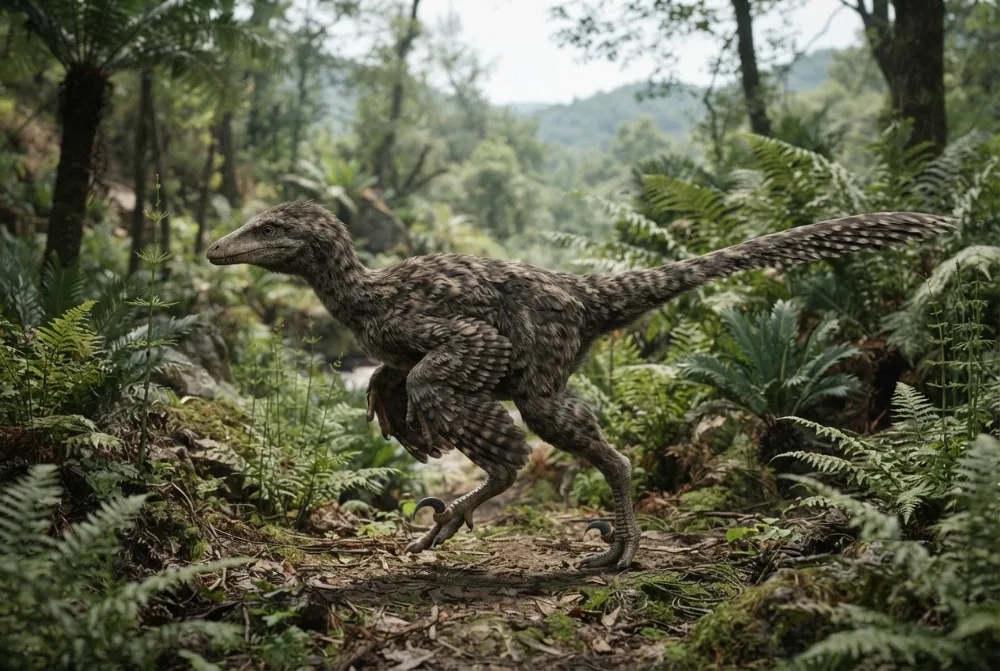
Lingyuanosaurus
Lingyuanosaurus was a small, feathered dinosaur that lived in what is now China. It was a therizinosaur, a type of meat-eating dinosaur that later evolved to eat plants. This dinosaur had a long neck and a beak, and its fossils help scientists understand how therizinosaurs changed over time.12
Azalaki na bomoi ntango nini?
Azalaki monene boni?
Azalaki molai boni?
Azalaki molai boni na likolo?
kokanisa
Azalaki kilo boni?
 molai lokola bapusu 4 ya ndako zolo kino mokila🍌molai lokola matoko 12 oyo balandani🍌kilo lokola matoko 100🏃akokaki kopota metele 100 na sekonde 12 (moto oyo aleki mbangu asalelaka 9,6)
Lingyuanosaurus azalaki monene boni soki tokokanisi na YO?
Kaka matematiki na navigatere na yo. Eloko moko te ebombami to etindami esika moko.
Azalaki na mbangu boni?


Makambo ya kosepelisa
Lingyuanosaurus is the third therizinosaur found in the Jehol Group of China, along with Jianchangosaurus and Beipiaosaurus.1
Its fossils were found in a single layer of rock, all from one individual dinosaur.2
Lingyuanosaurus had a tibia (shin bone) that was longer than its femur (thigh bone), which is unusual for therizinosaurs.12
Scientists think Lingyuanosaurus was an intermediate therizinosaur, meaning it lived between the early and late branches of this group.12
The fossils of Lingyuanosaurus include parts of its spine, ribs, arms, legs, and hip bones, but no skull.2
Lingyuanosaurus lived during the Early Cretaceous period, about 121 to 113 million years ago.4
Mituna oyo batunaka mingi na ntina na Lingyuanosaurus
?How big was Lingyuanosaurus?
It was small, about 2.2 metres (7.2 feet) long and weighed around 12 kilograms (26 pounds).3
?What did Lingyuanosaurus eat?
It was a therizinosaur, a type of theropod dinosaur that evolved to eat plants. It had a beak and small leaf shaped teeth for a herbivorous diet.2
?Did Lingyuanosaurus have feathers?
Yes, it was a feathered dinosaur. It belonged to a group of theropods that are known to have had feathers.3
?When did Lingyuanosaurus live?
It lived during the Early Cretaceous period, about 121 to 113 million years ago.3
Mpo na bayebi ya badino
- Nkombo ya siansi
- Lingyuanosaurus
- Nkombo epesamaki na
- Yao et al. 20194
- Lisanga
- Badino ya nsala ya kokamwa
- Libota / klade
- Therizinosauria4
- Klasifikasio
- Theropoda > Therizinosauria4
- Mbula ya mabanga
- mbula milio 121 kino 113 (Aptian)4
- Milongo ya mabanga
- Jiufotang4
- Bikolo
- Sina4
- Bafosile oyo ekomami
- 1 na The Paleobiology Database4
- Ntango bamonaki yango
- Lingyuanosaurus was named in 2019 by Yao and colleagues based on a partial skeleton found at Sihedang, Lingyuan, China. The name comes from the city of Lingyuan and the town of Sihedang.41
- Naino bazali kowelana
- Scientists are not sure whether the rocks that held Lingyuanosaurus belong to the Yixian Formation or the Jiufotang Formation.12
Esika makambo euti
- A new transitional therizinosaurian theropod from the Early Cretaceous Jehol Biota of China | Scientific Reports (preview-www.nature.com)
- A new transitional therizinosaurian theropod from the Early Cretaceous Jehol Biota of China (pmc.ncbi.nlm.nih.gov)
- Lingyuanosaurus (en.wikipedia.org)
- Lingyuanosaurus in The Paleobiology Database (CC BY 4.0): mbula, bisika, milongo ya mabanga, klasifikasio.
Likambo nyonso na lokasa oyo ezali na nimero oyo elakisi liziba na yango. Soki tosali libunga, limbisa biso, tozali bato balingaka badino, zulunalo ya siansi te. Yebisa biso na [email protected] mpe tokobongisa yango.
 Rex azali na nzala! Dino Wiki ezali mosala ya tata moko mpo na mwana na ye ya mobali oyo alingaka badino, ofele, piblisite te mpe batrakere te. Bato bakolo bakoki kopesa Rex biskwi mpo na kosalisa ete etikala na internet.Leisa Rex
 Therizinosaurus
 Oviraptor
 Chirostenotes
 Citipes
 Leptorhynchos
 Avimimus
 Stegosaurus
 Iguanodon
 Archaeopteryx
 Giganotosaurus
 Microraptor
 Deinonychus